
Inter respond to derby defeat with ruthless rout of Feyenoord
Yann Bisseck, Pio Esposito and Piotr Zielinski scored as Inter beat Feyenoord 3-0 in Rotterdam to steady their Champions League campaign after a bruising week.
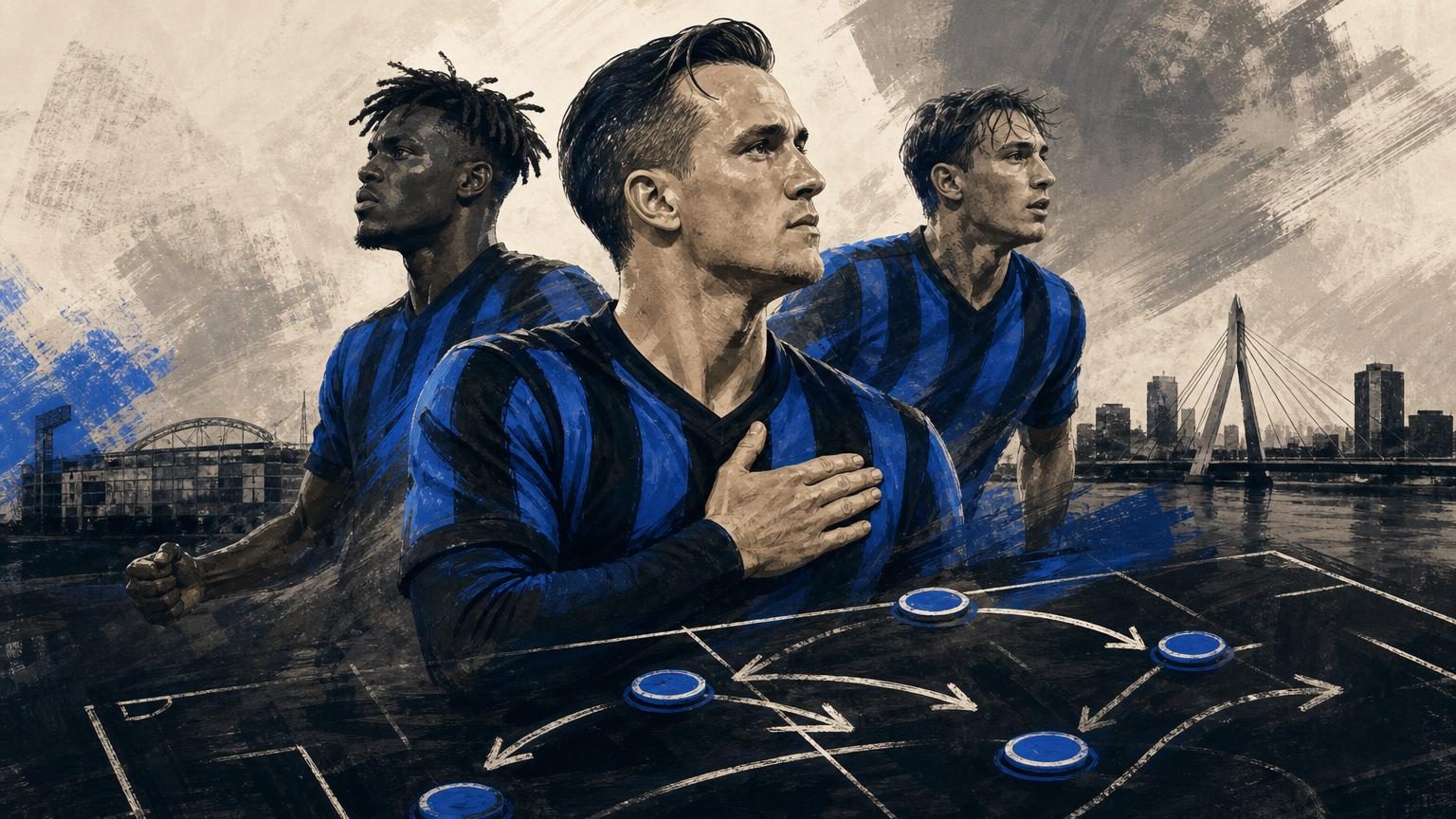
Inter answered a difficult week with a comprehensive 3-0 win away to Feyenoord in the Champions League, goals from Yann Bisseck, Pio Esposito and Piotr Zielinski settling the contest well before half-time was out, according to Football Italia.
The victory arrived days after Cristian Chivu's side lost the Derby della Madonnina 3-1 to AC Milan, and after a stuttering start to this Champions League campaign that included two defeats and a laboured 1-0 win over Shakhtar Donetsk, Football Italia reported.
Inter were without several key figures in De Kuip. Alessandro Bastoni was suspended following a red card against Shakhtar, while Lautaro Martinez, Curtis Jones, Luis Henrique and John Stones remained injured, per Football Italia.
Feyenoord, who had beaten Como 3-2 in an earlier home game this season, were missing Jakub Moder, Bart Nieuwkoop, Gijs Smal, Jeremiah St. Juste, Thomas Beelen and Jordan Bos.
A centre-back finish set the tone early
Bisseck broke the deadlock inside eight minutes, pressing high up the pitch to win possession back before turning away from two Feyenoord players and placing a left-footed finish into the far corner, Football Italia detailed. It was the defender's first Champions League goal.
The manner of the goal mattered as much as the timing. A centre-back initiating the press, winning the ball in a dangerous area and finishing like a forward is not the kind of contribution Inter can plan around, but it reflects the intensity Chivu's side brought from the opening whistle, a response to the passivity that had undone them in Milan's derby defeat.
Feyenoord did have a route back into the game before Inter doubled their advantage. Federico Dimarco saw a couple of early shots blocked at the near post, and at the other end Anis Hadj Moussa dribbled beyond Dimarco to force a save from Josep Martinez, a reminder that the hosts were not simply bystanders in the opening phase.
Spence's right flank did the damage for the second
Inter's second goal, on 34 minutes, came from a different source of threat. Djed Spence advanced down the right flank and stood up a deflected cross that Pio Esposito headed home from close range, despite Feyenoord's complaints about a physical challenge on the defender in the build-up, Football Italia noted.
Spence's involvement was not isolated. He had already tested Feyenoord's goalkeeper from a near-post position after a strong run, underlining how much of Inter's attacking width in this match came from the right-back pushing forward into advanced areas rather than from a conventional winger.
Zielinski added the third shortly after the hour, converting from the edge of the area with what Football Italia described as a ferocious strike, after earlier efforts had gone just wide or forced a save from distance. The goal, assisted by Nicolo Barella, capped a first-half-and-after period in which Inter created a stream of chances without needing to force the issue.
Pio Esposito thought he had a second of his own on 66 minutes, turning in a Dimarco cross from close range, but the goal was ruled out for offside.
What the numbers show about control
Inter finished with 53 per cent of possession to Feyenoord's 47, and were level on total shots at 11 apiece, according to the match statistics recorded by Football Italia. But Inter's shots on target told a clearer story: six to Feyenoord's two, a measure of how often a team's efforts actually tested the goalkeeper rather than missing the target altogether.
That gap between shot volume and shot quality is the clearest statistical signature of the performance. Feyenoord matched Inter for attempts but rarely threatened Martinez directly, while Inter converted a smaller share of pressure into three clinical finishes from three different types of play: a high press, a right-flank cross, and a long-range strike.
Feyenoord made changes through the second half, introducing Sem Steijn, Andy Diouf and others as they searched for a way back into the tie, but could not find a route past an Inter defence that, even without Bastoni, controlled the game comfortably once the third goal went in.
Inter's win moves them forward in the league phase after the setbacks of the previous two matches, giving Chivu's squad a result to build on heading into their next fixtures, with the derby defeat to Milan now a week in the past rather than the dominant storyline.