
Selhurst Park, not Anfield: how Liverpool's title really slipped away
Revisiting the Crystal Palace collapse that followed Steven Gerrard's slip, and why the maths, Tony Pulis's low block and a burst of euphoria combined to undo Brendan Rodgers' side.
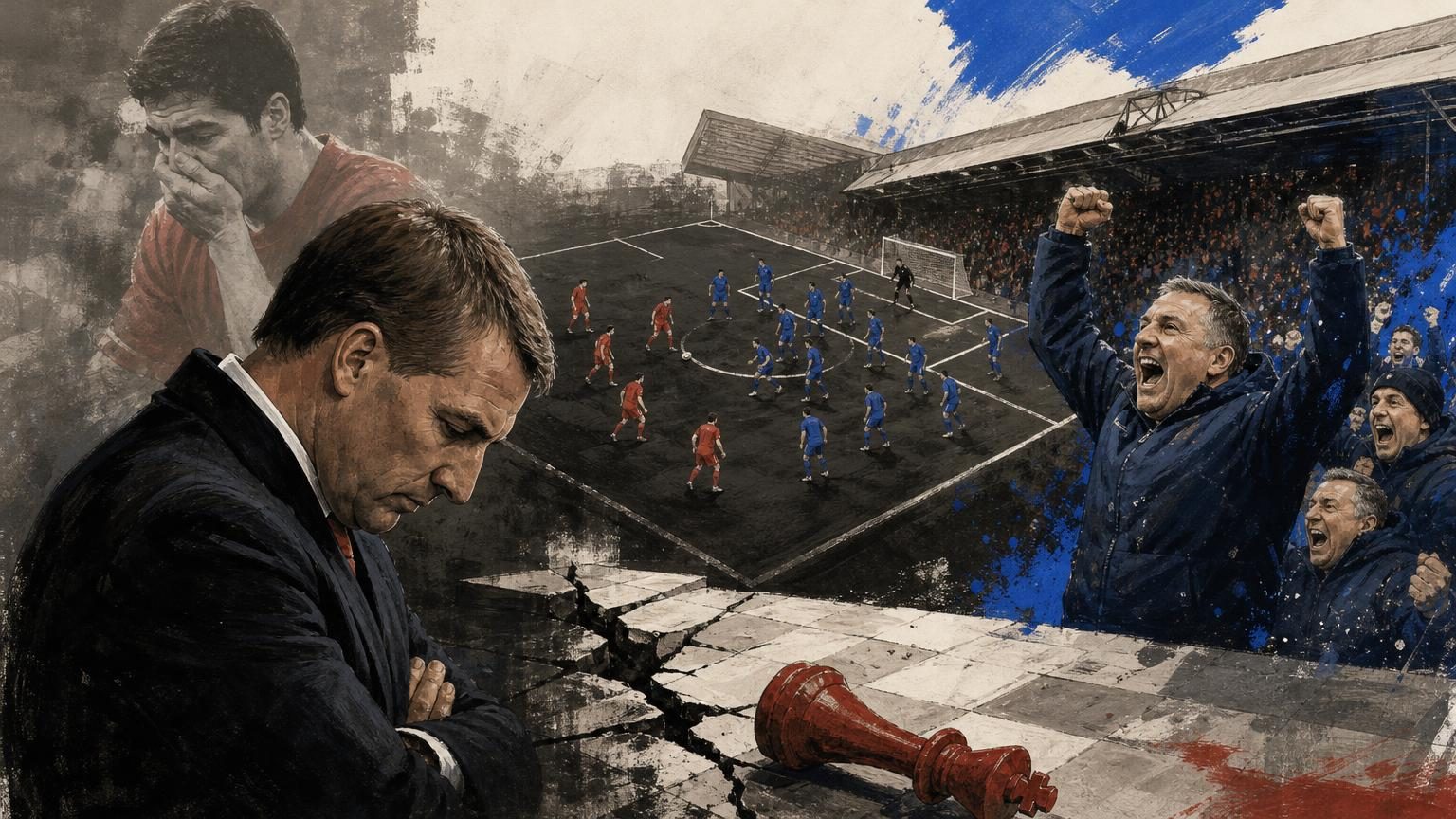
The Steven Gerrard slip against Chelsea is the image everyone remembers from Liverpool's surrender of the 2013-14 Premier League title. Jose Mourinho's Chelsea won that game 2-0 after Demba Ba ran through on Gerrard's untimely loss of footing, and Mourinho celebrated by banging the badge on his gilet in front of the away end, Planet Football recalls.
But the Chelsea defeat did not hand Manchester City the title outright. Liverpool had merely dropped to second on goal difference, a measure of how many more goals a team has scored than conceded, which separates sides level on points. Both clubs were closing in on 100 goals for the season; City's superior defensive record gave them a 12-goal cushion, according to Planet Football.
The run-in still favoured Liverpool on paper
City's remaining fixtures looked harder on the surface. They had two home games but against Aston Villa and West Ham, neither of whom was yet mathematically safe from relegation. Liverpool, by contrast, faced Crystal Palace away and then Newcastle at Anfield, a Newcastle side sitting ninth with the worst goal difference in the top half of the table.
Of the two, Palace was the fixture Brendan Rodgers would have picked. Already safe in 11th, with nothing left to play for, Palace were the kind of mid-table side a title challenger should brush aside. Tony Pulis's team arrived on a run of five wins in six, but that form counted for little in the context of Liverpool's pursuit of a first league title in 24 years.
Pulis's low block held until it suddenly didn't
Set for a Monday night under the Selhurst Park floodlights, the game carried an obvious subplot: could Gerrard respond to the Chelsea slip in front of a crowd fully invested in seeing him fail. The answer came fast. Gerrard swung in a corner that Joe Allen headed home unmarked, breaking a Palace defence that had not conceded from a set piece all season.
The first half followed the script Liverpool wanted. They had 68 per cent of possession and twelve shots to Palace's three, dominating territory against a team set up in a deep, compact block. Pulis later told the BBC he had torn into Scott Dann and Damien Delaney at half-time for failing to close down Luis Suarez and Daniel Sturridge quickly enough.
The warning did not land. Liverpool scored twice in the opening minutes of the second half, turning control into a rout. Raheem Sterling escaped Joel Ward's press while Dann and Delaney dropped off Suarez, and Sturridge's shot deflected in off Delaney for 2-0.
Delaney then stepped out to close Suarez near the halfway line in a transition moment that backfired badly, letting the ball run through to the Uruguayan, who exposed Palace's back line before Sterling's pass, pulling Dann out of position, teed up a finish through Julian Speroni's legs for 3-0.
Euphoria undid the control that built it
Rodgers' own half-time message, by his account, had been to simply see out a lead, telling his players that 1-0 would have been enough. That instruction was overtaken by events within minutes of the restart. A Liverpool side that had won its previous ten league games and led the table for a month was playing with the weight of 24 years of frustration behind it, and the quick second goal turned measured control into something closer to a chase for more.
That shift in mentality is the tactical hinge of the night. A team sitting on a three-goal lead against a beaten, low-block opponent had every incentive to manage the game, protect the goal difference that mattered to their title race, and see out the remaining minutes.
Instead, the same pressing and quick combination play that had built the lead carried on being used to chase a fourth goal, leaving spaces in behind that a Pulis side, built to counter-attack when stretched, could exploit.
Planet Football's broader point is that the damage to Liverpool's title bid was not sealed by Gerrard's slip against Chelsea but compounded at Selhurst Park, in a match that on paper should have been the easier of the two remaining fixtures. The numbers before kick-off, the goal-difference gap, the run-in, and Palace's lack of motivation, all pointed towards a routine win. The way the second half unfolded, with a dominant platform undone by the same urgency that created it, is the detail that gets lost behind the image of Gerrard on the turf against Chelsea.