
Man Utd's structural crisis meets Roma's transition threat at Old Trafford
United's defensive collapse under Michael Carrick faces a Roma side built on quick transitions and shared goalscoring, with Champions League qualification places at stake.
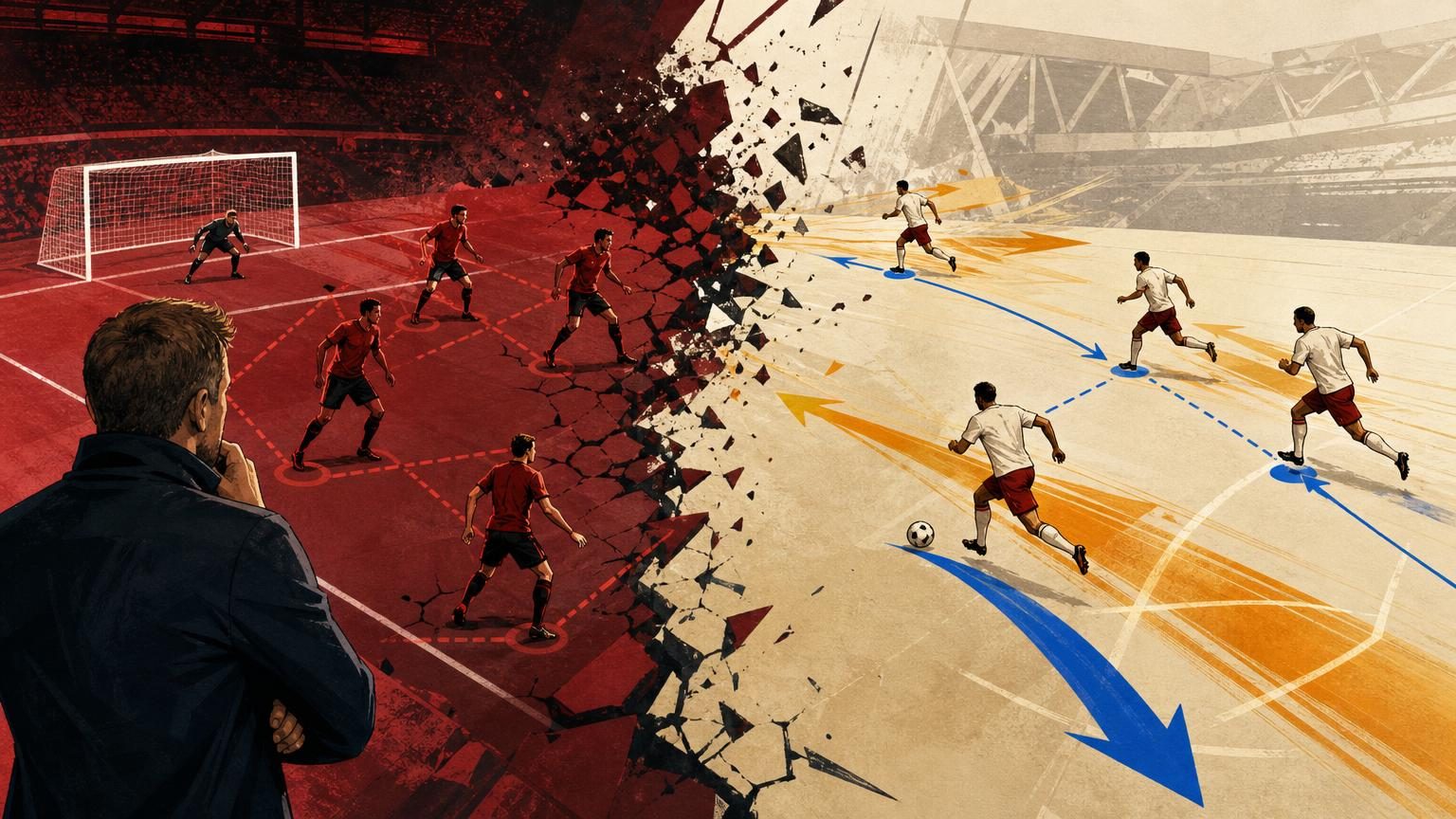
Manchester United host Roma at Old Trafford on Tuesday in a Champions League league-phase fixture that neither side can afford to lose, with United sitting 21st and Roma one place and one point better off in 15th, just inside the top-24 cutoff that determines who advances, according to The Analyst (Opta).
Opta's supercomputer still makes United narrow favourites, giving them a 40.9% win probability against 34.5% for Roma, a gap that reflects home advantage more than current form. Kickoff is 21:00 CET (20:00 GMT), with Spanish official Jesús Gil Manzano refereeing as part of an all-Spanish officiating team, Football Italia reports.
United's underlying numbers are brutal. They have taken just seven points from nine Premier League games, failed to score in four of them, and are winless in nine matches across all competitions since mid-September — their longest such run in 42 years, per The Analyst.
Why United's shape keeps breaking under pressure
The Chelsea defeat that preceded this game is instructive. Lisandro Martínez's second-half red card at Stamford Bridge left United to see out the closing stages a man light, and they conceded twice before the final whistle in a 2-0 loss. Playing with ten men forces a back line to compress and cede ground, and United's inability to hold a compact defensive structure in that scenario has been a recurring theme of their slump.
The same structural fragility was exposed in Como, where United's 4-1 defeat left them 21st in the table. Conceding four goals away from home points to a team unable to control transitions — the moments immediately after losing possession when an opponent attacks before a defence can reset. United's only victories this season have come against Ipswich Town and Azerbaijan's Sabah, hardly a benchmark against a Roma side playing with far greater control.
Roma's attack thrives on speed and shared responsibility
Roma arrive in considerably better order. Gian Piero Gasperini's side are unbeaten in Serie A this season, having drawn with Inter, Napoli and Como while winning seven times, and they go into Old Trafford on the back of a 5-2 demolition of Udinese in which they were four goals up inside 37 minutes, The Analyst reports.
That burst illustrates how Roma score: not through one dominant outlet but through rapid, varied attacking transitions that have produced 21 goals in six games, with 14 different players finding the net. A side scoring through that many contributors is harder to prepare for defensively, because there is no single pressing trigger or marking assignment that neutralises the threat.
Roma have shown they can adapt their approach when required, too. After Donyell Malen was sent off against Como, they held out for a 0-0 draw, a result built on dropping into a low block and defending with numerical disadvantage rather than chasing the game. That capacity to shift from transition-based attacking football to disciplined containment is a mark of tactical flexibility that United, by contrast, have not displayed under similar circumstances this season.
The away record that complicates Roma's task
History still works against the visitors. Roma have won only two of their last 20 Champions League away games, drawing six and losing 12, and they have conceded in 32 consecutive away fixtures in the competition — the longest such run by any club in the current Champions League, according to The Analyst. They have also failed to win any of their last 16 trips to England, drawing six and losing ten.
That record suggests Roma's defensive structure is less secure away from Stadio Olimpico than their domestic form indicates, even allowing for the quality of their attacking transitions. A team capable of building a four-goal first-half lead at home has still conceded in every away Champions League match for several seasons, which points to a gap between control in possession and defensive solidity once the context shifts.
United's response, responding to a seventh defeat in their last ten Champions League games, will again hinge on whether Michael Carrick can restore a defensive structure capable of surviving the kind of pressure that undid them at Chelsea and in Como. Roma, unbeaten in 17 straight league matches and chasing a first Scudetto in 26 years, have the attacking variety to punish any repeat of those structural lapses.