
Manchester United's chaos theory: four goals conceded, four clawed back
United's 4-4 draw with Aston Villa extended a week of extraordinary comebacks that raises as many tactical questions as it answers about Michael Carrick's team.
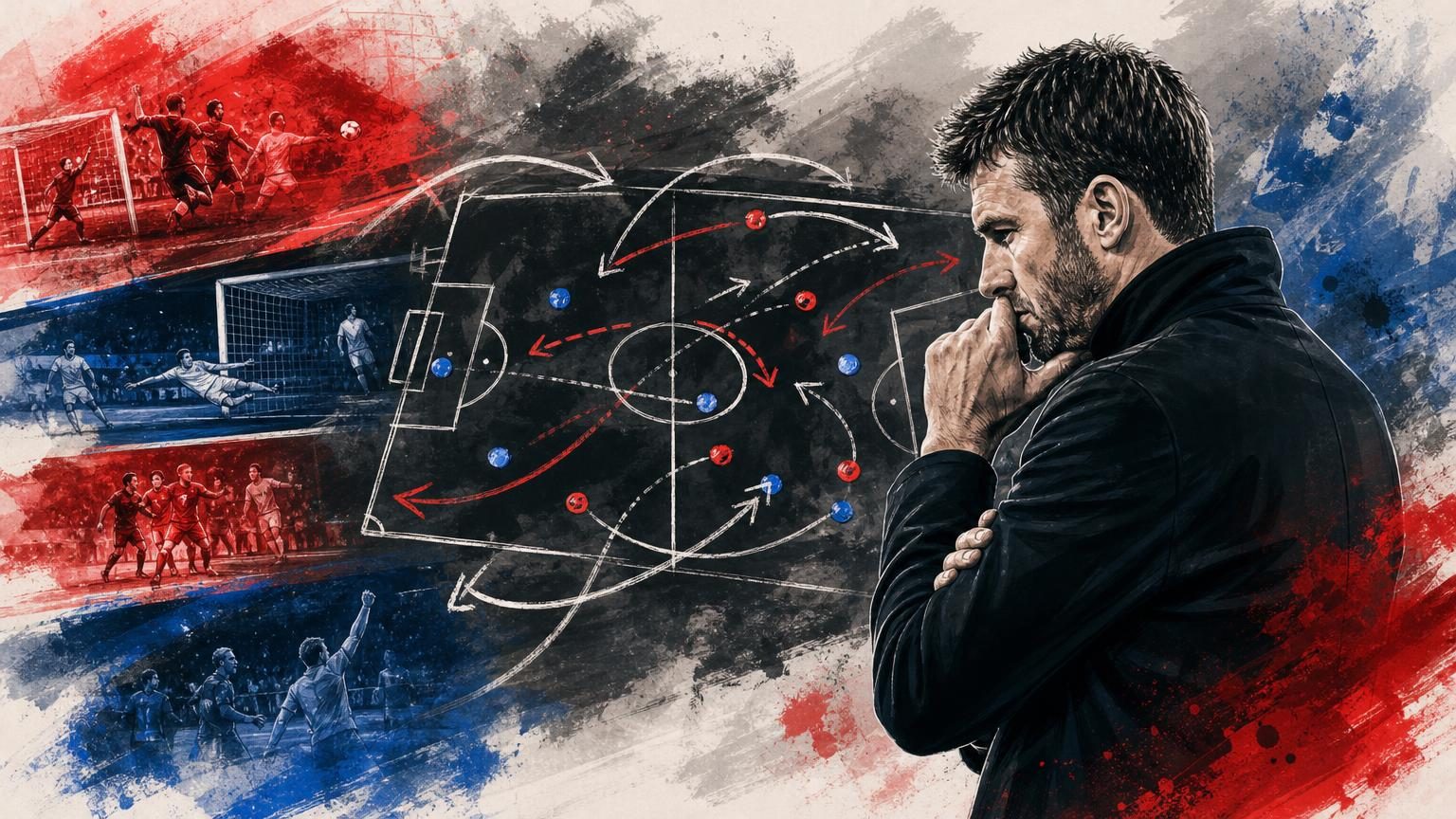
Manchester United conceded four goals and scored four of their own against Aston Villa, turning two separate two-goal deficits into a 4-4 draw that was, according to Planet Football, the first instance in Premier League history of a team coming back from two goals down twice in the same match.
The pattern had already appeared once this week. On Tuesday, United were 2-0 down to Roma in the Champions League before winning 3-2, Planet Football reported. Four days later, Alysson and Nicolas Jackson scored inside the opening four minutes against Villa, the earliest United have ever trailed by two goals in a Premier League fixture, per the same outlet.
Bruno Fernandes and Youri Tielemans pulled United level before half-time. Villa then scored twice more within the first ten minutes of the second half to restore the two-goal gap, before Joshua Zirkzee and Patrick Dorgu scored in stoppage time to complete the second comeback and secure the point.
Two collapses in the same match expose a transition problem
Conceding so early in both halves points to a specific defensive failure rather than bad luck repeated twice. Goals inside the first four minutes of a match and inside the first ten minutes of a second half both tend to come from defensive transition moments, when a team has just restarted play and has not yet settled into its defensive shape.
Those are the moments a side is most exposed if its structure is not immediately coherent: players jogging back into position, distances between units not yet set, and no collective pressing trigger established. United were caught in exactly that state twice in 45 minutes of game time, conceding four goals in total during those windows.
That United still found a way to level the score twice suggests individual quality and resolve going forward, but it does not fix the underlying issue. A team that is routinely vulnerable at kick-off and at the restart is exhibiting a structural problem, not a one-off lapse, and structural problems do not resolve themselves through attacking comebacks alone.
What the results do and do not show about Carrick's position
The scoreline sits alongside a much blunter number: United have won only one of their first ten league games this season and sit in the relegation zone, Planet Football reported. A points record like that measures outcomes, not performances, and it cannot distinguish between a team that is unlucky and one that is structurally broken.
The two comebacks this week complicate that picture rather than resolving it. They show a team capable of scoring four goals in a single half of football, as happened after the second Villa collapse, which is itself a data point about attacking output under pressure. But attacking output does not offset a defence that has now been breached rapidly and repeatedly in a short span of fixtures.
Planet Football's own framing captured the tension: United have moved from being the league's most underwhelming team to its most bizarre, still toiling near the bottom of the table but doing so, in the outlet's words, in ‘(almost?) entertaining fashion.’ That is a verdict on spectacle, not on game management, and the two are separate questions for Carrick.
Game management — organising a team to protect a lead, or to avoid conceding in the moments immediately after kick-off and half-time — is precisely where United failed twice in this fixture. Whatever credit the comeback buys Carrick in the dressing room, it does not address why his side keeps finding itself two goals down inside minutes of a restart.
What comes next
United head into the international break with the extraordinary distinction of having twice overturned two-goal deficits in a single Premier League match, a historical first, and with only one league win from ten games, a position that leaves them in the relegation zone. Planet Football noted that Carrick may look back on this week as a turning point if results soon follow, or as the week his side made history for the wrong reasons if they do not.
The underlying transition problem that produced four of Villa's eight combined goals this week will not disappear over the break. Whether Carrick can convert this week's attacking resilience into defensive discipline at kick-off and at half-time is the question that will shape United's results when the Premier League resumes.