
McTominay's anger exposes Napoli's deeper injury and dressing room problem
A 4-1 Champions League defeat at Porto left Scott McTominay furious and Napoli's squad visibly fraying, on and off the pitch.
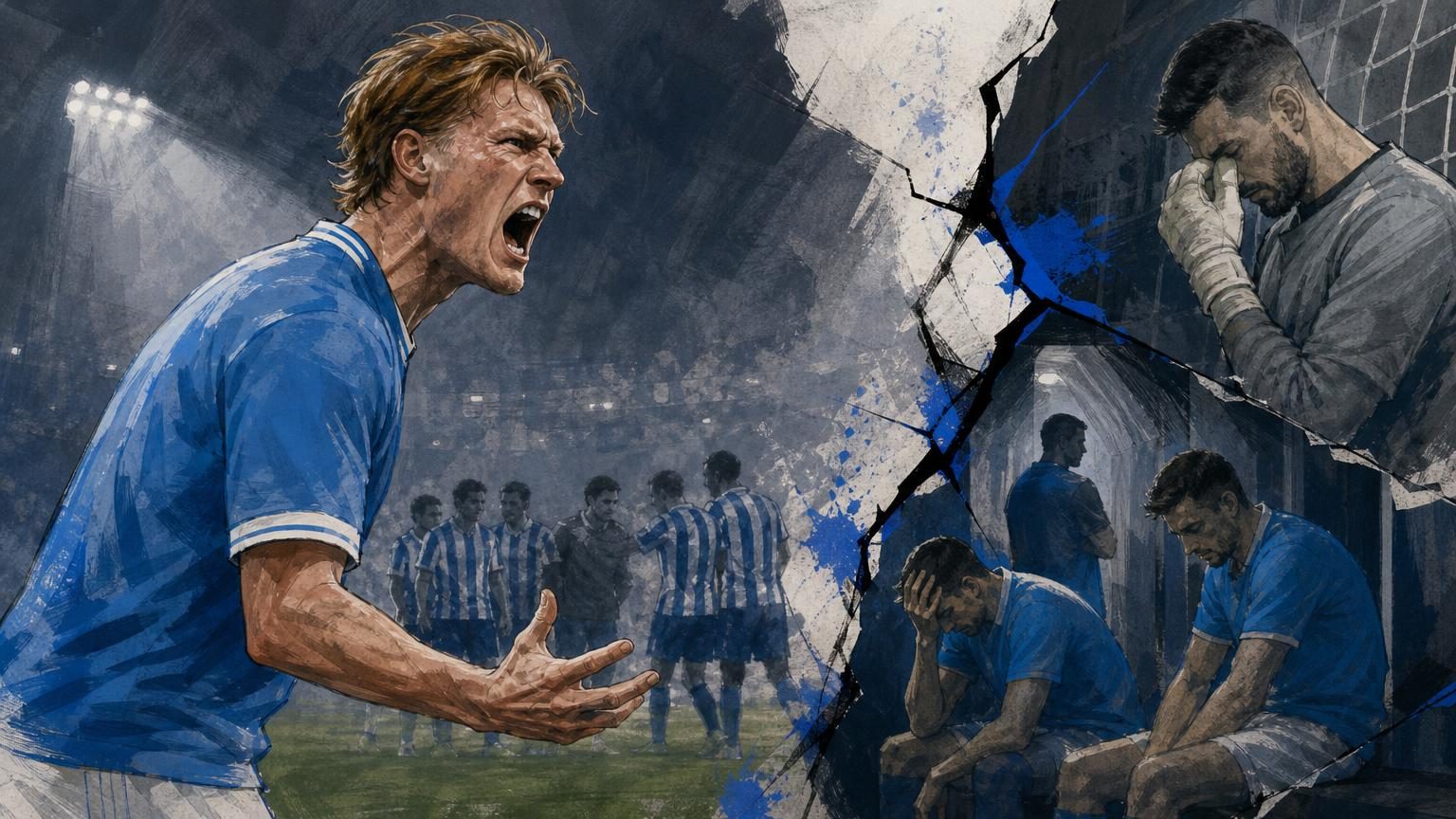
Napoli's 4-1 defeat at Porto in the Champions League was their seventh loss in 14 matches across all competitions this season, and Scott McTominay, who scored the visitors' only goal, made no attempt to soften the picture afterwards.
"Of course I'm angry. We lost 4-1 in the Champions League; there's nothing to smile about," McTominay told CBS Sports, in comments reported by Football Italia.
Why the same legs keep breaking down
McTominay's explanation centred on one structural problem rather than a single tactical failing: a squad stretched so thin by injuries that the same players are being asked to carry matches every few days.
He said Napoli have "a lot of important players you can't change," including attacking options, and that the gap caused by repeated absences is compounded by a schedule that offers no recovery window between fixtures.
That distinction matters. A coach can adjust a press trigger or a defensive block between games, but he cannot manufacture fresh legs for a front line playing the same eleven minutes over and over inside a three-day turnaround.
Fatigue of that kind rarely shows up as a single error. It shows up as a drop in pressing intensity in the final twenty minutes, in slower recovery runs after losing the ball, and in defenders arriving a half-step late to second balls — all symptoms consistent with a team that conceded three times after half-time having led through McTominay's early goal.
A collapse that outran the scoreline
Napoli held their own for the first half in Porto before the match turned entirely in the second period, the kind of pattern that tends to accompany a team losing its structure rather than simply being outplayed from the first whistle.
Football Italia also reported an ugly confrontation between Lorenzo Lucca and Kevin De Bruyne during the game, a detail that points to friction inside the team rather than purely a tactical breakdown against Porto's attack.
McTominay was careful not to use the injury list as a full excuse. "First and foremost, we need to do better, injuries in football are part of it, but we have too many," he said, acknowledging that squad depth problems do not absolve the players on the pitch of responsibility for how they defended the second half.
A dressing room splitting along national lines
The unrest was not confined to the pitch. Matteo Politano used his post-match interview to criticise teammates who avoid speaking to the media after defeats, a complaint with a pointed edge.
"It would be nice if a few other teammates came here to give an explanation and not just us Italians, but never mind," Politano said, as reported by Football Italia.
That comment, set alongside the Lucca-De Bruyne clash, suggests the strain at Napoli is not solely about missing personnel or an overloaded fixture list. A squad under pressure needs its senior players visible and accountable; Politano's remark implies that burden is falling unevenly, with only some nationalities within the squad willing to face questions when results go wrong.
For a club built this season around integrating high-profile new signings such as De Bruyne alongside holdovers like McTominay and Politano, that kind of fracture is corrosive in a way no amount of squad rotation can fix on its own. Tactical cohesion depends on trust between teammates in transition moments — covering a gap, communicating a defensive switch — and that trust is harder to sustain when friction is spilling into public view.
Napoli now face the task of stabilising both problems at once: nursing an injury list that McTominay says has left them without recognisable rotation options, and repairing a dressing room where, by Politano's own account, not everyone is pulling in the same direction when things go wrong. Neither is solved on the training pitch alone, and both will shape how Napoli respond in their next matches in Serie A and the Champions League.