
Amorim's frustration with Milan's fringe players exposes a deeper rotation problem
Gazzetta dello Sport reports eight Milan players drew Ruben Amorim's ire after the Ferencvaros defeat, a result that highlights the risks of squad rotation under pressure.
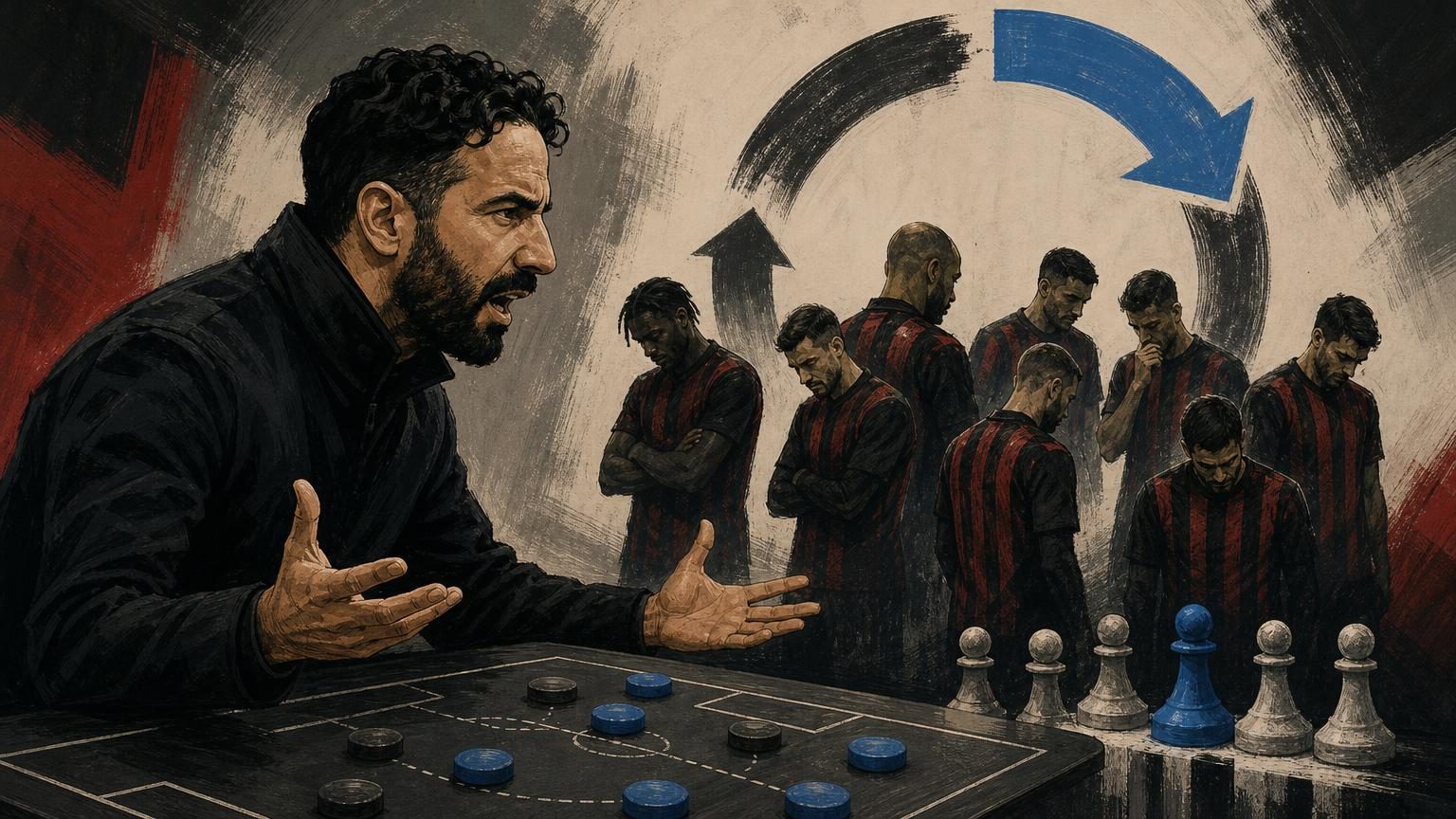
Milan's 2-0 home defeat to Ferencvaros in the Europa League has left Ruben Amorim naming names, with La Gazzetta dello Sport reporting that eight players angered the head coach with their attitude and performance, according to Football Italia.
The result, Milan's third Europa League defeat in four matches, leaves the Rossoneri facing a genuine threat of missing the knockout stages. In Serie A they sit fifth, a reminder that domestic form has not been the issue.
Amorim did not hide his anger afterwards. He told reporters that Milan "cannot afford to do something like this, especially in the first half, in front of our fans, at our home," adding, "We have to improve, otherwise it's over."
Why the rotation plan backfired
Gazzetta's report, relayed by Football Italia, names Alphadjo Cisse as a particular source of frustration. The Italy international was hauled off at half-time despite having been rested for the Derby della Madonnina days earlier — the exact kind of fixture where a rotated, rested player is expected to repay the manager's trust with a strong display.
That he did not is precisely why Amorim is said to have been annoyed: the whole logic of resting a player for a derby is that he arrives fresher for the next match. When the freshness does not translate into performance, the rotation itself starts to look like a wasted substitution of effort rather than a tactical refresh.
Bartesaghi, Terracciano, Jashari and Musah are also identified as players who failed to show the right attitude. All four fall into the bracket of squad players used to manage fixture congestion, and their collective underperformance suggests a deeper issue than individual error: a group not fully bought into matches outside the first-choice framework.
The second-half decline nobody fixed
What appears to have troubled Amorim most is the shape of the match itself. Milan's performance reportedly worsened after half-time, even once he introduced senior figures such as Mario Gila, Luka Modric and Christian Pulisic from the bench.
In theory, bringing on experienced regulars in a trailing position is meant to stabilise a side defensively and sharpen its attacking transitions — fresh legs pressing higher, more composed passing under pressure, better control of tempo. That none of this materialised, with Ferencvaros instead extending their lead through Lenny Joseph, points to a breakdown in collective organisation rather than a single individual's failing.
A team that gets worse after introducing recognised quality typically has a problem that sits above personnel: communication between units, pressing triggers not being followed, or a defensive line failing to compress space as the opposition grows in confidence. Gila's role in Ferencvaros's second goal, scored under his pressure, fits that pattern of a backline being pulled apart rather than simply beaten by a moment of individual brilliance.
What Amorim needs from Genoa
The timing compounds the problem. Milan have one more Serie A fixture before the international break, away at Genoa, and Football Italia frames it as a match that demands a response to shake off the European disappointment.
For Amorim, the challenge is man-management as much as tactics. He has to decide whether to persist with rotation ahead of a demanding winter schedule or lean more heavily on the regulars who, even as substitutes against Ferencvaros, could not arrest the slide. Trusting the fringe players again so soon risks repeating the same pattern if their attitude does not change; freezing them out risks overloading his first-choice XI before the fixtures pile up further.
Either way, the Genoa match offers an immediate test of whether the dressing-room reaction Gazzetta describes translates into a sharper, more committed performance, or whether the same attitude problems resurface in a competition where Milan can less afford them.