
Amorim says Milan's late collapse against Atalanta does not erase progress
After Milan surrendered a 3-0 lead before winning 3-2, Ruben Amorim defended his side's development and explained a tense touchline exchange with Adrien Rabiot.
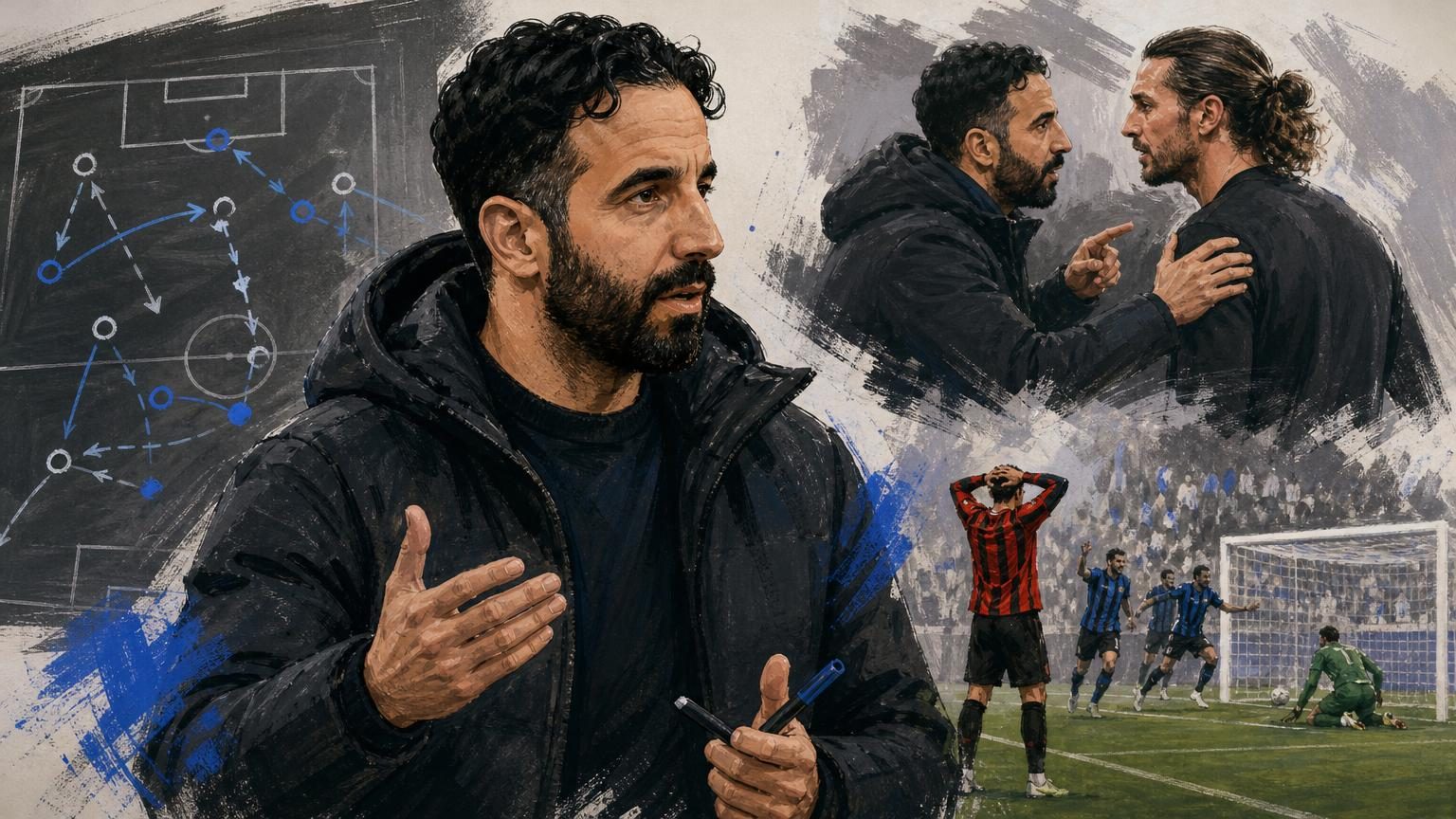
Milan beat Atalanta 3-2 at San Siro on Saturday, but the story of the night was how close they came to throwing away a three-goal cushion, and what that says about a team still being rebuilt under Ruben Amorim.
Goncalo Ramos, Adrien Rabiot and Mario Gila had the hosts 3-0 up, with Ramos also seeing a penalty saved by Marco Carnesecchi, according to Football Italia. Atalanta then clawed back through Gianluca Gaetano and Nikola Krstovic, and only a late save by Mike Maignan to deny Davide Zappacosta preserved the win.
A three-goal lead turned nervy finish
Speaking to DAZN Italia and Sky Sport Italia after the match, Amorim separated the result from the performance, telling reporters the collapse in the closing stages should not overshadow broader gains he had already flagged after the win over Sassuolo.
He pointed to a shift in control rather than a physical issue: Milan, he said, had been dominating and closing in on a fourth goal before conceding their first, only for mistakes in the build-up to invite Atalanta back into the game.
That detail matters tactically. A team that is the better side for 70 minutes and then concedes twice in half an hour has usually not been outplayed physically — it has lost its shape or its composure, and Amorim's own framing points squarely at the latter.
Amorim diagnoses a mental shift, not fatigue
Amorim was explicit that fatigue was not the root cause. He said the team grew afraid of conceding at the exact moment it should have been pushing for a fourth goal, and that he brought on fresh midfielders to try to settle things, but the anxiety spread beyond the players and into the stands.
That is a specific and uncomfortable admission from a head coach: not that his players tired, but that they flinched. It suggests Milan's issue against Atalanta was less about Amorim's system breaking down structurally and more about a squad still learning how to see out matches once control is established.
The context helps explain why Amorim is keen to stress continuity rather than crisis. Milan had thumped RB Salzburg 4-0 away in the Europa League on Thursday with a heavily rotated side, a result Amorim credited to the squad's work rate even as he acknowledged that changing how the team presses takes time.
He said the players are starting to read the moments to press more accurately, and that positioning becomes easier once that timing clicks — a theme that connects directly to Milan's evolving defensive structure.
The Rabiot flashpoint and Milan's evolving shape
The sharpest moment of tension came with Rabiot, who had been booked for dissent and looked visibly frustrated before Atalanta's first goal. Television cameras caught an exchange between the midfielder and his coach on the touchline.
Rabiot later told Sky Sport Italia he was angry about Milan's second-half display and said the substitutes needed to offer more. Asked directly whether he had considered replacing his midfielder after the yellow card, Amorim said he had spoken to Rabiot at half-time, calling him an important and experienced player who understands he cannot contest every decision once booked.
Amorim added that he would have substituted Rabiot had he sensed another foul was likely to produce a second yellow, but said he did not feel that risk at the time — a judgement call that, in hindsight, held up, since Rabiot finished the match.
Beyond the individual moment, Amorim pointed to the bigger structural picture: Milan are still settling into a hybrid system built around a back three, with wide players dropping in to add defensive cover when needed. The late Atalanta surge is, in that reading, a symptom of a system still being bedded in rather than evidence it is failing.
Taken together, Amorim's comments frame Saturday's result as consistent with a team in transition — capable of dominant spells and heavy away wins, but still vulnerable to lapses in composure once a lead needs protecting. How Milan manage those closing stages will be the clearer test of whether the improvements he describes are taking hold.