
Amorim's Milan crisis of consistency exposed again in Europa League collapse
A 2-0 home defeat to Ferencvaros days after thrashing Inter has left Ruben Amorim without answers, and points to a deeper problem in how Milan manage two competitions at once.
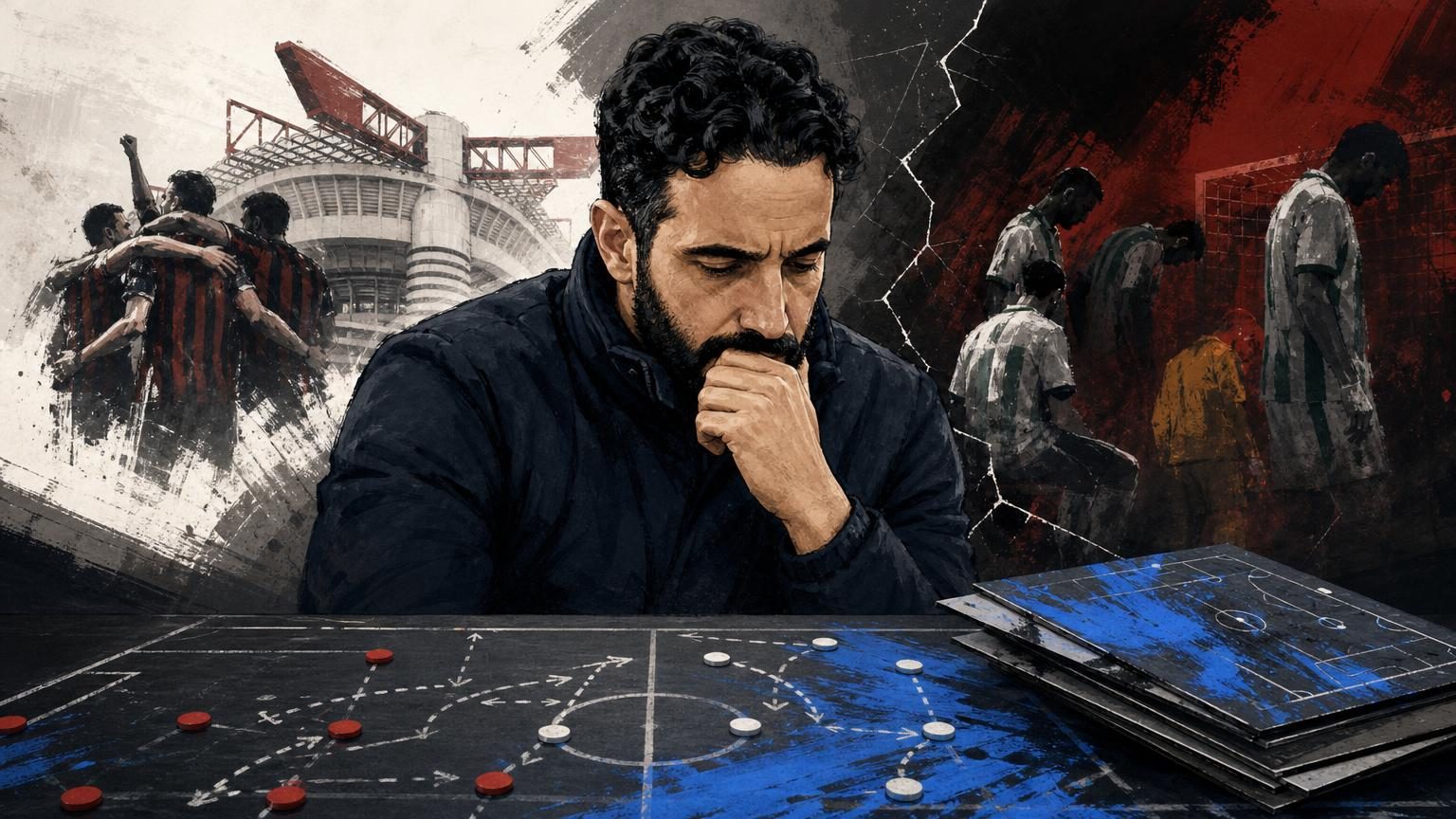
Ruben Amorim could not explain what he had just watched. Milan lost 2-0 to Ferencvaros at San Siro on Thursday, four days after beating Inter 3-1 in the derby at the same stadium, and the Portuguese coach offered no defence of his team, telling Sky Sport Italia there was "no explanation" for the performance, according to Football Italia.
Lenny Joseph scored both goals for the Hungarian side, pouncing on defensive and goalkeeping mistakes to beat Lorenzo Torriani, the 21-year-old standing in for suspended Mike Maignan and injured Pietro Terracciano. It was Milan's third defeat in four Europa League group matches this season.
A pattern that predates this squad
What makes the result harder to dismiss as a one-off is that Amorim himself connected it to last season, saying he had already seen Milan show "similar problems" before he arrived. That matters analytically, because it shifts the explanation away from a single bad performance and towards something structural in how this group handles competitions beyond Serie A.
Squad rotation is the obvious mechanical culprit. Amorim rested Strahinja Pavlovic, who had played almost every minute of the season, and admitted the team missed him. Rotation itself is not the issue; every coach managing two fronts has to manage minutes. The problem, as Amorim framed it, is that those coming in did not raise their level to compensate, and he was blunt that there were "no excuses" for that shortfall.
Why the gap between games is so stark
The contrast with the derby is instructive. Milan dismantled Inter with intensity and precision days earlier, suggesting the players are capable of executing Amorim's demands when fully primed. Against Ferencvaros, he described a team that was not "prepared to play football," citing poor concentration, unforced errors and weak contests for second balls — the loose-ball duels after long passes or clearances that determine who regains possession in transition. Losing those consistently cedes territory and invites exactly the kind of mistakes that led to Joseph's goals.
This is not simply about fatigue from playing every three days, though Amorim raised that too. It is about a drop in collective attention that a coach can set up for in training but cannot fully guarantee once his back is turned on matchday. His own admission that "Probably I didn't do enough to make sure the team was ready" points to a gap between tactical planning and the psychological readiness of a squad still learning his methods.
The absence of both senior goalkeepers added fragility to a backline already shaken by concentration lapses. Torriani, deputising for Maignan and Terracciano, was beaten twice in a match where Milan's defending in transition had already invited pressure. A young goalkeeper making only his handful of appearances is more exposed when the structure in front of him breaks down, and Amorim's complaint about defensive errors suggests communication and positioning, not individual quality, were the issue.
Amorim was careful not to use the injuries as a shield. He said the team "ought to have won with those who started too," rejecting the idea that absences alone explain a result this poor. That is a significant admission from a coach: it locates the failure in application rather than personnel.
What comes next for Milan in Europe
With three defeats from four games in the Europa League league phase, Milan's path beyond the knockout play-off stage in January already looks difficult. Amorim said he would keep competing "just like the others" for as long as qualification remains mathematically possible, while making clear Serie A is his priority. The immediate challenge is less tactical than habitual: finding a way to carry derby-level intensity into midweek fixtures that, results suggest, Milan under Amorim and before him have consistently failed to take seriously enough.
The coach's own diagnosis was the most damning part of his assessment. Rather than pointing to a single system failure, he described a team unwilling to show the courage needed when games are not framed as must-win occasions. Fixing that is a question of culture as much as coaching, and Amorim conceded he does not yet have the answer.