
Amorim keeps Milan's shape a secret before Atalanta test
Ruben Amorim rotated heavily after thrashing Salzburg and says his side's true quality has been better than the scoreline suggested, declining to reveal his plan against Atalanta.
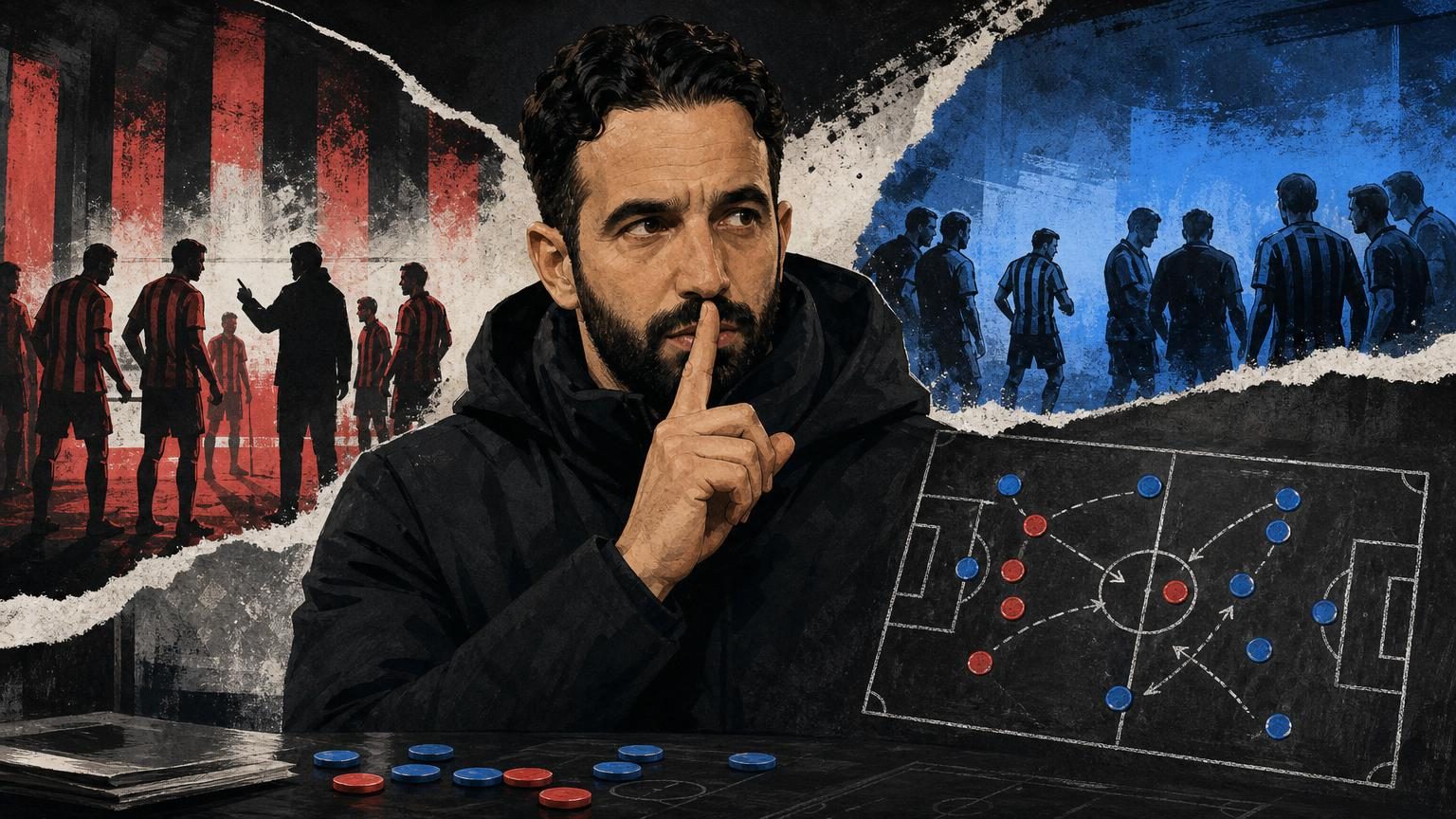
Ruben Amorim made wholesale changes to his Milan side for Sunday's Serie A meeting with Atalanta, just three days after a 4-0 Europa League win away to RB Salzburg built on a hat-trick from 19-year-old Alphadjo Cisse, according to Football Italia.
Cisse, whose treble in Austria had been reported by the Guardian as the headline act in Milan's rout, was benched for the Atalanta game despite his midweek form. Amorim explained that he does not pick players purely on the back of a previous result, noting that Cisse is not used to playing matches in quick succession and needs to be managed carefully.
That reasoning points to a squad-management logic rather than a tactical demotion. Amorim is treating Cisse as an impact option rather than an automatic starter, a stance that suggests he sees games in isolation, assessing opponents individually rather than running the same approach simply because it worked last time out.
Why Amorim won't show his hand
Asked directly about his formation before kick-off, Amorim refused to clarify whether Milan would set up in the back three some have described, or the 4-3-3 with Diego Moreira at left-back that the club's official website lists as the base shape. He told Sky Sport Italia and DAZN Italia that it would become obvious once the match started, adding that he did not want to hand Atalanta any advance notice.
That ambiguity is not simply coaching mind games. Milan's build-up under Amorim appears flexible enough that full-backs or wing-backs can occupy different roles depending on the player chosen, which is why observers have read the same side two different ways. Moreira's selection at left-back, alongside the returns of Luka Modric, Mario Gila and Goncalo Ramos after they were rested in Austria, points toward a core Amorim trusts for Serie A fixtures even as the Europa League squad rotates around it.
Amorim was explicit that finding the right pressing triggers and spacing would matter more than any one system label against Atalanta, whom he singled out for their fluid movement and strong combination play. He said Milan need to be smart in picking the moment to press and in occupying the right areas to win the ball back, rather than relying on a fixed structure to do that work for them.
A table-topping campaign still missing consistency
Milan arrived at the fixture unbeaten in Serie A this season, but Amorim was candid that the run has included performances well below the level his team is capable of, which is why points have been dropped along the way. He argued that Milan have actually played better games than the one that produced four goals in Salzburg, framing the scoreline there as flattering rather than representative.
That distinction matters for how outside observers should read Milan's form. A heavy win away to Salzburg is a result marker; Amorim's own assessment is that underlying performance level, not the scoreboard, is the more honest gauge of where his team stands. He pointed to a lack of consistency in small details as the gap between unbeaten status and a position that reflects the quality he believes is there.
Amorim added that preparation for the Atalanta game had gone well and that he felt the team continues to improve, while repeating that Milan are still early in building an identity under him. He was careful to frame every fixture as carrying equal weight, saying the aim was to win this match and then the next two as well, rather than treating any single result as decisive.
Milan's longer-term injury list offered no flexibility for further rotation beyond what was already planned. Alexis Saelemaekers and Matteo Gabbia remain unavailable over an extended period, meaning Amorim cannot lean on them to manage the fixture list the way he has used Cisse, Modric, Gila and Moreira as rotation pieces between European and domestic football.
The approach leaves Milan's younger forward as a player being protected rather than entrenched, and leaves the shape against Atalanta deliberately unclear until kick-off. Amorim's own framing suggests he is less concerned with public clarity over his system than with closing the gap between performance level and results that have so far kept Milan unbeaten but short of where he believes the team should be.