
How Andy Carroll's collision with De Gea became a turning point
A bruising corner-kick collision between Andy Carroll and David de Gea at Upton Park in April 2013 did more than produce a stoppage-time talking point — it marked a shift in how United's young goalkeeper was perceived.
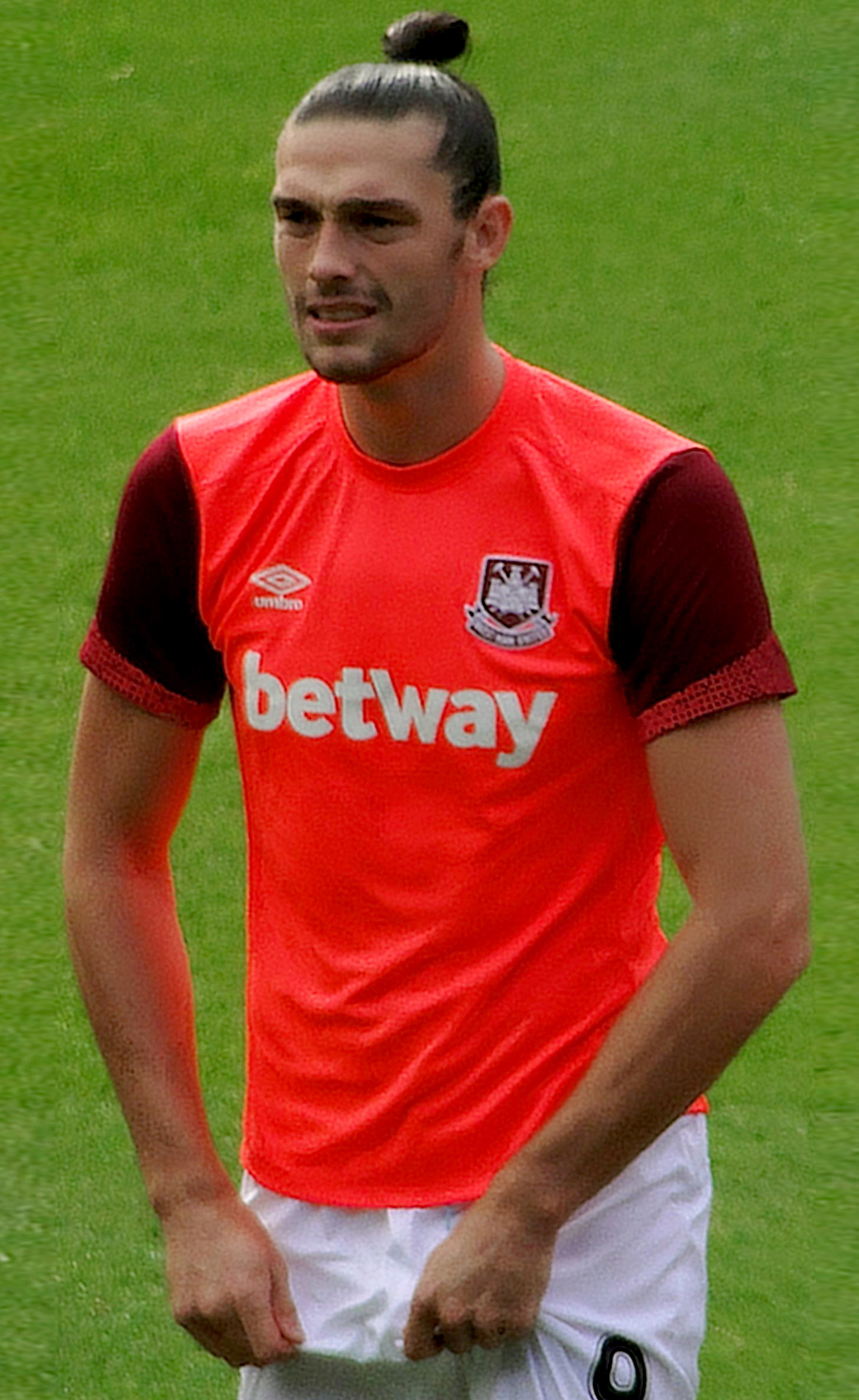
West Ham drew 2-2 with Manchester United at Upton Park in April 2013, a match remembered less for Ricardo Vaz Te's and Antonio Valencia's goals than for a single aerial collision, Planet Football recalls.
Andy Carroll, West Ham's target man under Sam Allardyce, charged through a floated corner and smashed into David de Gea, sending the United goalkeeper flying and catching Patrice Evra in the process.
Why Carroll was West Ham's aerial weapon
Allardyce built his West Ham side that season around direct delivery into the box, with Carroll as the focal point of nearly every dead-ball situation. The logic was simple: win the aerial duel, create chaos, let a striker built for exactly that kind of contest finish the job.
That approach placed enormous physical demands on opposing goalkeepers, who had to compete not just for the ball but against a forward whose entire value lay in using his size and momentum to dominate the six-yard box. Carroll's run for the corner that led to the collision was a product of that system working as intended, even if the outcome went beyond a standard aerial challenge.
De Gea, in his second season after joining from Atletico Madrid in 2011, was still being judged against a very different model of goalkeeping — one built on reflexes and shot-stopping rather than physical dominance of the penalty area. Planet Football notes that much of the commentary around him at the time focused on his slight frame, which made him an obvious target for a side built to exploit exactly that kind of mismatch.
The collision that tested De Gea's authority
The flashpoint divided opinion immediately. Sir Alex Ferguson was unequivocal afterwards, saying, "It was a red card, there is no doubt about that." He added that the referee had seen the incident but failed to punish it as such, arguing, "The referee did see it but he didn’t see it as a red card. We know how West Ham play, it’s ball-in-the-air most of the time and you’ve got to defend those things." Ferguson went further still, saying, "They are very, very aggressive as we’ve seen tonight. You hope there’s a strong referee. I’m not so sure we got that tonight."
Allardyce rejected that reading entirely. "I think at the very most it is a yellow card," he said, before reaching for an unusual comparison to make his case: "Carroll is committed to try and go to the header and cannot stop. As you see in your code on the road, if you are travelling at 60mph it takes 300 yards to stop. That happens."
Carroll himself offered a simpler defence to Sky Sports. "I just went for the ball and obviously went through De Gea, but I just went for the ball and that’s all it was," he said, before adding, "I was running straight in trying to get the ball and couldn’t stop at that moment, obviously the keeper has come and won it and I couldn’t stop when I was flying through the air."
The disagreement between the two managers reflects a familiar tension in English football over where the line sits between committed aerial challenges and reckless endangerment of a goalkeeper. Carroll was never booked for the incident, and the game continued as a contest between United's possession-based approach and West Ham's willingness to go long and direct whenever the ball reached their forward.
How the incident reshaped De Gea's standing
Planet Football's account frames the collision as a pivotal moment in De Gea's early career at Old Trafford, arguing that his willingness to get up and continue after being flattened changed how he was treated by opponents and pundits alike. Subsequent attempts by Carroll and Kevin Nolan to unsettle him in the same match were dealt with, in the outlet's description, far more comfortably.
Whether a single collision can be credited with transforming a goalkeeper's standing is a harder claim to verify than the collision itself, but the broader trajectory is not in dispute. De Gea went on to make 545 appearances for United before leaving in 2023, and won the club's Player of the Year award on four occasions during that span.
Ferguson's United won the Premier League title that season, their last under his management, with De Gea established as first-choice goalkeeper. The Upton Park draw sits as a minor footnote in that campaign, but as a snapshot of the physical examination facing a young, slightly built goalkeeper in English football during that era, the Carroll collision remains one of the more vivid.
West Ham, for their part, continued to rely on Carroll's aerial presence as a central pillar of Allardyce's approach for the remainder of that campaign, with set-piece delivery into the box functioning as one of the side's most reliable attacking outlets.