
Atalanta's collapse against Parma exposes a team that cannot hold a lead in its head
A 3-0 home defeat to Parma has pushed Atalanta into a training retreat, with Maurizio Sarri admitting his side's problem is no longer tactical but psychological.
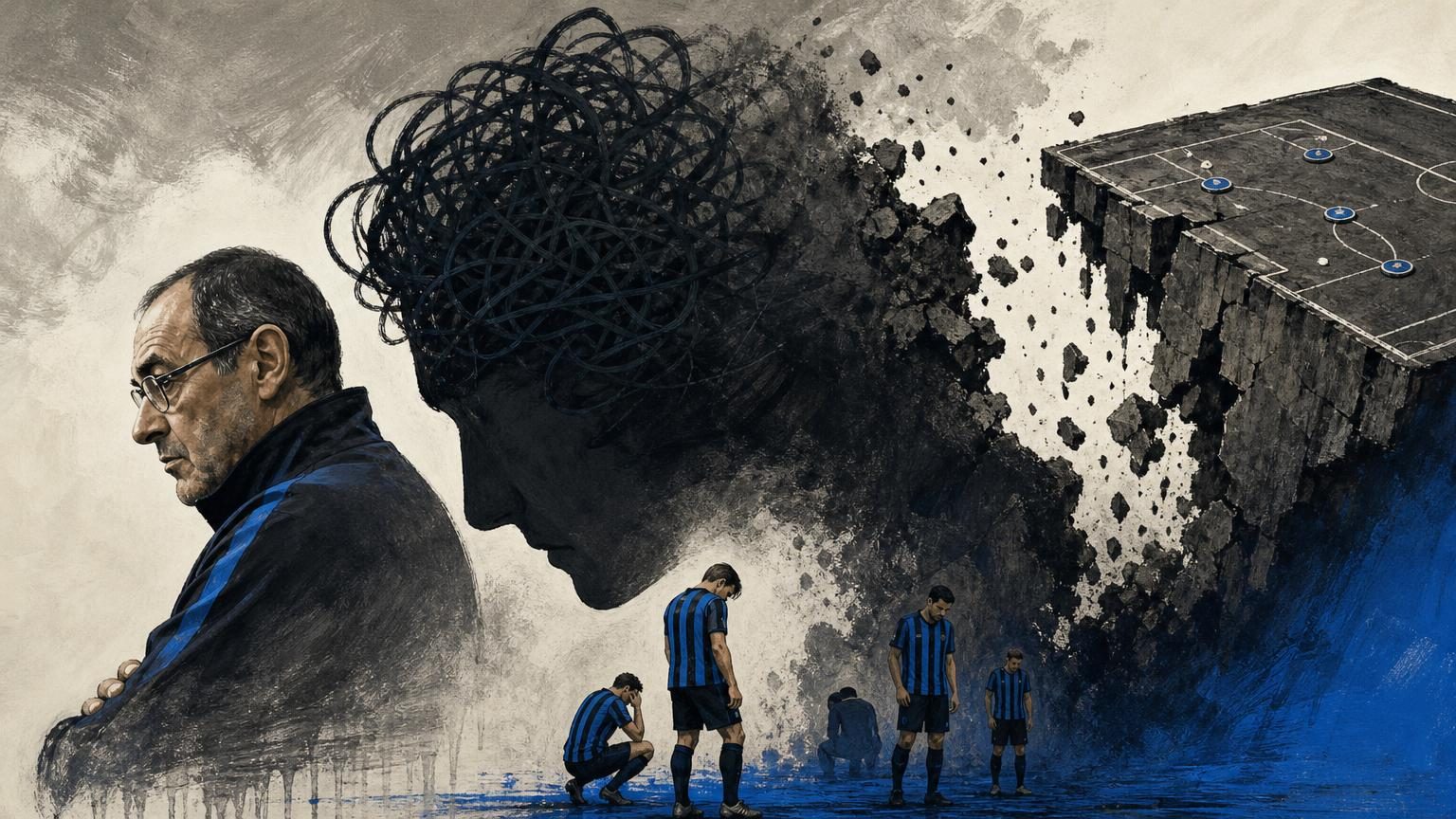
Atalanta will spend the coming days at a training retreat after a 3-0 home defeat to Parma left them without a win in four Serie A matches, Football Italia reports.
The result leaves La Dea with 11 points from ten league games, 13th in the table, having won just once in their last five fixtures. They have scored 16 goals this season and conceded 20, a return that places them closer to a relegation fight than the European places Atalanta have grown used to occupying.
Maurizio Sarri told reporters, via Gazzetta, that his side had been the better team for most of the contest before conceding control. "The first 40 minutes were high-level; we had the game in our hands. Then we conceded from a set piece, and we paid a high price. It's hard to accept that second half," he said.
Control without conversion is becoming the pattern
Sarri's account points to a specific and repeating failure: Atalanta are managing to dominate long stretches of matches without turning that dominance into a secure result. Holding the run of play is not the same as holding a lead, and a side that cannot defend a set piece while on top is vulnerable precisely when it should be most comfortable. That is less a question of system than of composure under pressure, and Sarri frames it that way himself.
Sarri was explicit about where he places the blame. "I apologise to the fans and the club; we can't be so fragile in defence and in our heads. It's better to go on a training retreat for some days," he said. Asked to characterise Parma's approach, he added: "It wasn't about Parma's courage; it was about our fear."
That framing matters. A coach identifying fear rather than a tactical mismatch as the cause of a collapse is describing a mental rather than a structural problem, one that training-ground work on shape or pressing triggers is unlikely to fix on its own. Sarri's own summary of the second half reinforced this: "We controlled the game, and we had time to turn things round. On the other hand, we got irritable, and that's how it ended."
He went further on the scale of the issue, saying he felt "indebted to this club" and wanted to pull the squad out of its current run, before adding: "Honestly, I didn't expect this fragility from the group, while other difficulties were predictable." That line is notable from a coach who arrived last summer alongside sporting director Cristiano Giuntoli — it suggests the drop-off caught the new regime by surprise rather than confirming a known weakness.
Four winless games turn scrutiny on the new regime
Atalanta's players were booed at the final whistle, and Giuntoli confirmed the training retreat decision to reporters. "We apologise to our fans; the second half was unacceptable," he said, before outlining the immediate response: "Now we need to keep our heads down and keep working hard. Starting tomorrow, we'll all head to training camp."
Asked directly whether Sarri's position was under threat, Giuntoli did not deflect the question. "We are all under scrutiny these days," he said — an answer that applies the pressure to the sporting project as a whole rather than isolating the head coach, given that both men joined the club in the same summer rebuild.
The points-per-game return of roughly 1.1 across ten matches, and a negative goal difference of minus four, are not figures consistent with a side simply suffering bad luck in front of goal. They describe a team conceding more than it should relative to the chances it creates at the other end, which is why Sarri's language has shifted from tactical detail toward basic defensive discipline and temperament.
A congested week offers an immediate chance to respond
There is no time for the retreat to be a long one. Atalanta host Kairat in the Conference League this Thursday, meaning the training camp Giuntoli described has to double as preparation for a European fixture just days after a damaging domestic result. That compresses the usual window clubs use to reset after a heavy defeat into a matter of hours rather than a full week.
How Atalanta respond against Kairat will be the first real test of whether Sarri's diagnosis — fragility in defence and in the head, rather than a tactical breakdown — can be addressed quickly enough to halt the winless run before it stretches into a fifth game without a win domestically.