
Benitez: Italy's problem is defending, not a shortage of talent
Rafa Benitez tells Gazzetta dello Sport that Italy has the players to compete but has lost the defensive culture that once defined its football, pointing to a tactical shift since 2019.
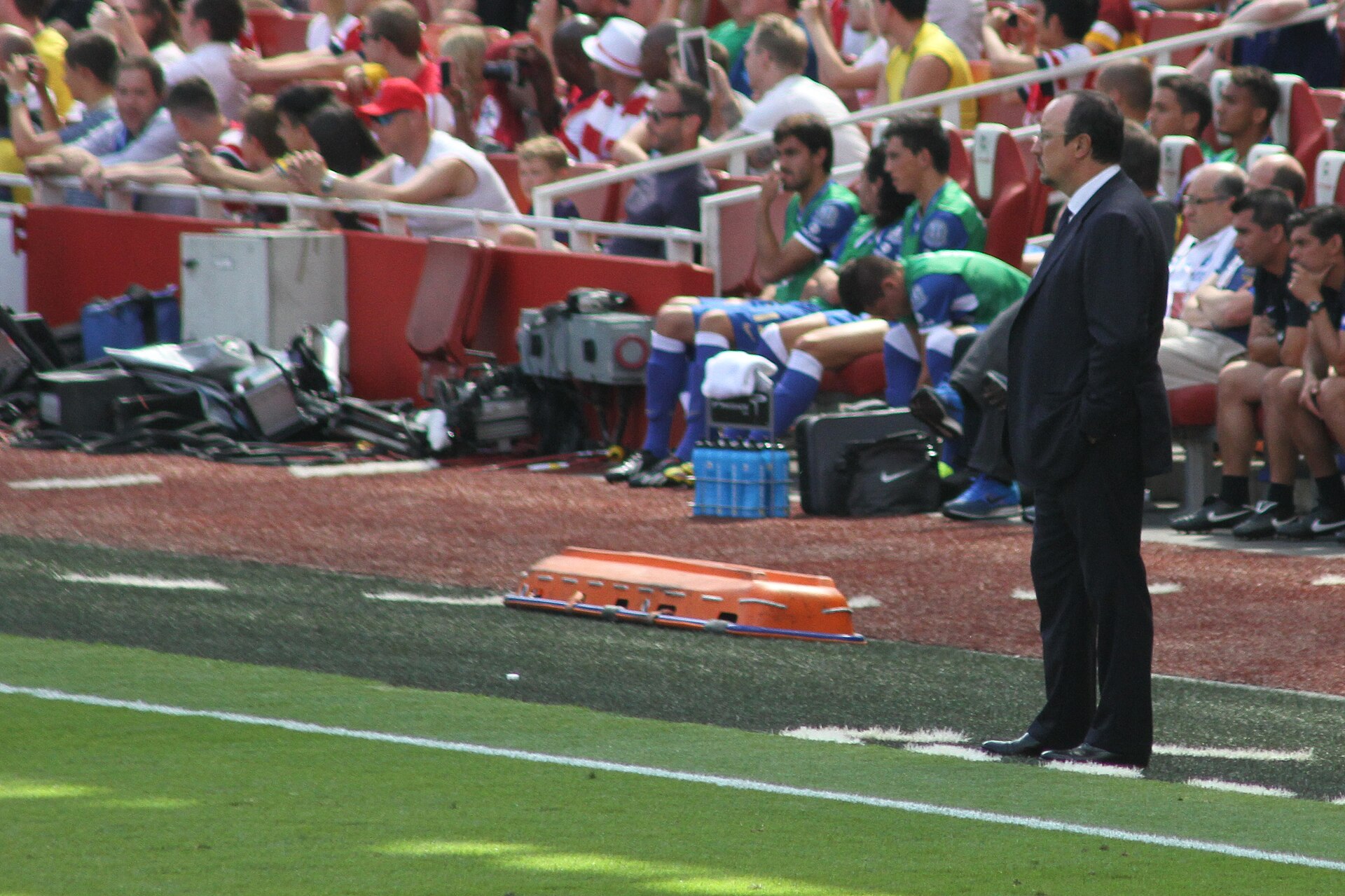
Rafa Benitez believes Italian football's struggles are not down to a lack of players, but to a loss of defensive identity that once set the country apart. The former Inter, Napoli and Liverpool coach was asked by Gazzetta dello Sport whether Italy remains in crisis after a mixed week for Serie A clubs in Europe.
Four Italian sides lost their Champions League matches in midweek, while Juventus, Milan and Atalanta won in the Europa League and Conference League respectively, according to Football Italia.
Benitez separated the issue into two strands. One is the clubs, their recruitment and their financial decisions. The other is the national team, the youth system, and the pool of talent beneath it, which he does not think is the real problem.
Why he rejects the talent shortage narrative
Benitez pointed to Italy missing three World Cups as evidence that the sport is struggling nationally, but he resisted the idea that this stems from a lack of individual quality. He said there may be no Baggio, Del Piero, Totti or Vieri at the moment, but that Italy still has players of real stature.
He named Gianluigi Donnarumma as possibly the best goalkeeper in the world, Riccardo Calafiori as an Arsenal starter, Alessandro Bastoni as a cornerstone at Inter, and Federico Dimarco as a wing-back capable of hurting opponents when he gets forward. That list, all defenders or a goalkeeper, is deliberate: it is where Benitez locates both the remaining quality and the collective failure.
Agreeing with comments previously made by Massimiliano Allegri and Fabio Capello, Benitez said Italy has lost the ability to defend as a unit, something he described as one of the hallmarks of a footballing culture that dominated for a long time. The implication is that individual quality at the back has not disappeared, but the organisation that once made Italian defending greater than the sum of its parts has eroded.
A tactical explanation, not just a cultural one
Benitez offered a concrete mechanism for that erosion rather than leaving it as a vague complaint about mentality. He traced it to a 2019 rule change allowing teams to restart play from inside their own penalty area, which he said pushed sides toward higher pressing and man-to-man marking out of possession.
The consequence, in his reading, is that defending now relies on individual duels across the pitch rather than the collective cover and compactness Italian teams were once known for. When the initial press is broken, there is no safety net behind it, and a single error can turn directly into a clear chance rather than being absorbed by the defensive block.
He cited the goal Kylian Mbappe scored against Roma as an example: one individual mistake, with no covering structure in place, led straight to the goal. For Benitez, that passage of play is not an isolated lapse but a symptom of how man-to-man defending without compactness behind it has become standard, meaning a beaten press now tends to produce a counterattack every time.
Serie A's competitive gap and the next test
On the state of Serie A itself, Benitez stopped short of calling the league uncompetitive, but acknowledged a split at the top. He said that in extreme cases, Roma, Inter, Napoli and Como are operating on different parameters from the rest, though he characterised this as more of a temporary short circuit than a structural flaw.
He pointed to the return of the Champions League in midweek as an immediate opportunity to test that view, saying the matches on Tuesday and Wednesday would provide quick answers about where Italian clubs stand against continental competition.
Asked how Italian football could recover its lost ground, Benitez's prescription was brief: invest in young players and build a balanced style of play. It is a short answer that leaves the harder work, translating that balance into a defensive structure capable of supporting the individual quality he already sees in Donnarumma, Calafiori, Bastoni and Dimarco, still to be done on the training ground rather than in a quote.