
Why Boniek sees good players, not a title-winning Juventus
Zbigniew Boniek told Radio Anch'io Sport that Luciano Spalletti's Juventus lack the collective identity of a Scudetto contender, even after ending a 35-day winless run at Lecce.
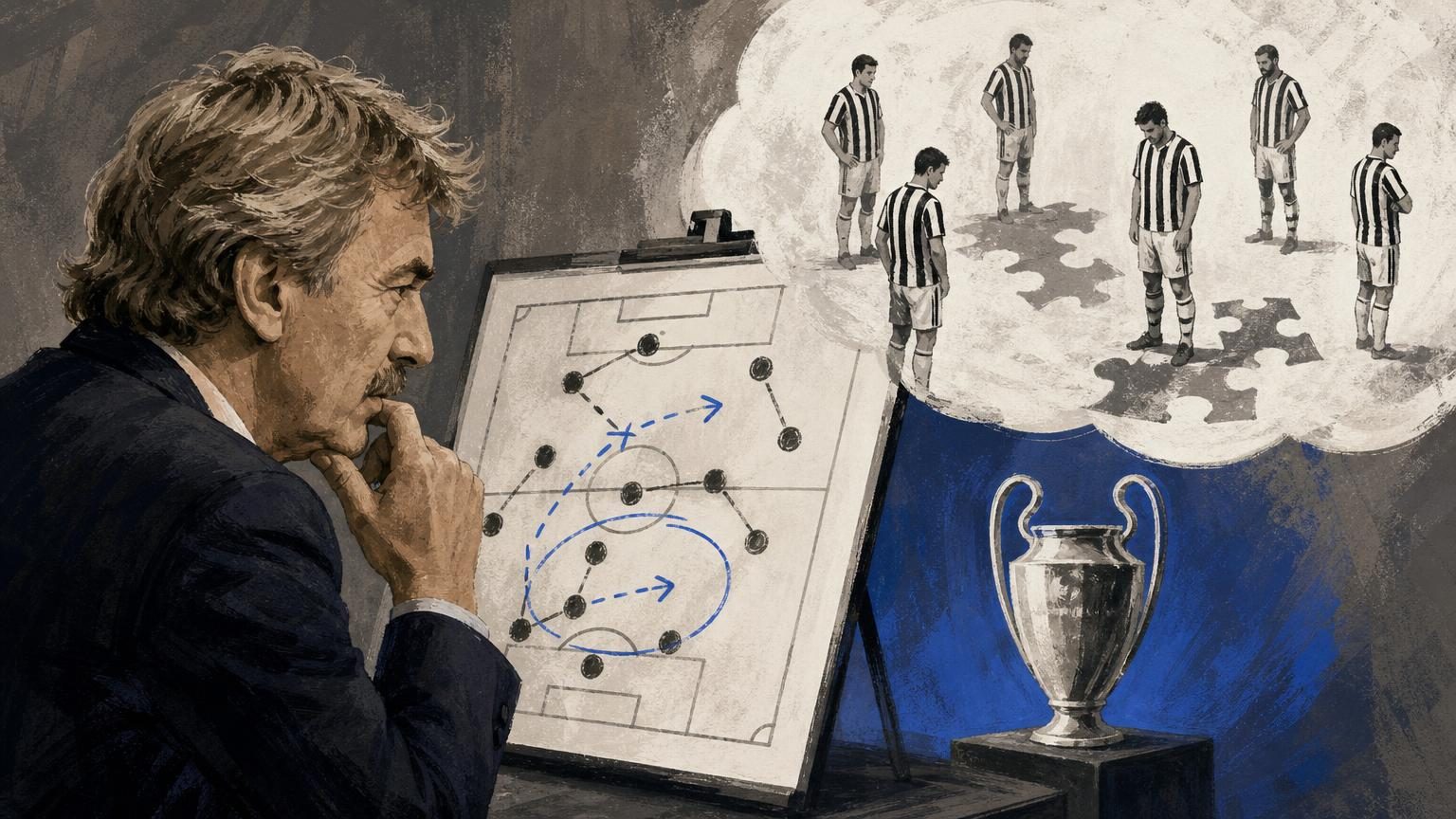
Zbigniew Boniek has delivered a blunt verdict on Juventus, telling Radio Anch'io Sport that the club he once starred for are assembling individuals rather than building a team capable of winning Serie A, Football Italia reports.
The comments followed a 2-0 win away at Lecce, Juventus's first league victory in 35 days, with goals from Weston McKennie and Douglas Luiz settling the contest before half-time.
Boniek was unmoved by the result. "I see and hear various critics, some who want Conte, some who criticise Spalletti. I'll just say that when I watch Juventus, I don't see a team of champions, just good players. And that makes the difference," he said, adding that the club are not currently in the Scudetto race and that their struggles are visible in Europe too.
The distinction between quality and cohesion
Boniek's phrase draws a line that analysts often blur: individual quality and collective organisation are not the same asset, and a squad can possess plenty of the first while lacking the second.
A team of champions, in this reading, is one whose build-up play, pressing triggers and defensive transitions are rehearsed to the point of looking automatic, so that results come from structure rather than from moments of individual class.
Boniek's claim is that Juventus right now rely on the latter, which explains why they can still beat a side like Lecce yet continue to suffer against stronger European opposition, where gaps in pressing coordination and transition defending are punished more severely.
Reading the Lecce win correctly
Boniek's scepticism about the Lecce scoreline is itself a point about how to read a result: a 2-0 away win can flatter a team if the underlying pattern of the match does not support it.
He noted that the opening goal came from a free kick, a set piece in which McKennie's movement appeared to deceive Lecce's goalkeeper, rather than from a sustained passage of open-play build-up. "The first goal came from a free kick, somewhat by chance, with the goalkeeper fooled by McKennie. It's not as if they dominated. In the past they had more quality," he said.
That distinction matters because a set-piece goal says little about a team's capacity to control territory or dictate tempo through direct, patterned attacking sequences, which is precisely the kind of control Boniek associates with genuine title contenders.
His point is not that the win was meaningless, but that ending a 35-day winless run via a dead-ball routine is a different achievement from dismantling an opponent through organised play, and conflating the two risks overstating Juventus's actual progress.
Spalletti's methods and Boniek's old grievance
Boniek also addressed Luciano Spalletti directly, poking fun at the coach's dense, elaborate way of explaining his ideas in public. "He's very demanding and particular. I've been in Italy for 44 years, and when I hear him speak on TV I have to get the dictionary out to understand what he's saying," he said.
The remark is light in tone, but it sits alongside a more serious implication: if Spalletti's tactical instructions are as intricate as his public language, the coach may be asking more of his squad's game model than the current group can execute consistently, which would align with Boniek's wider argument that Juventus look like good players rather than a coherent team.
Boniek's relationship with Juventus carries its own history. He won the Scudetto and the European Cup across three seasons at the club in the 1980s, but ties have been strained since the Calciopoli scandal, when he was openly critical of the club's management under Luciano Moggi.
That tension resurfaced in 2010, when he was among 50 former players voted to receive a star at the new Juventus Stadium, only for the club to suspend the award after supporter protests and rerun the vote, with Edgar Davids ultimately given the star instead.
Boniek chose not to revisit that episode in detail. "I'm not here to criticise my old team. Without criticising them, they gave me a star at the Stadium and then took it away," he said, before adding, "I'll stop there."
The win at Lecce lifts Juventus to seventh on 14 points, closing the gap that opened during their winless spell, but Boniek's underlying argument is about process rather than position: a team can climb the table on individual quality and still fall short of the collective organisation he believes a genuine Scudetto challenge requires.