
Cannavaro on Spalletti, Allegri and why today's strikers hunt less than his generation did
Ahead of Juventus-Napoli, Fabio Cannavaro tells Football Italia why the two coaches share a tactical approach and argues modern forwards work harder but finish less ruthlessly than his era's.
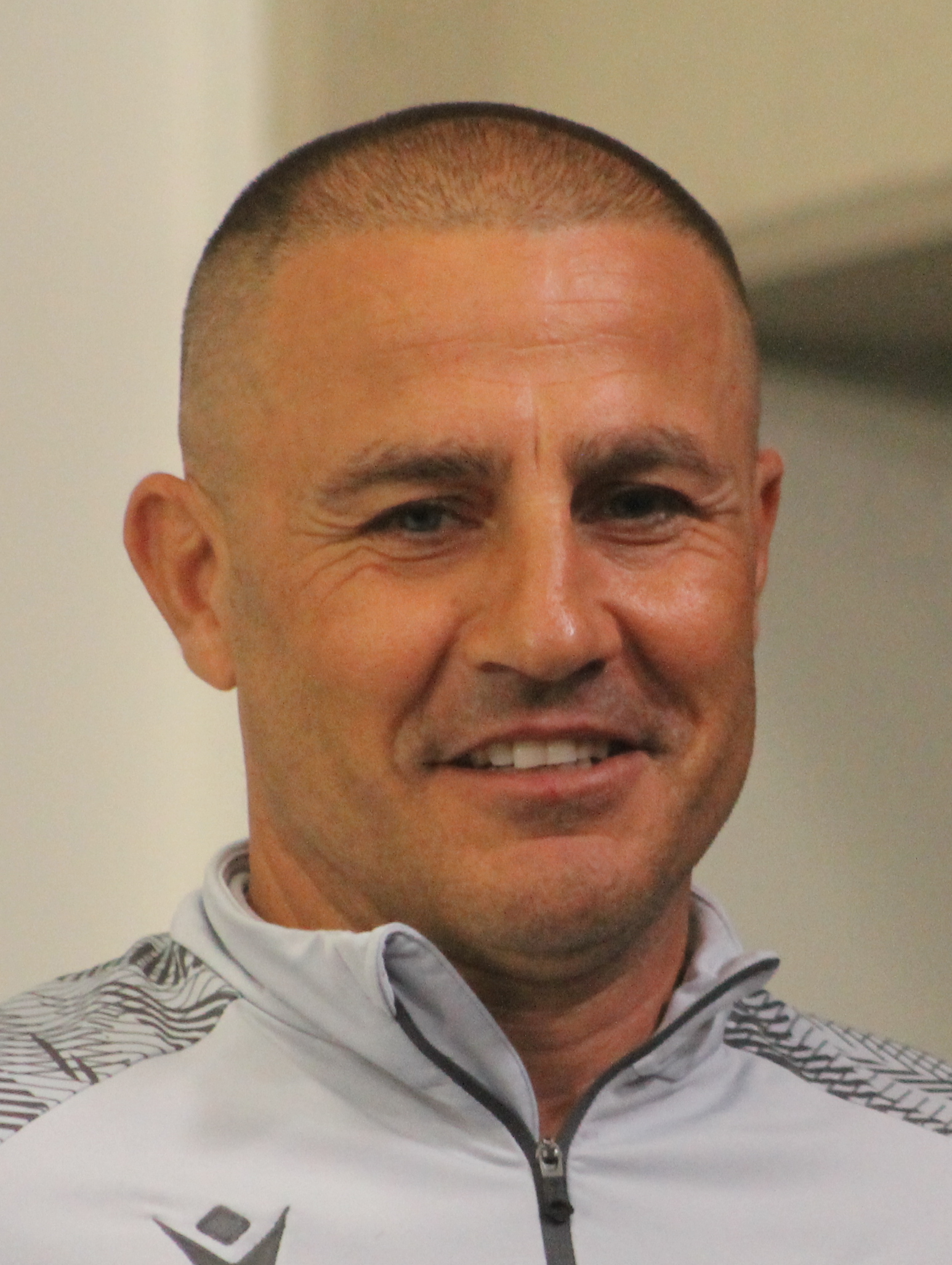
Fabio Cannavaro has drawn a direct line between Luciano Spalletti and Massimiliano Allegri, arguing the two coaches share a common approach to management even as their teams arrive at Sunday's meeting in contrasting form.
Speaking to Betsson.Sport with quotes carried by Football Italia, the former Juventus and Napoli defender previewed the clash at the Allianz Stadium, which kicks off at 20:45 CET on Sunday.
Allegri will watch from outside the technical area. He is serving the second match of a two-game ban, meaning assistant Marco Landucci takes the touchline duties again, as he did for the defeat at Genoa.
Why Cannavaro sees Spalletti and Allegri as cut from similar cloth
Cannavaro's central point is not about style of play but about adaptability. "Tactically, they're not tied to one system and they know how to adapt to their players," he said, describing both as coaches who reshape their structure around personnel rather than forcing a fixed blueprint.
That is a meaningful distinction in Serie A, where plenty of coaches are defined by a single system. Cannavaro's reading suggests Spalletti and Allegri instead diagnose what their squad can execute and build from there, which also explains why neither side's identity is easy to pin to one formation this season.
He added that both men understand the wider demands of Italian football beyond the pitch. "They know Italian football very well and everything that surrounds it: how to manage players, journalists and fans," Cannavaro said, a reference to the man-management and media pressure that shapes a Serie A season as much as any system.
The two clubs arrive level on 14 points but travelling in opposite directions. Napoli beat Monza 4-1 in midweek, while Juventus lost 2-0 at Genoa, a result that prompted Spalletti to apologise to the club's fans, as reported by Football Italia.
Cannavaro attributed Napoli's uneven campaign to a cluster of early-season injuries, while pointing to squad turnover as the issue at Juventus. "Juve, who have changed more than last year, can't find consistency," he said, framing the lack of continuity in selection as the obstacle to building a settled structure rather than any single tactical flaw.
The centre-back pairing that both sides are missing
Cannavaro, who won the Ballon d'Or in 2006 while at Juventus, reserved particular praise for Alessandro Buongiorno and Gleison Bremer, the centre-backs each club is currently missing or managing carefully.
"I really like Buongiorno because he's a real defender. He senses danger, he knows when to step up and when to be hard," Cannavaro said, highlighting the reading of space and timing that separates a centre-back comfortable stepping out of the defensive line from one who simply holds position.
He extended the same judgement to Bremer, calling both players "extraordinary" while noting the recurring fitness issues that have affected each. Buongiorno is out until the new year after knee surgery, and Bremer is a doubt for Sunday.
Their absences carry tactical weight beyond simple squad depth. A centre-back capable of judging when to press higher and when to sit allows a back line to defend proactively rather than retreating into a passive low block, which is precisely the quality Cannavaro singled out in both players.
Why he rates today's strikers as workers rather than killers
Cannavaro was notably less complimentary about the modern No.9, using Rasmus Højlund and Randal Kolo Muani as his reference points without targeting either by name as a criticism of their individual ability.
"Højlund and Kolo Muani are great workers. Football today is much faster, more intense and more athletic," he said, before drawing the generational contrast directly: "Strikers from my generation were a bit more 'killer' in front of goal. Nowadays strikers play more for the team and work a lot off the ball."
That observation points to a real shift in how the striker's role is coached. Where Cannavaro's era prized a forward whose primary output was finishing, the modern system asks the same player to press from the front, occupy centre-backs to open space for others, and link possession, functions that inevitably compete with pure goalscoring output for a striker's attention and energy.
It is a trade-off rather than a decline, in Cannavaro's framing: strikers today are asked to do more across the whole pitch, and the ruthlessness in the box he associates with his generation is partly a casualty of that broader remit.
Cannavaro, who grew up in Fuorigrotta near the old San Paolo, also reflected on his own Napoli debut as the emotional high point of his career. "I think it was the most emotional day of my life," he said. "Getting to play in Serie A for the team of your heart isn't something everyone gets to do."
Sunday's meeting arrives with both clubs level on points but Napoli carrying momentum and Juventus searching for the consistency Cannavaro identified as missing, with Landucci again deputising for a suspended Allegri at the Allianz Stadium.