
Carnevali backs Spalletti and switches to 3-5-2 as Juventus host Rennais
Juventus director Giovanni Carnevali defends Luciano Spalletti and explains the Bremer dressing-room row, as the Bianconeri shift formation to finally pair Nick Woltemade with Randal Kolo Muani.
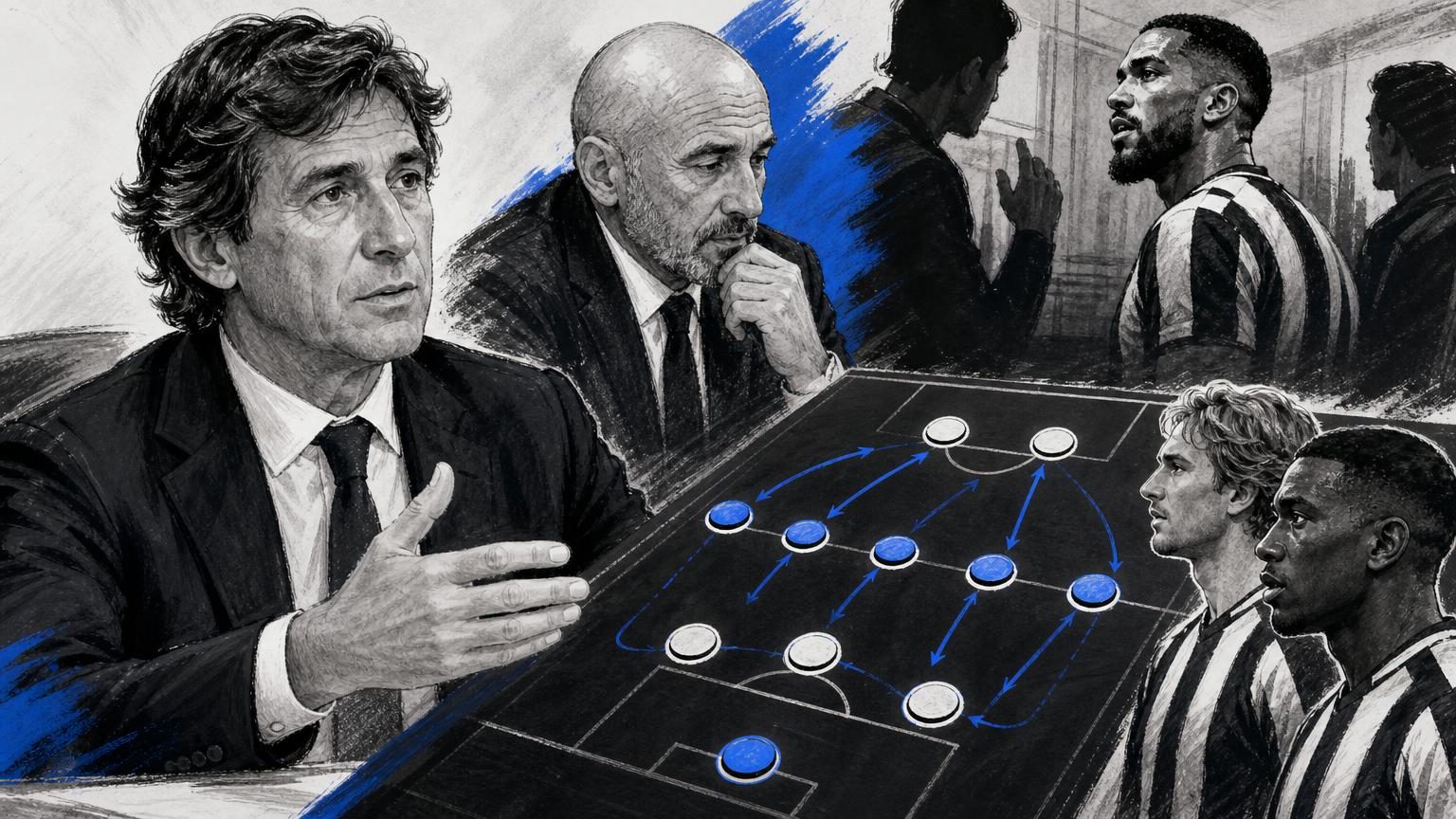
Giovanni Carnevali has thrown his weight behind Luciano Spalletti ahead of Juventus' Europa League meeting with Stade Rennais, while also addressing the fallout from Bremer's criticism of teammates after the 3-0 home defeat to Lazio.
Carnevali, speaking to Sky Sport Italia and reported by Football Italia, said the squad and captain had cleared the air after Bremer accused some players of "hiding" under pressure during that Serie A loss.
"We talked to the players and reproached Bremer, because what he said was not right, he too spoke to the squad and cleared the air," Carnevali said. "It is natural for us to work with and support the coach."
That defeat to Lazio sits oddly alongside Juventus' Europa League form, where they lead their group after a 5-0 win over NEC Nijmegen and a 2-1 comeback victory at Celta Vigo. Carnevali framed the gap between competitions as the club's central problem.
"I think the important thing is consistency, because we alternated some good games with clearly negative performances," he said, adding that Juventus want "the maximum concentration" to carry the Europa League results into the league.
Why Carnevali points the finger at the summer, not Spalletti
Asked directly whether the club retains full faith in its head coach, Carnevali turned the question toward recruitment and financial decisions rather than results on the pitch.
"We must try to rebuild, so there have been some mistakes made in recent years not just on a sporting level, but an economic one too," he said, citing a summer settlement agreement and Financial Fair Play restrictions that blocked certain transfer moves.
He argued that four months into his own role, changing course again would be counterproductive. "I don't believe it is right to change every time there are some difficulties," Carnevali said, calling instead for patience with young players carrying the weight of the Juventus shirt.
He returned to the FFP theme later in the interview, calling the restrictions "a big problem" the club has to live with rather than disguise. That framing matters: it shifts scrutiny away from Spalletti's substitutions or selection and onto a squad shaped by limits on spending, which is a structural explanation for inconsistency rather than a tactical one.
Carnevali also noted the scrutiny that comes with the job itself, observing that other clubs do not face the same instant pressure for changes after two poor results. "We all know what we need to do, that there are some issues that have to be analysed, and we are doing that," he said.
The formation change built around two strikers
Against Rennais, Juventus moved to a 3-5-2 shape, which finally pairs Nick Woltemade and Randal Kolo Muani as a strike partnership after both forwards had publicly pushed for the chance to play together.
The switch from a back four to three central defenders changes the balance of the side in several ways. It allows wing-backs to provide width that a front three or a lone striker system would otherwise need from wide forwards, and it frees the two strikers from defensive tracking duties out wide.
Weston McKennie was given a free role behind the front two, which in a 3-5-2 typically sits above a double pivot of two holding midfielders. That positioning lets McKennie roam into pockets between the lines while the deeper two protect the back three, a structural trade-off that offers Juventus more central presence going forward at the cost of some natural width unless the wing-backs commit fully.
Pairing two strikers also changes the attacking patterns on offer. Rather than relying on a single focal point to hold the ball under pressure, Juventus gain a second runner who can stretch the backline in behind or combine short with Woltemade, theoretically easing the service problem that comes from isolating one forward against two or three defenders.
What the shift says about Spalletti's situation
The formation change arrives at a moment when Spalletti's methods are under public pressure following the Lazio defeat, and Carnevali was careful to frame it as evolution rather than crisis management.
"The coach is still the same, he knows that we need to work," Carnevali said. "It's true, the jersey weighs, the bench is a high-pressure situation, but that's part of being at a big club like Juve."
He repeated that lack of consistency, both on the pitch and in the club's finances, explains the current position, concluding that Juventus "have to acknowledge and live with it" rather than hide from the problem.
Juventus kicked off against Stade Rennais at the Allianz Juventus Stadium in Turin at 17.45 UK time, sitting top of their Europa League group heading into the match, with the new front pairing and midfield shape offering an early test of whether the tactical rethink can translate into the domestic consistency Carnevali says the club is chasing.