
Como's 4-1 Dismantling of Manchester United Was No Fluke
Cesc Fabregas's side controlled the ball, the space and the pressing picture in a 4-1 win over Manchester United, a result mirrored by Como's youth side and framed by United's long history of painful European nights.
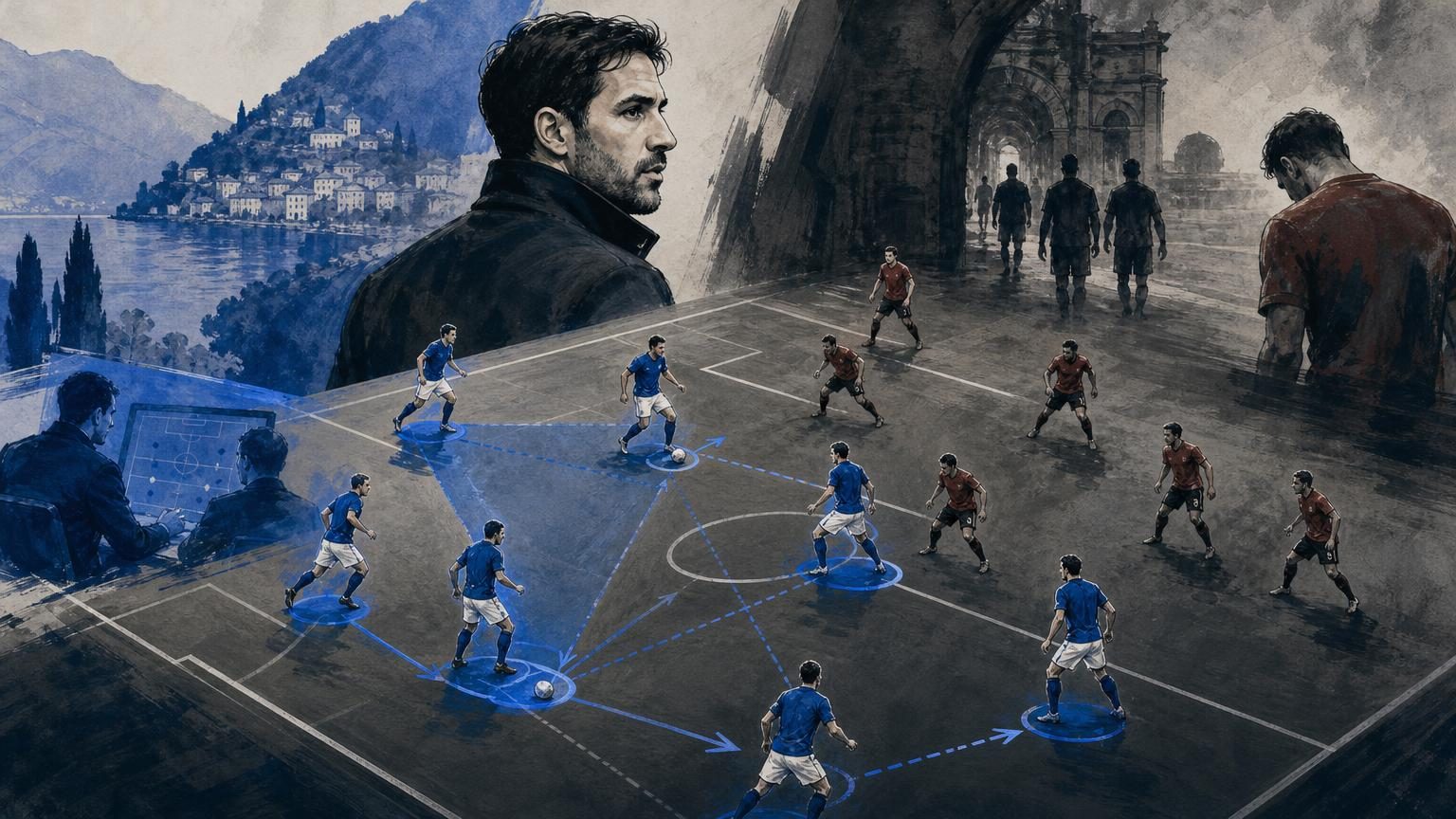
Como beat Manchester United 4-1, and for most of the match that scoreline undersold how comprehensively Cesc Fabregas's side controlled proceedings. According to tactical analysis site Spielverlagerung, the gap between the teams was not primarily about chance volume. It was about access: Como decided where the ball could go, who was allowed to receive it, and under what pressure it arrived.
That is a specific and useful distinction. A team can be outclassed in a low-scoring, chance-starved game if its opponent controls the terms on which the ball moves. Spielverlagerung's reading is that Manchester United, managed by Michael Carrick, never wrestled back control of those terms in any phase of the game, in possession or out of it.
How Como built attacks United couldn't touch
In build-up play, Como moved away from their usual 4-2-3-1 shape and reorganised into something closer to a 4-3-3, according to Spielverlagerung's breakdown. The two central midfielders were the variable piece: given licence to roam, they pushed into the half-spaces rather than holding a fixed line, stretching United's shape and creating passing angles through the middle that a flatter structure would not have offered.
The effect, per the analysis, was a possession game of real technical sophistication. Como drew United's press in one direction, switched the point of attack, and then worked the ball systematically into the space left behind the opposition's defensive line. That is a harder pattern to defend than isolated individual quality, because it targets structural weaknesses rather than relying on one-off moments.
A press built to isolate, not just chase
Out of possession, Spielverlagerung describes a pressing structure with clear directional intent: Como funnelled United down one side of the pitch and applied man-marking around the ball only for the specific action unfolding, while the rest of the team was already shifting to anticipate the second ball. That combination, of disciplined press-triggers paired with a mature passing game once Como had the ball back, is what the analysis frames as evidence of sustained work rather than a one-off performance.
The scoreline fits that reading. A 4-1 result built on repeated control of access, rather than a flurry of isolated chances, points to a team imposing a gameplan for long stretches rather than simply finishing well on the day.
The same result, repeated down the age groups
The pattern was not confined to the first team. Como's Under-19 side also beat Manchester United 4-1, in the UEFA Youth League, fielding eight Italian players in the starting XI and sixteen in the matchday squad, Football Italia reported. Speaking ahead of Como's Serie A fixture with Sassuolo, Fabregas said he was pleased with the group: "I'm very happy. Many of the lads arrived this year. They're strong, they're Italian, and it's a similar concept to what we'd like to bring to the first team." He added that the young players "understand our style of play and they're doing a great job."
Fabregas also linked the academy's output to squad size, telling reporters: "We have a short squad, but if you have a long one, you never need to bring anyone up from the academy." He cited Cassano, Pisati, Baralla and Papaccioli as players who have come through or returned via that route, according to Football Italia. Como president Mirwan Suwarso has separately said the long-term aim is a first team made up entirely of Italian players, ideally drawn from Lombardy, following a model similar to Athletic Club, Football Italia reported.
For Manchester United, the defeat lands in a club history littered with heavy European nights. Planet Football ranked the 4-1 loss at Como among the club's more embarrassing continental results, placing it alongside historic routs such as the 4-0 defeat to Barcelona in the 1994-95 Champions League group stage, when Alan Ferguson's side were restricted by foreign-player rules and outclassed by a Stoichkov and Romario-inspired Barça.
The comparison is a reminder that United's current struggles abroad sit within a longer pattern rather than existing in isolation, even if the scale of control Como exerted at both first-team and youth level this week marks it out as a particularly pointed example of a side being taken apart by structure, not just talent.