
Conceicao's denial can't hide Juventus's slow-start problem
Francisco Conceicao rejected claims of a bench bust-up after Juventus came from behind to beat Celta Vigo, but the bigger story is a Europa League unbeaten run built on fixing games at half-time rather than winning them from the start.
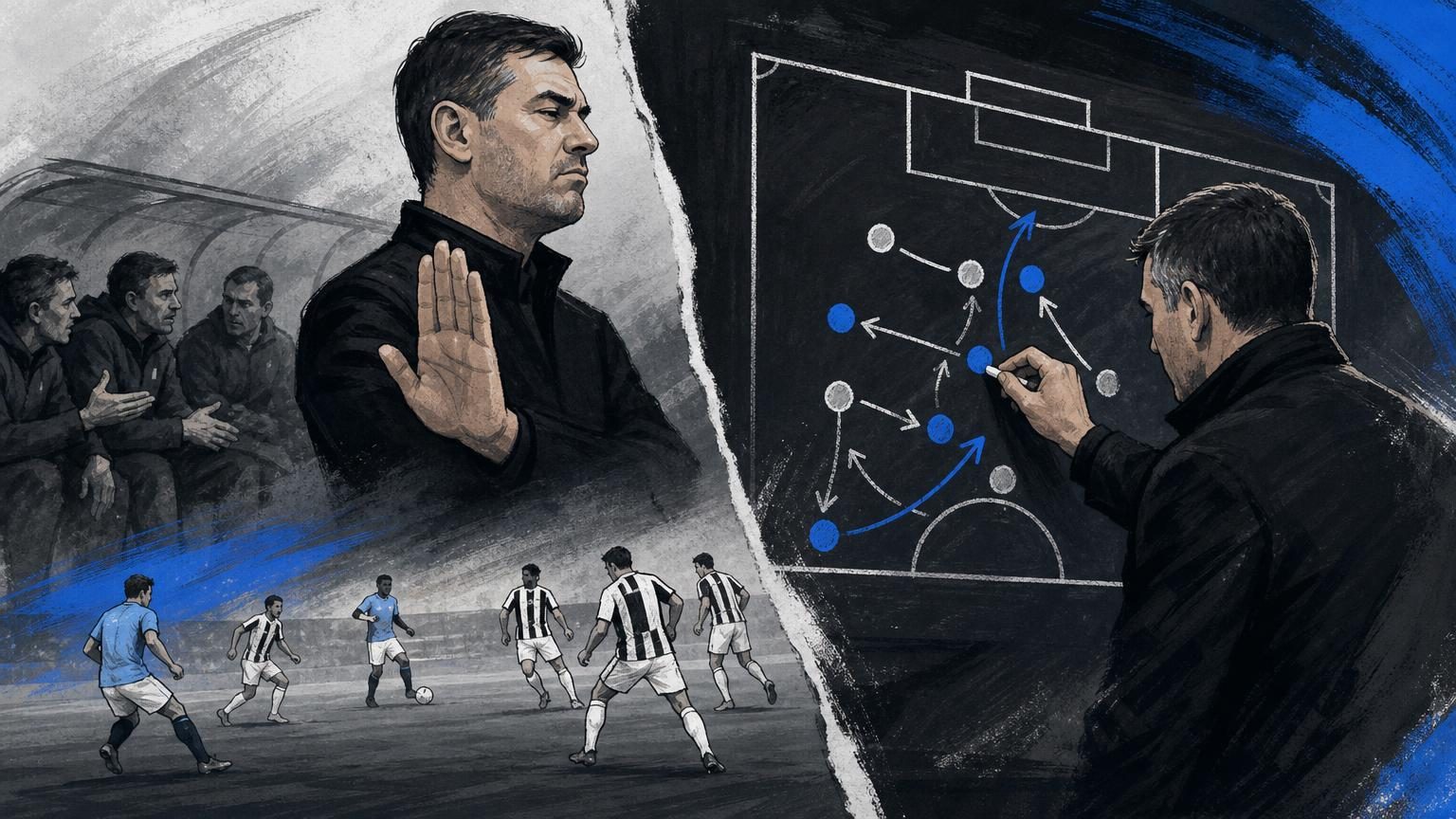
Francisco Conceicao has denied reports that he reacted angrily to being substituted during Juventus's 2-1 Europa League win at Celta Vigo, insisting there was no confrontation with Luciano Spalletti's staff.
"I want to clarify that I did not argue with anyone," Conceicao told Sky Sport Italia, as reported by Football Italia. "I went off, I hit the area of the bench where I sit down, but I did not have any dialogue with a member of staff. I went into the dressing room to change my shirt, go to the bathroom, and came back out after a few minutes."
The denial matters less than what provoked it. Juventus were a goal down at Estadio Balaidos after Hugo Alvarez's opener, and it took a Nick Woltemade equaliser and a stoppage-time winner from Randal Kolo Muani to turn the match around.
That pattern — a sluggish first half rescued by a sharper second — is becoming the defining feature of this Juventus team in Europe, and it is a more revealing story than one player's reaction to being hauled off.
Spalletti's diagnosis points to a structural habit, not a one-off
According to Football Italia, Spalletti told his players at half-time that they would keep losing games if they continued being "always late to the ball, to the challenges, to the runs." That is not a complaint about effort alone; it describes a team consistently losing the first contact and the first movement in buildup and transition, which is a timing problem as much as a mentality one.
Conceicao echoed the same diagnosis in his own words, saying the team had to "think first about what we wanted to do" before producing the response that brought two goals and, in his view, chances for more. When a player and his manager independently land on the same explanation — passivity in the opening exchanges, intensity only arriving after a rebuke — it stops being incidental and starts looking like a pattern Juventus will need to break rather than just manage.
Winning after going behind is a repeatable trick only for so long. Against Celta Vigo it worked because Juventus had the attacking depth to fix things from the bench; against better-organised opposition, a goal conceded early can simply decide the game before the adjustment arrives.
Spalletti's public needling is itself a management choice
Pressed afterwards on the substitution controversy, Spalletti did not simply deny an incident took place. He suggested, as relayed by Football Italia, that Conceicao "would do well to be angry with himself" over his own performance — a pointed remark for a manager to make about a player he still needed to coach through the following days.
That comment is worth reading as deliberate rather than offhand. Putting a mild public rebuke on record, while privately having his staff deny any physical altercation, lets Spalletti draw a line under the incident without appearing to let a below-par display pass unremarked. It is a small piece of man-management playing out in real time, and Conceicao's insistence that nothing improper happened reads as the player's half of that same negotiation.
Depth up front gives Spalletti leverage he can use again
The identities of the match-changers say something about where Juventus's strength currently lies. Woltemade levelled the scores and Kolo Muani struck the winner, meaning two players introduced or deployed in attack outscored and effectively replaced the output of a starting forward option in Conceicao.
That depth is precisely what allows Spalletti to make an unpopular substitution and still win the game, and precisely why a player taken off can feel aggrieved even when the result goes in his side's favour. Competition for places in the final third is now genuine enough that no single forward's standing in the side looks secure, Conceicao's included.
The result kept Juventus's Europa League record unbeaten through two matchdays, a detail Football Italia noted in the context of three points away from home. Conceicao himself pushed the conversation back toward that outcome rather than the row, telling reporters: "We need to talk about the second half performance, as we won, we picked up three important points in the Europa League, and need to keep going like this."
Juventus have little time to dwell on Vigo. They travel back to Turin to prepare for Lazio, whom Conceicao described as being "in good shape," with his own stated ambition to carry the second-half version of his team into Serie A and climb the table.
Whether that carries over will say more about Juventus's season than any dressing-room denial. A team that needs a half-time reset to beat Celta Vigo away from home will not get the same grace period against a Lazio side already playing well.