
Di Canio says Milan's Europa League struggles were entirely predictable
After a third defeat in four European games, Paolo Di Canio argues Milan's squad lacks leadership and the depth to match a resurgent Bournemouth side.
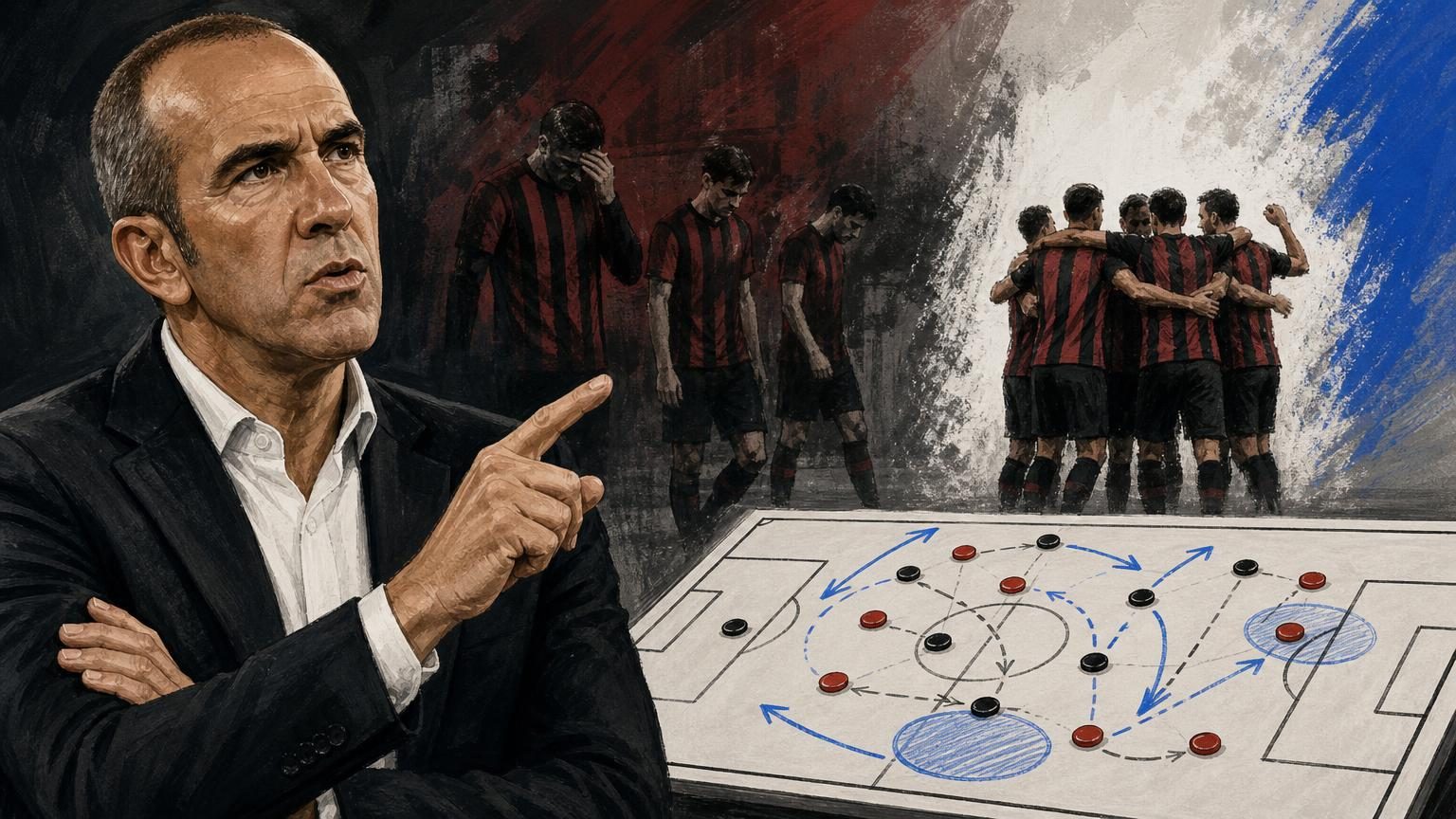
Milan's home defeat to Ferencvaros on Thursday was their third loss in four Europa League matches this season, a run that now puts qualification for the knockout rounds at genuine risk, Football Italia reports.
Lenny Joseph scored twice as Ferencvaros won 2-0 at San Siro, following earlier home and away defeats to Benfica and Bournemouth respectively in the competition's league phase.
Paolo Di Canio, who played for the Rossoneri between 1994 and 1996, told La Repubblica he expected exactly this kind of campaign, according to Football Italia.
Three defeats in four tell their own story
Milan's results sequence in Europe this season reads as a club struggling to find any continental rhythm: beaten at home by Benfica, beaten away by Bournemouth, and now beaten at home by Ferencvaros, a side many would rank as underdogs in this field.
That pattern matters because of how the Europa League's league phase works this season: a single table determines who advances directly and who faces an extra qualifying round before the knockout stage, so repeated defeats compound quickly rather than being isolated setbacks.
Di Canio's broader point, voiced to La Repubblica, is that Ruben Amorim's squad was never built with this competition's increased quality in mind.
"I was certain that Milan would struggle against Bournemouth," he said, adding, "Five or six of their players would be starters for Inter."
Di Canio's point about strength in depth
The comparison to Inter is a comment on squad depth rather than formation or system: Di Canio is arguing that Milan's bench and fringe players would not get into a direct domestic rival's first XI, a gap that shows up precisely in competitions requiring squad rotation across more fixtures.
He extended the critique to leadership inside the dressing room, asking who currently fills that role for Milan.
"Who is the leader in this Milan side?" he said. "Rabiot doesn't seem like it to me. Modric leads by example, not by temperament."
Di Canio contrasted that with his own playing days, recalling how Franco Baresi's presence alone could police standards inside the squad: "In my days, if you did something wrong, there would be Baresi glaring at you and the others would grin as if to say 'he'll take care of it'. It wouldn't even be down to Capello."
That distinction between leading by example and leading by temperament is worth separating out. A player like Modric can set a technical and professional standard through his own performances, but Di Canio's argument is that Milan currently lack the more confrontational, standards-enforcing figure who can correct teammates in real time, the kind of presence he says Baresi once provided.
He was similarly guarded about Milan's wider prospects this season, saying the starting XI is "not bad" but adding it is "not a team that wins the derby and is then immediately capable of winning the Scudetto."
Bournemouth's run exposes the gap
The side Di Canio cited as proof of Milan's limitations have themselves been one of this season's European stories. Bournemouth beat Milan in the league phase and, per the Guardian, have now won seven matches in a row following a 3-1 victory away at a 10-man Sparta Prague side.
Evanilson scored a late goal in that win, and Marco Rose's side have taken four victories from four in their debut European campaign, putting them in position to secure direct passage to the last 16 without needing a play-off round, the Guardian reports.
Set against that form, Milan's defeat at Bournemouth's stadium in October looks less like an anomaly and more like evidence for Di Canio's underlying argument: a well-drilled, in-form Bournemouth side with genuine momentum was always going to be a difficult away fixture for a Milan squad still working out its European identity.
What Milan need before the next league phase fixtures
Milan's immediate problem is practical rather than theoretical. Three defeats in four league phase matches leaves little margin, and another slip risks missing the knockout rounds altogether this season.
Di Canio's wider diagnosis, that the squad lacks a figure capable of enforcing standards and correcting teammates mid-match, is harder to fix inside a season than a tactical adjustment. Whether Amorim can generate that leadership from within the existing group, or whether it has to come from a different source entirely, will shape how the rest of Milan's European campaign unfolds.