
Gasperini rotates Roma against Cagliari's revamped back three
With Dybala absent and the fixture list unforgiving, Gian Piero Gasperini turns to Santiago Castro and a reshuffled XI as Cagliari switch systems for the visit to the Olimpico.
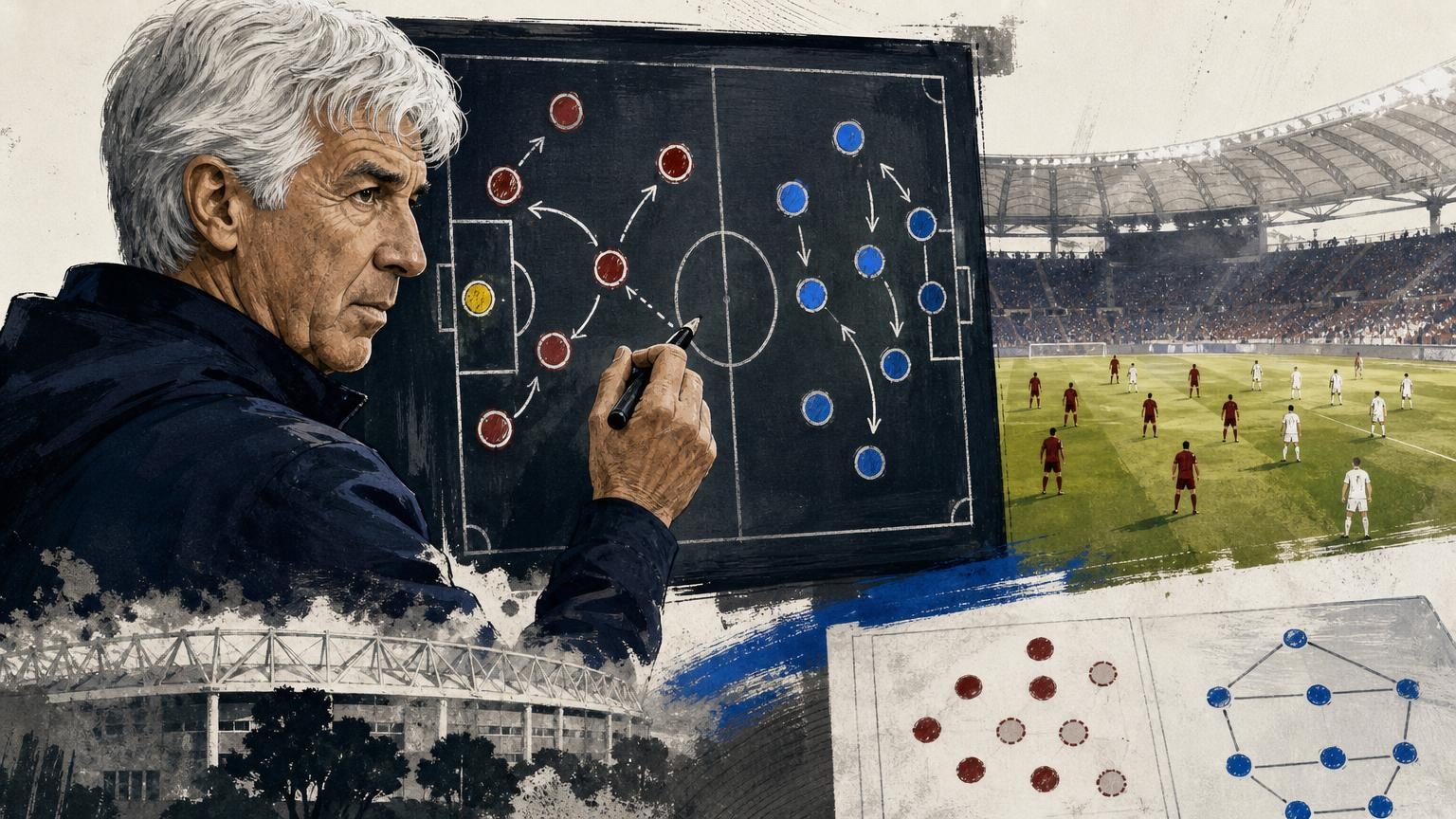
Roma go into their Serie A meeting with Cagliari at the Stadio Olimpico missing four first-team players, and Gian Piero Gasperini has used the gap to redistribute minutes rather than simply plug holes.
Paulo Dybala did not recover in time to be included even among the substitutes, Football Italia reported, while Mile Svilar, Manu Koné and Lorenzo Pellegrini remain unavailable. That is a significant chunk of Roma's attacking and midfield rotation gone before kick-off.
Gasperini framed the selection less as an enforced compromise and more as a chance to manage the squad across a congested run of fixtures. "The difficulties we face are different in each game," he told DAZN Italia, adding that the packed schedule inevitably produces knocks but also lets him "spread the responsibility around and boost the confidence of many players in a competitive squad."
Why Castro gets the nod over a fresher option
The most notable individual call is Santiago Castro starting ahead of Donyell Malen, who drops to the bench alongside Rodrigo Mora and Mario Hermoso. On paper that looks like rotation for its own sake, but Gasperini was explicit about the reasoning: Castro had already played two games ago and, in his words, "was decisive."
That single sentence does a lot of work. It signals that minutes management at Roma is not a blanket rule applied by rest periods alone — recent output still outweighs freshness when a player has delivered in his last involvement. With Dybala out, Castro effectively becomes the focal point of Roma's attack rather than a squad option, and Gasperini's comment reads as a vote of confidence aimed at removing any doubt about whether the striker has earned the role.
Cagliari's shift to three at the back changes the calculation
Cagliari arrive at the Olimpico having altered their own structure, moving to a back three after a 1-1 draw with Juventus was followed by two straight defeats. Gasperini expects that switch to produce a more cautious but still purposeful opponent. "I expect Cagliari to remain positive, albeit with a more defensive set-up, but still ready to go on the counter-attack," he said.
A back three used defensively but geared for transitions typically asks the opposition's wide players and full-backs to do more of the attacking work, since the extra defender frees a wing-back to support a counter rather than hold the line. Gasperini's specific warning about Alieu Fadera and M'Bala Nzola fits that pattern: both are built to exploit space in behind once Roma commit numbers forward, and Cagliari's bench options add to that threat.
For Roma, the response Gasperini wants is control through tempo rather than simply dominating possession. "We've got to play with a high tempo, quality, and also clear heads," he said, a phrasing that suggests he is as concerned with Roma's composure in transition as with their attacking intent — a team that overcommits against a counter-attacking back three can be punished quickly on the turnover.
A season defined by draws against the bigger sides
Roma's recent form adds context to the selection logic. They have drawn three of their last four league matches, and those results came against Inter, Como and Napoli — fixtures of varying difficulty that nonetheless point to a team finding it hard to turn control into victories. A home game against a Cagliari side that has just changed shape and lost its last two matches represents a different kind of test: less about matching an elite opponent, more about imposing tempo on one that is still adjusting its own identity.
That is the backdrop against which Gasperini's rotation makes sense. Resting certain forwards while trusting Castro's recent form, and doing so against a side retooling defensively, allows Roma to chase a result without risking further fatigue among players needed for the games that follow. Whether the approach yields three points will say as much about Cagliari's ability to hold their new structure under sustained tempo as it does about Roma's finishing.