
Juventus survive late AZ scare as Spalletti's press warning goes unheeded
A 2-1 Europa League win at AZ Alkmaar turned tense when Juventus dropped off late, prompting a touchline blow-up between Luciano Spalletti and Juan Cabal that explains more than one bad half-hour.
Juventus beat AZ Alkmaar 2-1 away from home on Thursday evening to make it back-to-back victories in the Europa League, but the final ten minutes told a different story from the one the scoreline suggests, according to Football Italia.
Teun Koopmeiners opened the scoring before Randal Kolo Muani doubled the lead before half-time, with Kolo Muani singled out for praise in the Italian press for his performance, Football Italia reported.
Juventus controlled most of the match without AZ posing a serious threat, but the closing stages unravelled quickly. Mexx Meerdink pulled a goal back in the 88th minute, and the final minutes became a scramble before the referee's whistle ended it.
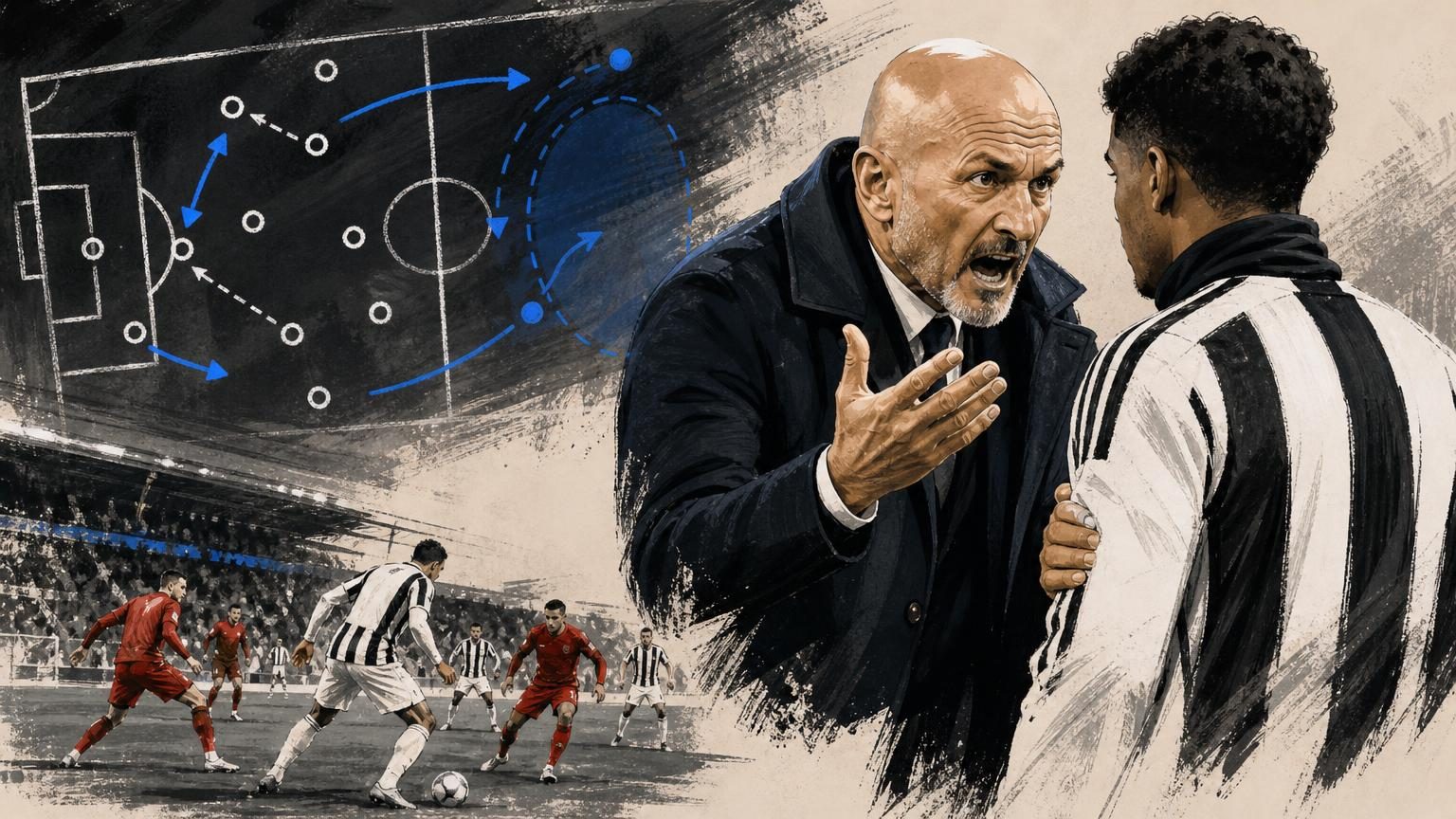
That late wobble produced the moment that has since spread on social media: head coach Luciano Spalletti squaring up to full-back Juan Cabal on the touchline and, as reported by La Gazzetta dello Sport via Football Italia, shouting that he could punch him.
Why a two-goal cushion turned into a scramble
The pattern Spalletti described afterwards is a familiar one in games that look settled early and then slip. A team two goals up against opposition it has dominated can start to manage the clock rather than the game, inviting pressure it had previously kept at arm's length by simply dropping its defensive line deeper.
That retreat changes the terms of the contest. Instead of defending with the ball still some distance away, a side sitting in a low block has to deal with longer spells of possession in its own half, more crosses and knockdowns, and — crucially — the kind of ball played in behind that punishes any hesitation over whether to push out or hold.
Spalletti identified exactly that moment as the source of the goal conceded. He told Sky Sport Italia that his side were pinned back, unsure whether to step up from defence, and that a through ball exploited the indecision. That is a description of a team whose structure had gone from compact and aggressive to passive and uncertain inside the same half hour.
The intensity drop that worried Spalletti more than the goal
Spalletti's frustration, by his own account, was not really about Meerdink's finish. It was about what allowed AZ back into a game Juventus had controlled. He told Sky Sport Italia that the moment his team's intensity dropped, their opponents were able to take advantage, framing the concession as a consequence of a broader loss of pressing application rather than a single defensive error.
That framing matters because it shifts the explanation away from one player's positioning and towards a collective failure to sustain the work-rate that had made the first eighty minutes comfortable. A side that presses high and compresses space in transition denies opponents the time to pick out the kind of ball that undid Juventus late on. Once that press softens, the same opponent who had barely threatened for an hour can suddenly manufacture two or three clear chances in quick succession.
Spalletti also used the post-match platform to push back on how his team's performances have been received more broadly, telling Sky Sport Italia that critics had mocked Juventus after a 5-0 win over NEC, a side he pointed out has since collected seven points in the competition. He argued that opponents' strengths get downplayed after Juventus wins and that his side deserved more credit for beating a strong AZ team on the night.
What the Cabal flashpoint says about game management
The touchline exchange with Cabal is best read as an extension of the same complaint rather than an isolated flare-up. Spalletti was reacting in real time to exactly the kind of lapse he later diagnosed in his press conference: a defender unsure of his line, in a passage of play where AZ were rallying and the structure behind the ball had become loose.
Spalletti's own description of the closing stages, that another three or four minutes might have cost Juventus the result, underlines how precarious the lead had become despite the dominant platform built earlier. A two-goal advantage built on control was nearly surrendered through a sequence of defensive decisions made under pressure rather than through any clear tactical plan from AZ.
The result keeps Juventus's Europa League campaign on an upward track after consecutive wins, but Spalletti's touchline reaction and his post-match remarks both point to the same unresolved issue: a team capable of dominating long stretches of a match still needs to manage the closing minutes of a lead without allowing its pressing intensity, and its defensive line, to drop at the same time.