
Marotta's warning exposes the gap between Inter's domestic control and European fragility
Beppe Marotta says Inter must heed the lessons of defeats to Real Madrid and Club Brugge as the Nerazzurri try to arrest a run of seven losses in eight Champions League games.
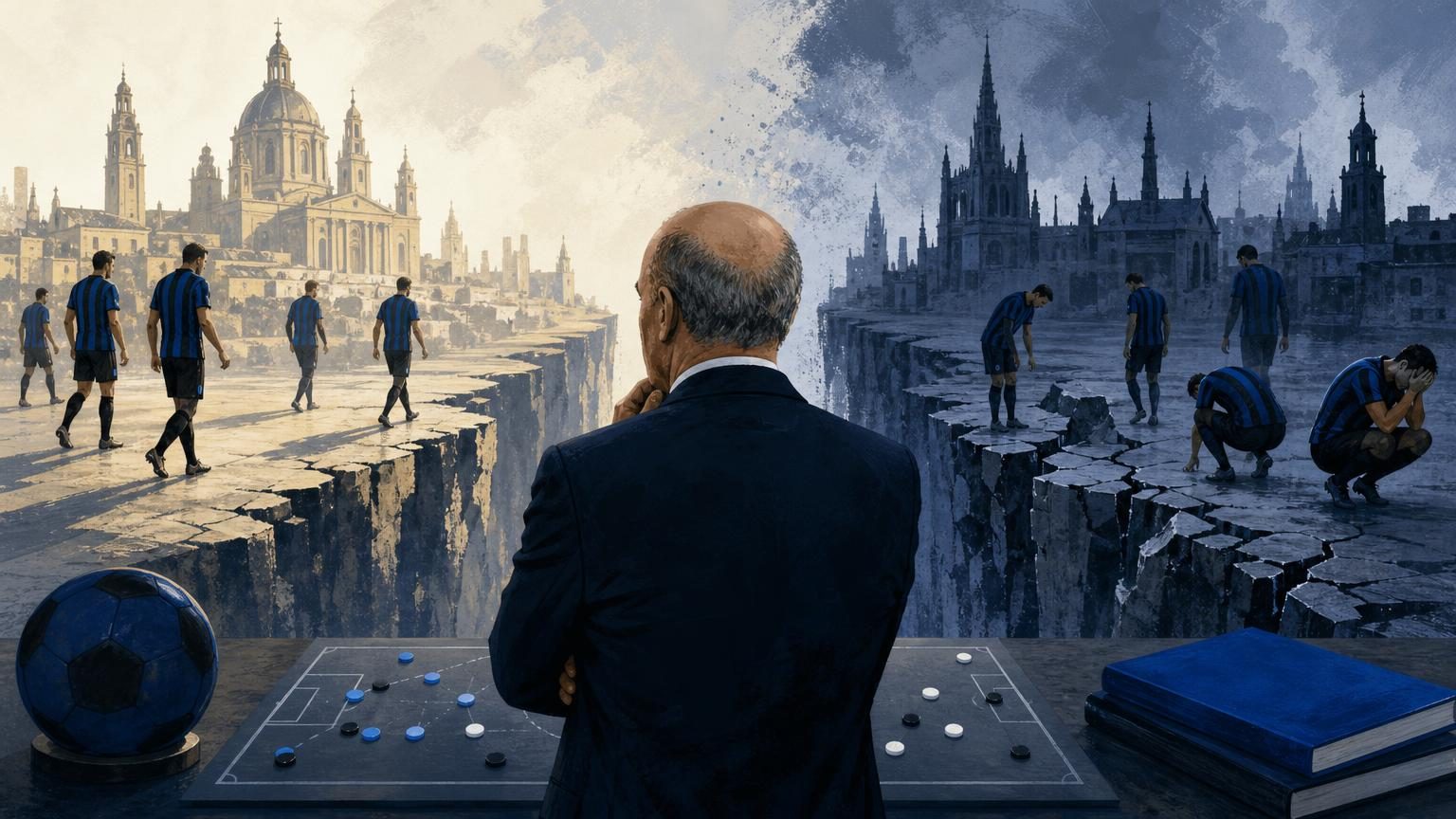
Inter host Shakhtar Donetsk at San Siro on Wednesday with their Champions League campaign already under scrutiny, and club president Beppe Marotta has used the build-up to issue a pointed diagnosis of what has gone wrong.
Speaking to Sky Sport Italia, reported by Football Italia, Marotta said there are "no easy teams you can walk over anymore like in the 1980s," arguing that clubs seeded below Inter in the draw have closed the gap through improved tactical organisation rather than raw talent.
The context makes the warning pointed. Inter won the Scudetto and Coppa Italia double domestically last season, and reached two of the last three Champions League finals, in 2023 and 2025. Yet they have lost seven of their last eight matches in the competition, a run that sits awkwardly alongside their continued presence at the top end of the tournament.
The problem is not talent, it is tempo
Marotta's explanation centres on what he calls cultural growth among teams that were previously treated as inferior seeds. His argument, as relayed by Football Italia, is that intensity and physical application have caught up to technical quality across the competition, meaning matches that look straightforward on paper no longer are.
That framing matters for how Inter's two Champions League defeats this season should be read. The 2-1 loss at the Bernabeu to Real Madrid and the 4-3 home collapse against Club Brugge were not games Inter were outclassed in territorially. Marotta pointed instead to individual errors and goals conceded too cheaply, language that points at moments of transition rather than a sustained tactical mismatch.
Against Brugge specifically, Marotta admitted Inter "struggled for much of" the match, a result he says should recalibrate how the squad approaches sides that look weaker on paper but can punish complacency. That is effectively an admission that game management, not just quality, has been the issue — an opponent underestimated in press and build-up phases is an opponent given space to counter into.
A defence without a voice to organise it
The sharper question put to Marotta concerned leadership at the back: Inter currently lack a defender capable of setting the tempo of the line and coordinating the unit's movements as one. He did not dispute the premise.
"I agree, this is certainly not an alibi, but we lost four players in that area and replacing them was by no means easy," Marotta said, according to Football Italia. He pointed to defenders who had reached "a certain age" alongside Denzel Dumfries' departure to Real Madrid as structural reasons the back line has lost continuity.
That matters tactically because a defensive line's effectiveness depends heavily on synchronised stepping and communication — the kind of organisation a long-serving leader enforces instinctively. Replace that leader and the risk is exactly what Inter have shown against Real Madrid and Brugge: moments where the unit fails to move together and individual errors become decisive rather than contained.
Marotta was careful not to isolate the issue to the back four, however. "I don't feel we should put all the blame on the defenders, as the rest of the team has to work to help out too," he said, a reminder that defensive solidity in a pressing system is a collective function, not purely a back-line responsibility.
Injuries compound an already thin margin
The timing is unhelpful. Lautaro Martinez is set to be out for several weeks, while Benjamin Pavard, Curtis Jones and John Stones are also sidelined, according to Football Italia. That leaves Inter managing both an attacking and defensive personnel shortage simultaneously, at the exact moment Marotta says intensity and physical application have become non-negotiable in Europe.
Hosting Shakhtar Donetsk represents precisely the type of fixture Marotta flagged as dangerous: an opponent considered beatable whose threat lies in catching a disorganised side cold. Inter's task at San Siro is less about producing moments of quality and more about proving they have absorbed the lesson of the opening two rounds — that comfort against a supposedly lesser side is not something the current Champions League allows any team to assume.
Inter's next assignments in the competition will show whether Marotta's diagnosis translates into a fix, or whether the structural issues he has acknowledged — an unsettled back line and a squad managing injuries in both boxes — continue to undercut a side still capable of reaching European finals.