
Moreira's two assists and a free-kick goal power Milan past Inter
Diego Moreira set up two goals and scored a stunning free kick as AC Milan beat Inter 3-1 in the Derby della Madonnina, ending the visitors' unbeaten Serie A start.
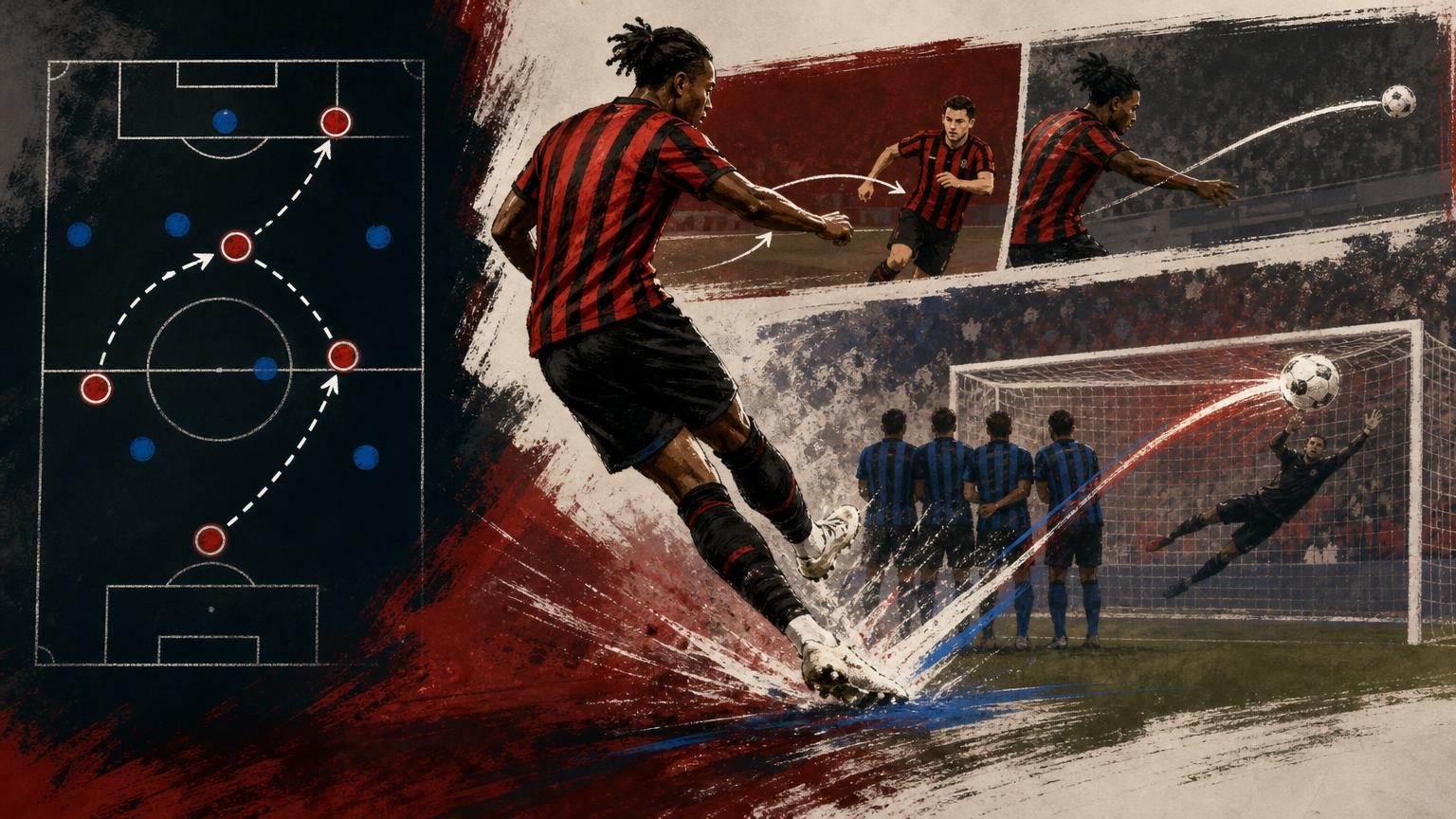
Diego Moreira produced the kind of performance that settles a derby inside the opening ten minutes, setting up Christian Pulisic and Adrien Rabiot before adding a free-kick goal of his own as AC Milan beat Inter 3-1 at San Siro on Saturday.
The Belgian international, back in the side after missing Wednesday's 4-2 defeat to Bologna through injury, called it his best game in the Milan shirt "so far", telling Sky Sport Italia that the team had fought together to take the points.
Inter arrived unbeaten in Serie A this season. That record did not survive the first quarter of an hour, as reported by The Analyst.
How Moreira's movement broke Inter open early
Milan's opening goal came from a pattern that is becoming familiar: Moreira drifting away from his starting side to create an overload the Inter defence could not match. He drove to the byline on the right, cut the ball back, and floated a left-footed cross for Pulisic to head into the bottom-left corner in the fourth minute, Opta's data from The Analyst shows.
The second followed within minutes and came from a different mechanism entirely. Rather than beating a man, Moreira delivered a low corner that Rabiot met with a deft chip, the ball clipping the far post on its way in. Two goals inside ten minutes, both created by the same player, told Inter they had no time to settle into their defensive shape before being punished twice over.
Inter's response showed why they had gone unbeaten before this game. Hakan Çalhanoglu's corner was glanced on by Manuel Akanji and Alessandro Bastoni finished from close range in the 22nd minute, his first goal in 20 appearances in this fixture, according to The Analyst. It was a reminder that set-piece delivery remains one of Inter's sharpest tools, and that a two-goal cushion built on quick transition play can be narrowed just as fast by a well-worked corner routine.
The free kick that put the game out of reach
Milan's response to being pulled back to 2-1 was to restore the two-goal gap before half-time rather than retreat into caution. Moreira's free kick in the 43rd minute, described by Opta as a dipping, viciously struck effort, did exactly that. Scoring from a dead ball is a different skill from combining in open play, and doing both inside a single half is what earned Moreira Man of the Match recognition.
That goal mattered beyond the scoreline. Going into the break 3-1 up allowed Milan to manage the second half from a position of control rather than chase a narrow lead. Inter were, in Opta's phrase, held at arm's length after the interval, with Milan content to sit in a lower block and protect what Moreira and his teammates had built in the first 45 minutes.
What the derby confirms about Moreira's role
Three separate goal involvements in one half point to a player operating in the half-spaces between Inter's defensive and midfield lines, capable of both delivering for others and finishing himself. That versatility is precisely what makes him difficult to mark out of a game: a full-back or wide midfielder can set up to deal with a winger who only crosses, or one who only cuts inside to shoot, but not easily both in the same ninety minutes.
Pulisic's involvement added its own subplot. Football Italia noted the American has developed an enviable record against Inter in this fixture, a detail he joked about after the win. His header was simple in execution, a finish into the bottom corner, but it depended entirely on Moreira's delivery arriving at the right height and pace.
The occasion carried extra weight before kick-off, with Kaka inducted into Milan's Hall of Fame and visibly emotional as he greeted the San Siro crowd, Football Italia reported.
For Ruben Amorim's side, the result halts Inter's unbeaten run and does so with a performance built on quick combination play in wide areas, a dead-ball strike that could not be defended, and a disciplined second-half shape that gave up nothing further after Bastoni's goal. For Inter, the concession pattern is instructive: they were hurt twice by transitions before they had organised, then conceded a third from a set piece they could do little about. Both are correctable problems, but both were exposed on the same afternoon by the same opponent.