
Orsolini's praise for Palladino reads as a verdict on Tedesco's exit
Bologna's fourth straight win at Parma extends a turnaround that began the moment Domenico Tedesco was replaced by Raffaele Palladino, and Riccardo Orsolini's words leave little doubt who gets the credit.
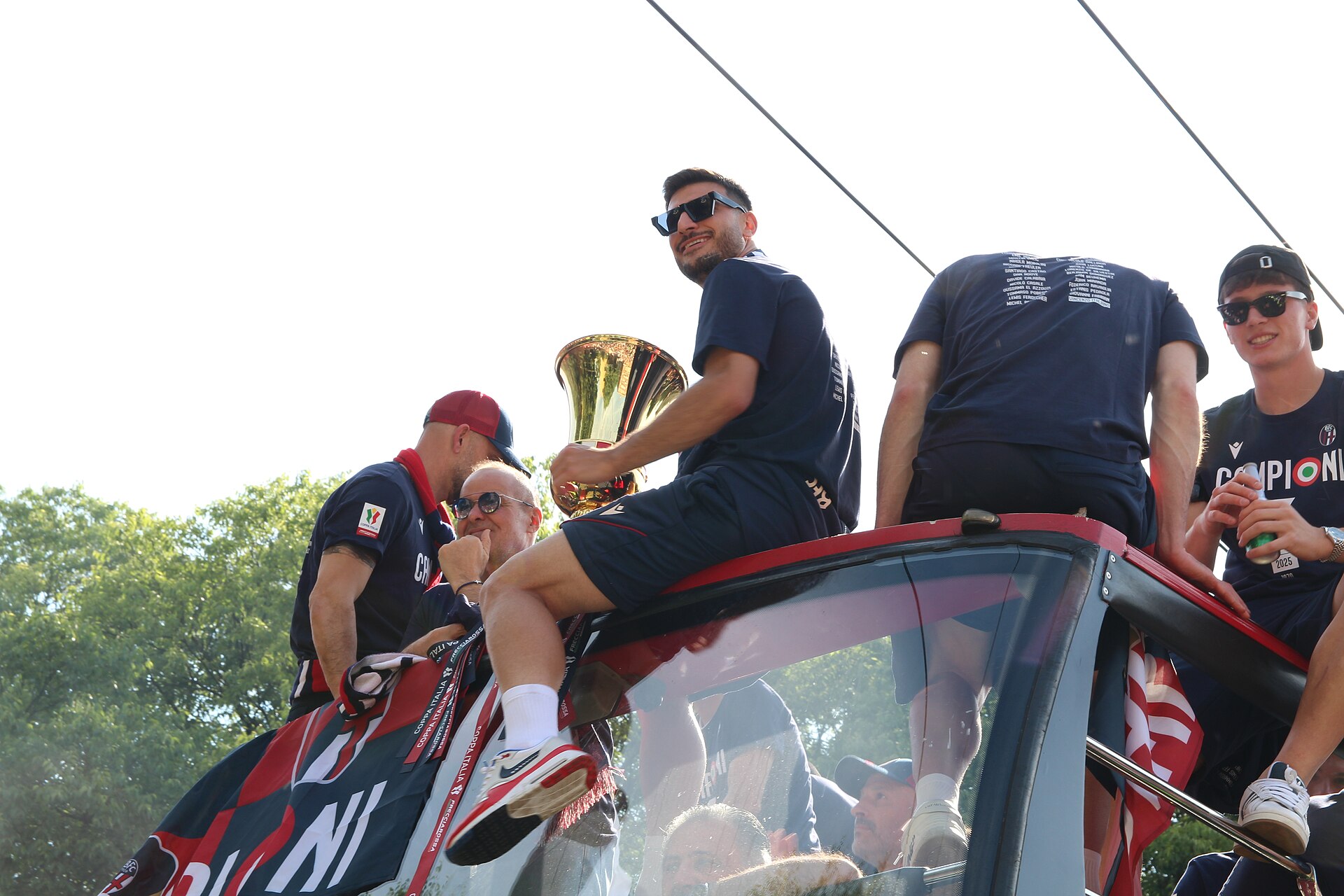
Bologna beat Parma 2-1 on Saturday to make it four consecutive victories under Raffaele Palladino, and Riccardo Orsolini's assessment of the turnaround amounts to a pointed account of what went wrong before it.
Domenico Tedesco was sacked on September 16 after Bologna took one point from their opening four Serie A matches, with all three defeats arriving by a single goal. Since Palladino's arrival the club have drawn once and won five of six, losing only 3-1 to Inter, reported Football Italia.
A pattern of 1-0 defeats says more than a single bad run
Three losses by the same scoreline is not a coincidence worth ignoring. It points to a team that was competitive in phases of matches but repeatedly short of the margins needed to turn parity into points - the kind of fine-detail failure that tends to sit on a head coach's ledger rather than the squad's.
That distinction matters for how the change in form should be read. A collapse built on heavy defeats would suggest the playing staff itself had regressed. A collapse built on three identical one-goal losses instead suggests a group capable of competing but lacking the cohesion, confidence or game management to close matches out - precisely the kind of deficit a change in coaching and man-management can address quickly, without needing a squad overhaul.
Squad continuity made a fast turnaround plausible
Orsolini was explicit about why the transformation could happen so quickly. He told DAZN Italia that Palladino had little time to work before matches resumed, since Bologna were already in crisis, and had to restore unity among a group that had performed well in previous seasons despite losing key players over the summer.
"The coach arrived in a bit of a rush, because we had started so badly and there was no time to discuss too much," Orsolini said. "We had to win games, he did well to get us all on the same page and bring us back together, seeing as this was a team that had done well over the years. We lost some important players over the summer, but the skeleton of that team remained."
That last point is the analytical key to the recovery. Squad continuity - the retention of a core group with shared experience of winning under previous coaches - gave Palladino a foundation he did not have to rebuild from scratch. His task was closer to re-establishing structure and belief in players who already knew how to function together than to teaching an unfamiliar group a new identity under pressure.
Away form and a timely return
The current streak has come against Cagliari, Milan, Monza and Parma, and Football Italia noted that three of those four wins were away from home. An away-heavy run is a meaningful signal in Serie A, where travelling teams typically face less control of tempo and territory than at home, so stringing together results on the road suggests the adjustments have held up outside a friendly environment rather than being a product of a soft home schedule.
It does not, on its own, confirm that Bologna have solved the issues that produced the 1-0 losses under Tedesco, since none of the four opponents are confirmed as direct replications of the problems those defeats posed. What it does confirm is that the group is currently winning matches it is not dominating by wide margins, including the 2-1 scoreline at Parma, which again points to a team managing moments rather than overwhelming opponents.
Orsolini's own second goal of the season came in just his fifth appearance, marking his return from nearly a month out with a thigh injury, according to Football Italia. A senior attacking player coming back into a side already building momentum adds another layer to the squad-continuity point: Palladino is not simply managing a settled XI but reintegrating returning contributors into a system that is already winning, which is a harder balance to strike without disrupting form.
The exclusion that said the most
When Orsolini listed the coaches he had enjoyed working under at Bologna, he named Thiago Motta and Vincenzo Italiano before Palladino. Tedesco did not feature. "I've been here for many years and went through a lot of different situations. I enjoyed myself with Thiago Motta, with Vincenzo Italiano, and now we are enjoying ourselves again with Palladino," he said, adding: "I don't know how far this team can go, but we want to enjoy ourselves together. We rediscovered our smile."
The omission reads less as an oversight than as a quiet verdict. Set against the run of 1-0 defeats and the speed of the recovery once Tedesco left, Orsolini's words describe a squad that needed its confidence restored more than its talent replaced - and credit Palladino, not his predecessor, with having done it.