
Spalletti's Juventus: a team that doubts itself into trouble
A 2-2 draw at Fiorentina left Luciano Spalletti diagnosing the same flaw he has seen all season: a Juventus side that stops trusting its own football the moment things go wrong.
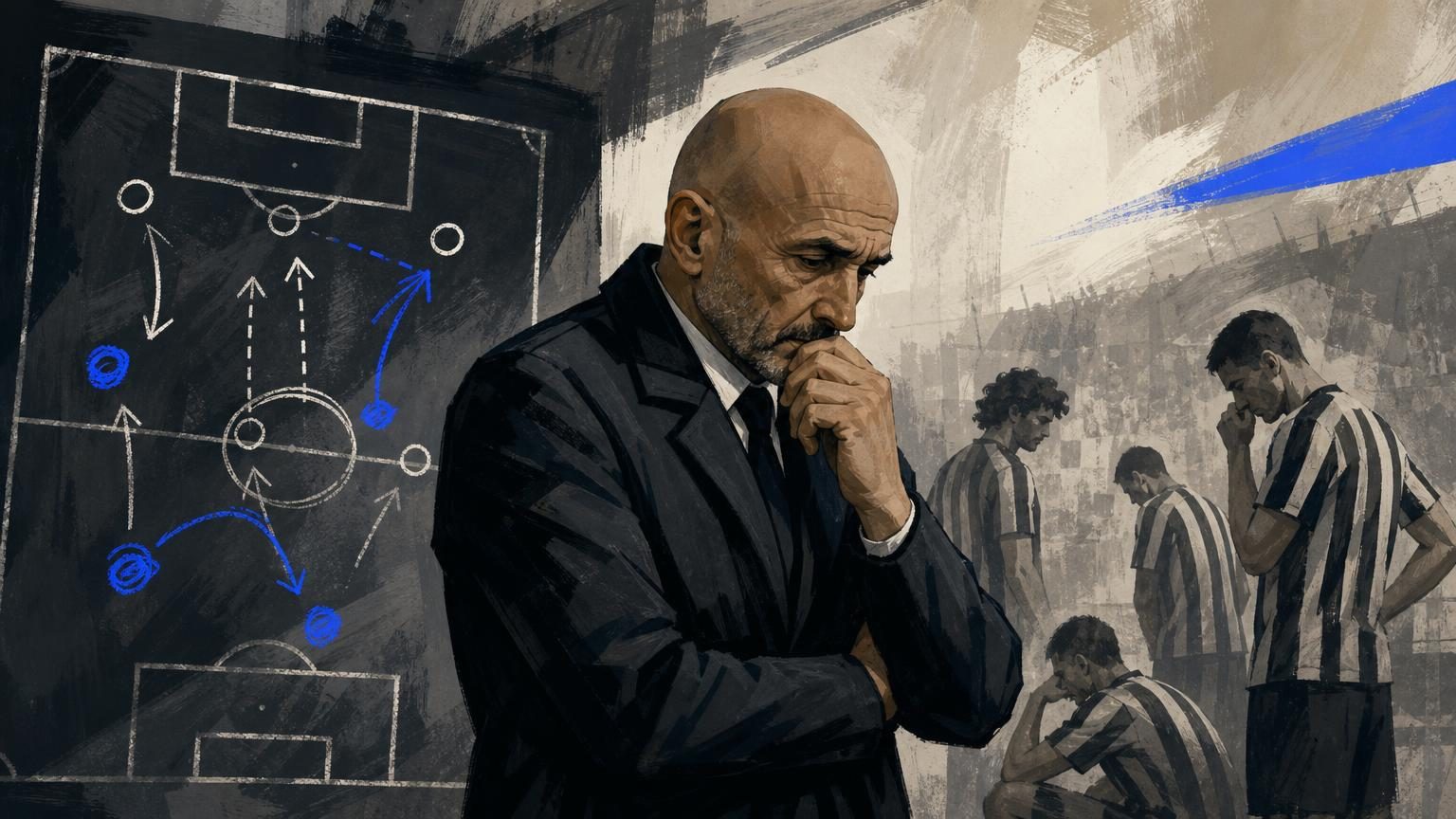
Juventus needed two separate comebacks just to leave the Stadio Artemio Franchi with a point, and Luciano Spalletti's explanation afterwards was less about shape than about state of mind.
Fiorentina led inside four minutes through a Mateo Pellegrino header. Nick Woltemade dragged Juventus level with his first Serie A goal, only for Alieu Njie to restore the home side's lead. Gleison Bremer eventually rescued a 2-2 scoreline, rising to meet a Douglas Luiz corner, according to Football Italia.
Speaking to DAZN Italia after the match, Spalletti said his side "tend to drown in a glass of water sometimes, and lose confidence in the way we play." He pointed to the pattern of the afternoon as evidence of something structural rather than a one-off: Juventus conceded early, responded well, then faded again. "We do really well for 10 minutes, then are lacking in something else the next, we aren't consistent," he said.
Why Juventus abandoned their own build-up
The team selection told its own story. Spalletti fielded a new front three, pushing Jeremie Boga and Randal Kolo Muani out to the flanks and using Woltemade as a central target rather than a link player. That is a tactical compromise, and Spalletti admitted as much: facing an aggressive Fiorentina and a team that still struggles to build out cleanly from the back, Juventus opted for more direct passes into the centre-forward rather than patient possession through midfield.
Spalletti was candid that this is not Woltemade's natural game. "It is not his greatest strength, holding up the ball, as he likes to combine with his teammates, but he's the best at it in the squad," he said. That is a significant admission from a manager — asking a forward to do the thing he does least well because the alternative, building from deep against a pressing opponent, carries more risk.
Kolo Muani's role drew a more positive assessment. Spalletti described him as increasingly mobile and switched on, saying his improving fitness means he "can put him anywhere and he'll deliver a performance," and that he "moves around a lot more and seems more engaged with the rest of the team." For a team short on attacking rhythm, a forward capable of operating across the front line offers Spalletti more flexibility than a fixed trident would.
The moment of hesitation that cost a goal
If the direct approach to Fiorentina's press was a tactical choice, the goal Juventus conceded for 2-1 looked like the psychological problem Spalletti was describing made literal. Guglielmo Vicario saved the initial effort, but his defenders failed to react quickly enough to clear the rebound, allowing Njie to force the ball in from close range.
Spalletti's own description of that pattern was pointed: "In some moments we decided not to make decisions, we just stay there and accept the situation, without taking action or the initiative." His conclusion was that hesitation itself becomes the problem. "Doing something takes away the doubt, but when you wallow in the doubt, you never manage to be in control of a situation," he said.
That is a coach identifying a recurring failure in game management rather than a single error. A back line that reacts late to a loose ball in the six-yard box is not simply unlucky — it reflects players waiting for someone else to commit first, which is precisely the lack of conviction Spalletti described in his wider answer about consistency.
A match of marginal calls neither side could settle
Both teams had cause to contest the officiating. Radu Dragusin had a goal ruled out for a push on Bremer, and Juventus were denied a penalty for a potential handball by Joao Mario. Shown a replay of the incident, Spalletti deflected rather than engaged: "I don't know, do you have an alternative question?" before adding, "I didn't need a replay, I already saw it on the pitch," per Football Italia.
His reluctance to press the point in public sits alongside his willingness to be direct about his own team's shortcomings — a manager picking his battles, criticising structure and mentality rather than officiating, even when there was a case to make.
The draw leaves Juventus seventh in Serie A with 18 points from 11 games heading into the international break, six points behind Milan and the Champions League qualification places. Football Italia noted that this is Juventus's worst start to a league season since they had 15 points at the same stage in 2021/22 under Max Allegri.
That comparison sharpens the stakes of Spalletti's diagnosis. A team that concedes inside four minutes, fights back twice, and still cannot turn parity into victory is not short of quality or effort. On his own account, it is short of the conviction to see moments through — the difference, as he put it, between acting and simply accepting what is happening.