
Spalletti shuts down talk of player power over Juventus system
Luciano Spalletti insists the switch to a 3-5-2 was his call alone, as Juventus prepare to visit Genoa on the back of a 2-0 win over Lecce.
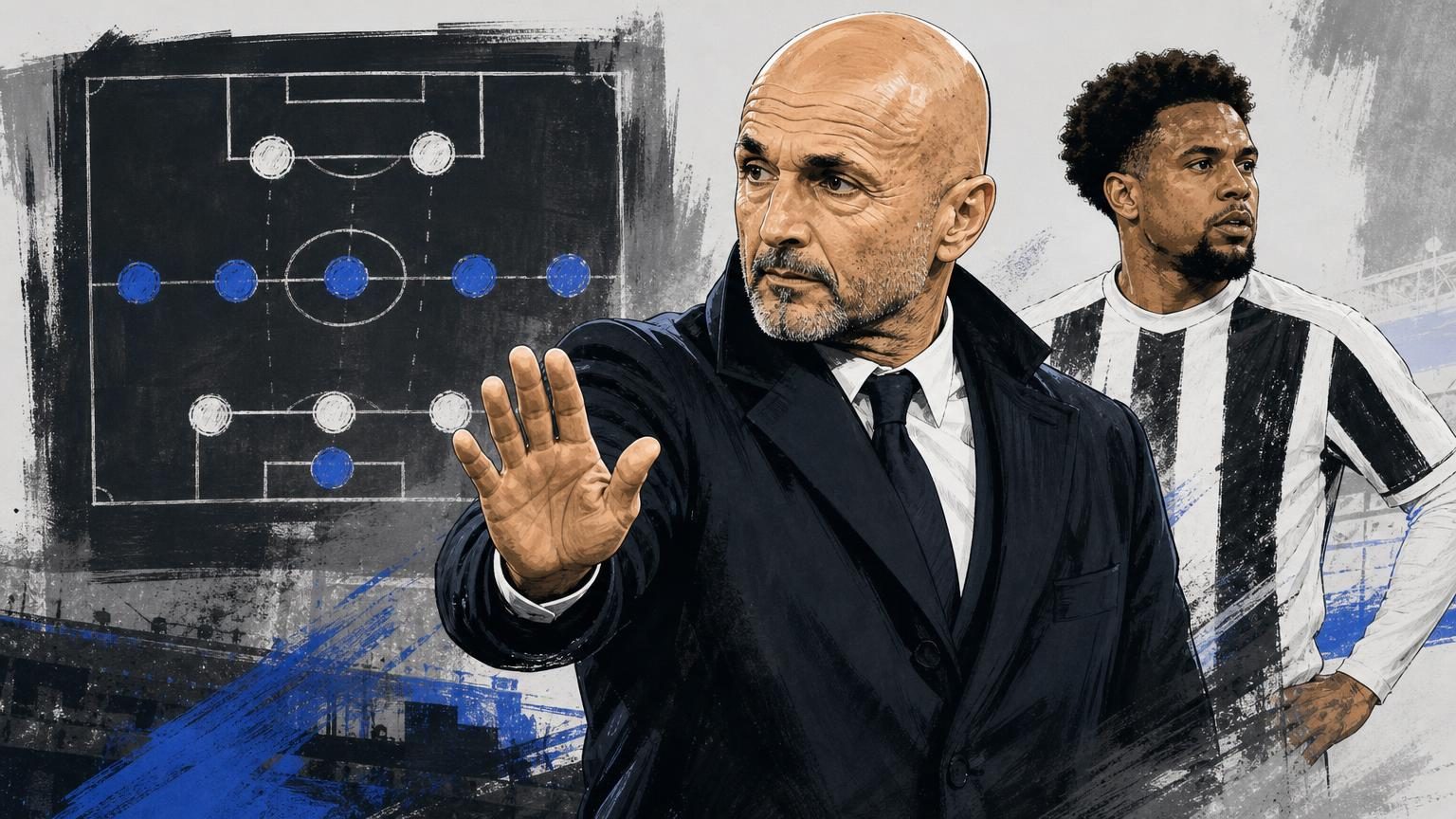
Luciano Spalletti used his pre-match press conference to dismiss any suggestion that Juventus players had influenced his recent switch to a 3-5-2, framing it instead as a calculated adjustment built around the squad he has rather than the squad he might want.
Juventus travel to Genoa on Wednesday evening looking to build on Sunday's 2-0 win at Lecce, a result that followed a 3-0 defeat to Lazio and a 1-1 draw with Cagliari. The Bianconeri sit seventh in Serie A, eight points off the top, according to Football Italia.
Why Spalletti rejects talk of player-led tactics
Reports in the Italian press had floated the idea that Juventus players asked for the formation change that produced the 3-5-2 shape now in use. Spalletti was blunt in rejecting that version of events.
"When some people said that the group requested this approach, that is something that is not up to the players," he said, adding that his squad is "more serious than the questions that are asked of them."
He went further, calling the idea that players would push for a specific system disrespectful to their teammates, and dismissing the rumour as the product of what he described as "a made-up Whatsapp group where these sorts of questions are passed around."
The denial matters because it draws a clear line of authority at a club under pressure. A coach explaining a system change as collective consultation signals something different to one insisting the call is his alone, and Spalletti is choosing the latter framing at a moment when results have been inconsistent.
The 3-5-2 experiment and its built-in escape hatch
Spalletti described the move to a back three not as a short-term fix but as a structure meant to carry Juventus forward, rather than a device to manage morale or motivate individuals.
He explained that a small rotation within the shape allows it to morph into a 3-4-2-1, with wide and central roles interchangeable enough to accommodate different player profiles. Kolo Muani was cited as an example of a forward who can operate almost as an attacking midfielder or as an outside forward within that structure.
That flexibility is the practical justification for the switch: rather than picking a rigid system and forcing square pegs into round holes, Spalletti is building a framework with a built-in adjustment, letting personnel dictate small tactical tweaks without altering the underlying principle of three central defenders.
Genoa's physical and tactical test under De Rossi
Spalletti was equally detailed on the challenge Genoa pose, citing their physical presence through Osmajic and Ostigaard, their set-piece threat, and their tendency to attack space when playing man-for-man defensively.
He also pointed to technical quality further forward in Messias, Baldanzi and El Shaarawy, before singling out Genoa head coach Daniele De Rossi as the figure who shapes the team's identity. Spalletti called De Rossi his own on-pitch leader during their time working together, describing him as someone who dictated instructions through a megaphone.
The combination Spalletti outlined, aerial and physical threats paired with technical movement in wide areas, is the kind of profile that tends to punish a back three if the wing-backs are caught upfield or if marking assignments blur during transitions. How Juventus manage those moments, rather than simply which formation they start in, will likely decide the game.
Managing fatigue through a congested calendar
Juventus have played three matches in nine days and face four more before the next international break on November 8, a workload Spalletti acknowledged carries risk beyond simple physical fatigue.
"The closeness of the matches is risky in terms of fatigue but also your state of mind," he said, framing the period as a test of mentality as much as conditioning.
He pointed to the first half against Lecce as the template his team should aim to reproduce, while conceding that too many misplaced passes crept into the second half. The acknowledgement suggests Spalletti sees defensive solidity and sharper passing accuracy under fatigue, rather than wholesale tactical change, as the priority against Genoa.
Asked about Harry Kane's Ballon d'Or win, Spalletti said he and his staff felt it was the right outcome given Kane's numbers, but added that his own squad has separate objectives to focus on. The remark, brief as it was, reinforced the same message running through the rest of his press conference: external narratives, whether about awards or about who picks the team, are being kept firmly at arm's length as Juventus try to close the gap at the top of Serie A.