
Spalletti answers Juventus strikers' pleas with a system built around them
After a chastening home defeat to Lazio, Luciano Spalletti has reshaped Juventus around Woltemade and Kolo Muani, framing the change as both tactical logic and a response to what his players asked for.
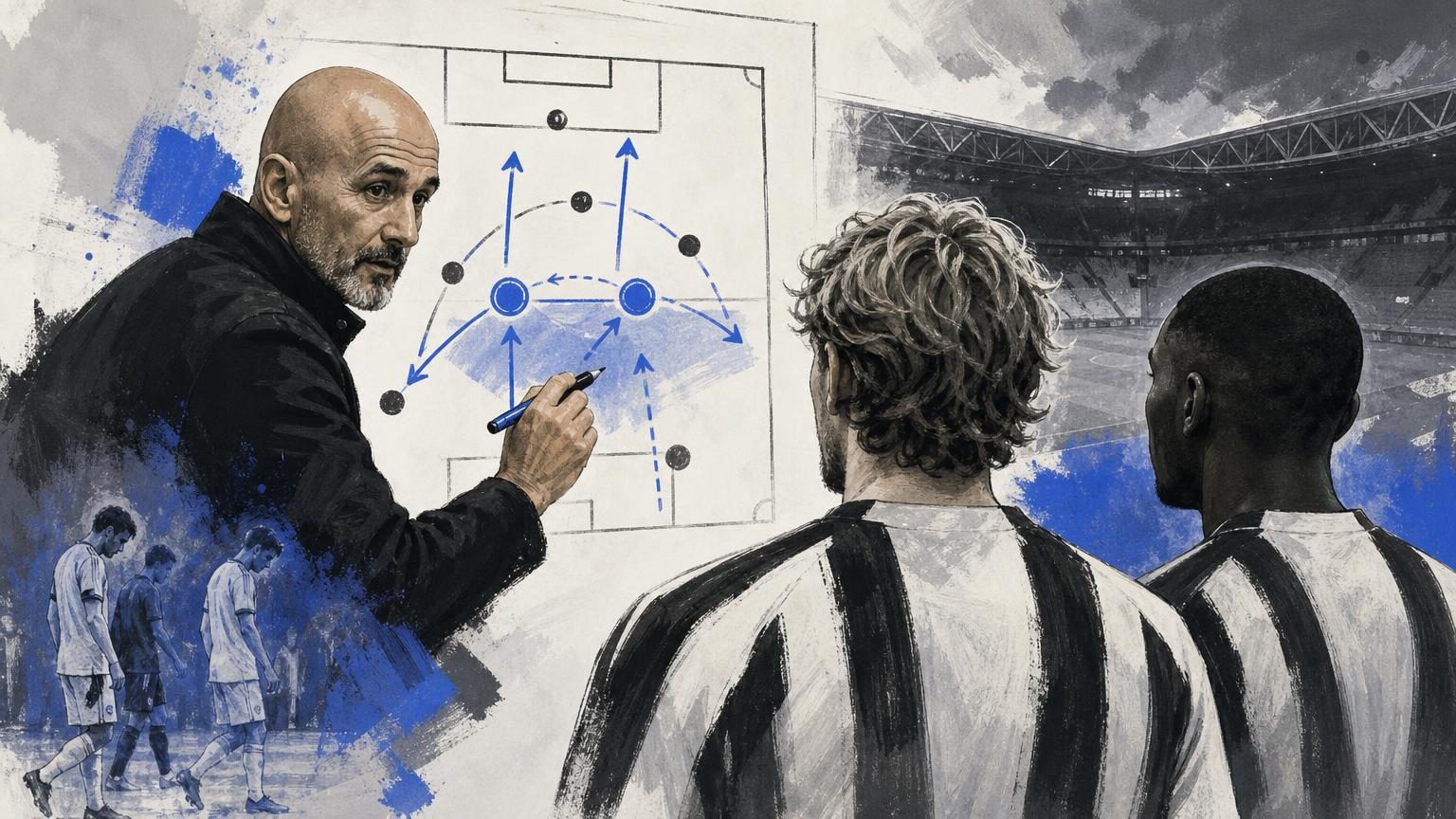
Luciano Spalletti has started Nick Woltemade and Randal Kolo Muani together for the first time, switching Juventus into a 3-5-2 system that could also read as a 3-4-1-2 with Weston McKennie operating in a free role, Football Italia reports.
The pairing is not a random tweak. Both strikers had, in the coach's own words, made public appeals in recent weeks to play alongside each other, and Spalletti chose this moment, against Rennes in the Europa League, to grant it.
The timing matters. Juventus arrive at this fixture having been beaten 3-0 at home by Lazio in Serie A, a result that reportedly prompted a crisis meeting inside the club, according to Football Italia. European form tells a different story: Juventus beat NEC 5-0 and came from behind to win 2-1 away at Celta Vigo.
Why the formation bends around two strikers, not away from them
Spalletti's explanation for the switch was pragmatic rather than ideological. He told Sky Sport Italia that a coach has to work with "the characteristics of the players," adding that nobody would be "crazy enough to use Edon Zhegrova as a right-back," so the system has to be built to extract what each player does best rather than force players into a shape that suppresses them.
Playing Woltemade and Kolo Muani together removes the usual trade-off of selecting one lone striker and accommodating the other from deep or wide. A front two gives Juventus two central, penalty-box presences at once, with McKennie's free role behind them designed to supply a connecting point between midfield and attack rather than a fixed, numbered position.
This is as much an answer to a dressing-room demand as a tactical decision. Spalletti was explicit that the players had made their case and that he "liked many of them," wanting to "put this into practice." The system, in other words, is partly a vote of confidence extended on the pitch after a week of questions off it.
The risk Spalletti is asking his team to carry
Pressed on the idea that building a team is about combining individuals so the whole exceeds the sum of its parts, Spalletti set out the calculation every player in his system has to make: how far to press, when to commit men forward to the edge of the opponent's box, and how much space that leaves behind for a counter-attack that then forces a sprint back toward his own goal.
He framed this explicitly as a question of risk against reward rather than bravery against cowardice, telling Sky Sport Italia that pressing high and leaving gaps is "not a lack of courage," but a decision about whether a teammate supports that press or whether it opens a gap between defensive and midfield lines that an opponent can exploit. Some players, he said, are built to cover and protect the team's structure; others offer less of that discipline but more unpredictability in the final third.
Pairing two strikers who both want to play centrally, in the same vertical channel, sharpens that trade-off. Juventus gain attacking weight and unpredictability up front, but the same movement that drags both forwards into advanced positions can strip cover from midfield if the supporting runs and pressing triggers are not synchronised.
A dressing room that judged itself before the crowd did
The tactical reshuffle sits alongside a more personal account of what followed the Lazio defeat. Spalletti described the Allianz Stadium crowd's jeers as something the players carried with them into the locker room, where he said the squad effectively repeated the verdict on themselves: "We jeered ourselves in there."
He linked that moment to a question he believes every player at a club like Juventus has to answer under pressure: whether to push forward and fight through difficulty, or to retreat from it. "The conscience of the players jeers in the silence of the locker room," he said, adding that difficult moments force a player to confront "what person do you become under pressure."
That framing echoes comments attributed to Bremer about teammates who hide in high-pressure moments, though Spalletti's own remarks stopped short of naming individuals, instead describing the challenge in general terms of courage versus fear.
Spalletti also acknowledged the pressure on his own position, noting that a losing run tends to accelerate speculation about a coach's future because, in his words, managerial sackings generate attention. He said he would always rather begin matches than sit and watch them unfold from the bench, a line that underscored his preference for being an active, hands-on presence rather than a passive observer of his team's response.
Whether the new front two and the free-role midfield slot solve Juventus's broader problems will be tested over the games that follow this Europa League fixture, starting with how the same structure holds up back in Serie A, where the Lazio defeat still defines the club's domestic standing.