
Amorim's balance and Chivu's gamble: how Milan dismantled Inter in the derby
Italian newspapers drew a sharp line between Ruben Amorim's settled Milan and Cristian Chivu's injury-hit selection as the Rossoneri won 3-1 in the derby della Madonnina.
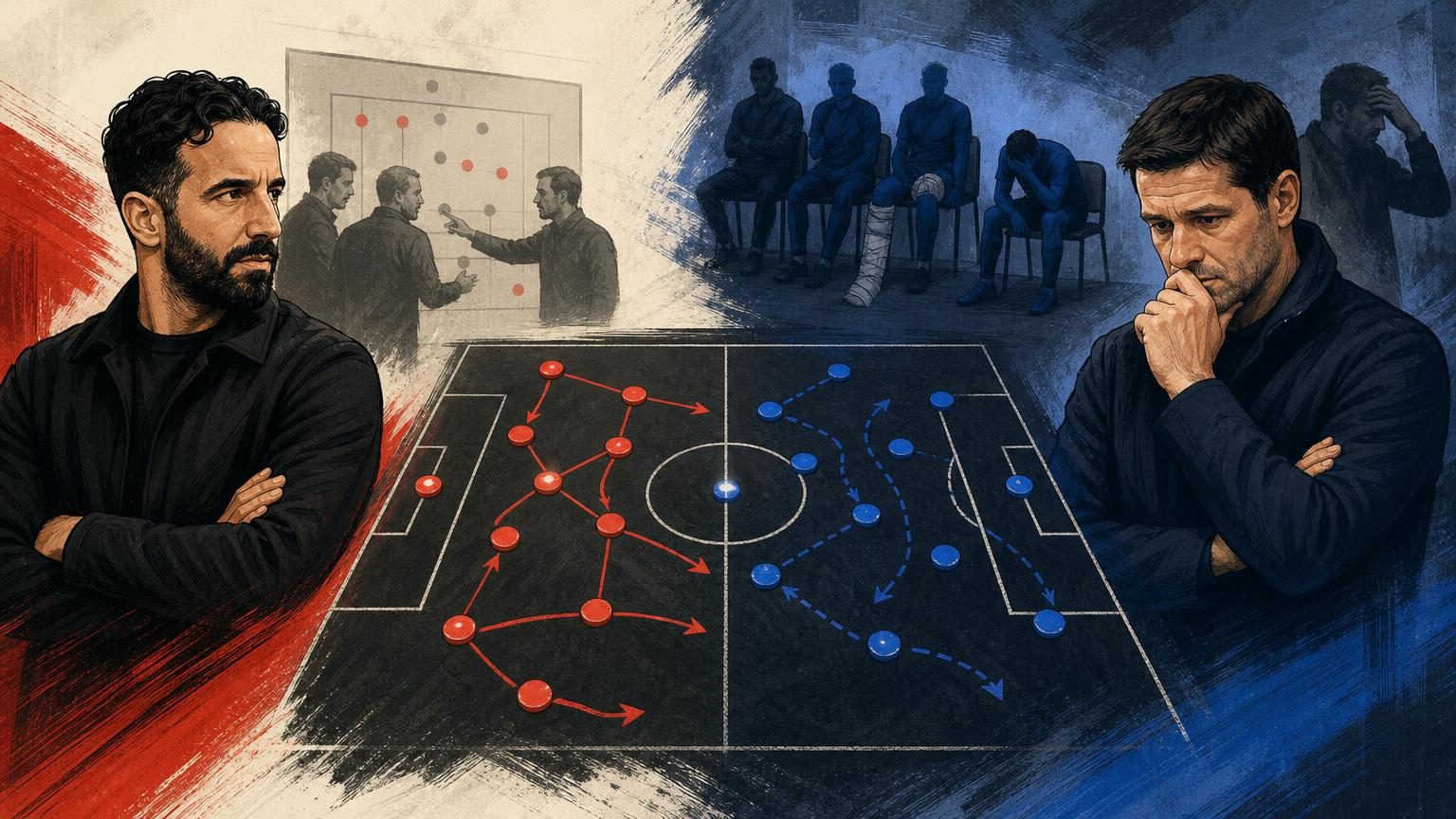
Milan beat Inter 3-1 in the derby della Madonnina on Saturday, with Diego Moreira scoring once and setting up two more goals and Alessandro Bastoni replying for the visitors, and Italian newspapers used the result to frame a wider gap between the two coaches' decision-making, according to Football Italia.
Amorim went into the match with Adrien Rabiot, Mario Gila and Moreira all returning from injury. Chivu had the opposite problem: Lautaro Martinez was unavailable and both Francesco Pio Esposito and Ange-Yoan Bonny were short of match fitness, leaving Marcus Thuram to play almost the entire game as the lone central striker before the pair were brought on with fewer than ten minutes left.
Why Chivu's lone-striker gamble unravelled early
Fielding Thuram alone up front was not a minor tweak. Gazzetta dello Sport noted it was the first time in 48 league matches that Inter had started with just one striker, a detail that frames the selection as a genuine departure from Chivu's usual approach rather than a like-for-like injury adjustment.
Playing a single focal point forward removes the option of rotating the front two to stretch a backline and asks the sole striker to hold the ball under greater pressure while midfielders arrive late to support. Against a Milan side set up to defend with control, that structure gave Inter less of an out-ball in the opening exchanges.
The consequence, according to Tuttosport, was that Inter fell two goals behind inside the first ten minutes, a deficit the paper suggested is not always recoverable regardless of the changes made afterwards. Waiting until the closing stages to introduce Esposito and Bonny meant Inter's attacking reinforcements arrived only once the gap in confidence and sharpness described by Corriere dello Sport had already opened up.
Amorim's balanced setup drew the praise
Milan's approach was framed in the opposite terms. Tuttosport credited Amorim's side with chasing the game from the first whistle and doing so from what it called a well-balanced formation, awarding the Portuguese coach a 7.5 rating and calling the win deserved rather than fortunate.
Gazzetta went further, giving Amorim an 8 out of 10 and writing that he had silenced his critics with an authoritative win, adding that his tactical calls were correct and that the return of Rabiot, Gila and Moreira from injury played directly into that success.
The contrast is less about formations on paper than about continuity. Amorim could reinsert key players into a system already working, while Chivu had to build a starting XI around absences that forced a structural change rather than a simple personnel swap. One coach was adding fit players back into a plan; the other was improvising one.
The ratings gap reflects a pattern, not just one match
Chivu's player-rating of 5 from Gazzetta came with the observation that his reshuffled approach made no real difference to the outcome. Corriere dello Sport was harsher still, rating him 4.5 and writing that his decision to alter the tactical setup proved “disastrously reckless,” adding that it undermined his players' confidence at a moment when they were already short of sharpness.
Tuttosport's conclusion pointed to the same root cause from a different angle, suggesting the starting XI was shaped by players not being fully fit and that the approach itself was wrong again, a phrase implying this was not an isolated misjudgement.
That framing matters because of Chivu's broader record in this fixture. He has not yet won a derby as Inter coach, and the club's last victory over Milan in this fixture dates back to April 2024. Saturday's defeat was described by Gazzetta as his third derby loss, reinforcing the newspapers' shared verdict that the tactical reshuffle was not a one-off experiment but part of a recurring problem in how Chivu sets his team up for this specific fixture.
For Amorim, the win offers evidence that his group can perform at full strength against the club's fiercest rival. For Chivu, the newspapers' consensus leaves a narrower question hanging over his next derby selection: whether an injury crisis forces his hand again, or whether Saturday's lone-striker experiment is quietly shelved.