
Amorim identifies Milan's real issue: dominance without a finish
Ruben Amorim says Milan's inability to pin opponents inside their own box remains the central flaw in his team's identity, even after the derby win over Inter.
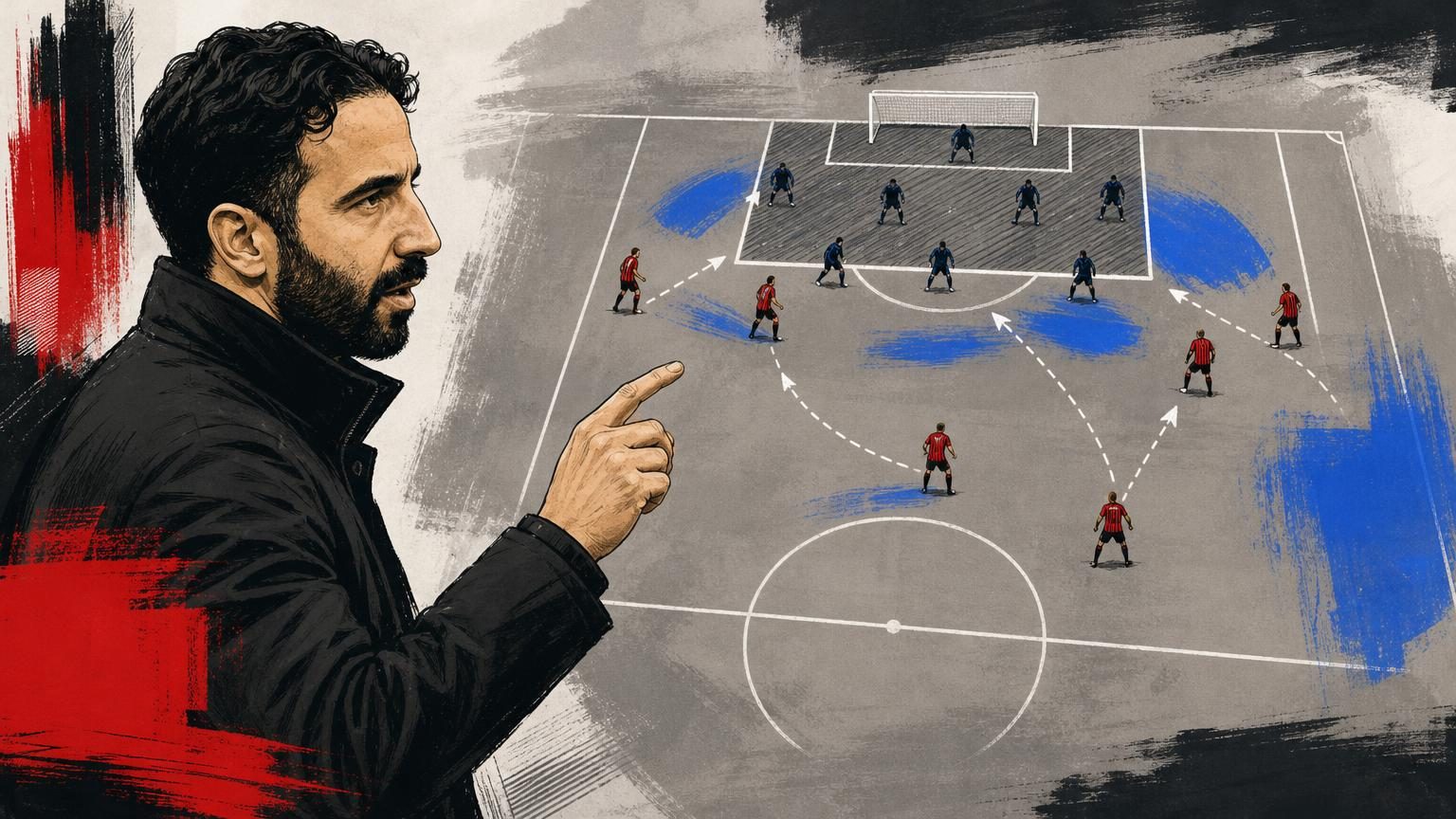
Ruben Amorim has named the problem he sees as central to Milan's season: the team dominates spells of matches but cannot consistently push opponents back into their own box and keep them there.
Speaking in a pre-match press conference on Wednesday, reported by Football Italia, Amorim said his side's identity is built around control and positivity but admitted the final third is where that identity breaks down. "We clearly lack the ability to push opponents near their box and keep the ball there to create more chances. That's the biggest problem with us," he said.
The comments come before Milan host Ferencvaros in the Europa League on Thursday, with a trip to Genoa in Serie A to follow on Sunday. Milan sit fifth in Serie A and have lost only once in their last ten league matches, but their European campaign has produced just one win from three games.
Territorial control without the payoff
Amorim's framing is specific. He is not describing a lack of possession — Milan have shown they can keep the ball — but a lack of sustained territorial occupation in the attacking third. Pushing an opponent into their own box and keeping them penned there is a measure of field tilt: how much of the pitch a team controls over a passage of play, not just how often it touches the ball.
A team can enjoy plenty of possession in midfield and still fail to compress the opponent into a low block near their own goal. Amorim's point is that Milan too often stop short of that final compression, which limits the volume and quality of chances they generate even in games they control.
He was careful to separate that structural issue from effort or application, framing it instead as a question of improving incrementally. "We need to improve and improve," he said, adding that he wants his side to be "positive and dominant" even if that identity is not yet fully realised in results.
What changed defensively against Inter
The derby win offered a glimpse of the version of Milan Amorim is building toward, albeit on the other side of the ball. He described a defensive approach built on marginal gains in positioning rather than a change in system, telling reporters the difference against Inter came down to being "a meter closer" to teammates than in the previous league game against Bologna.
Milan anticipated where Inter's danger would come from and adjusted their pressing and marking accordingly. Amorim said his side knew crosses from Federico Dimarco were likely, with Francesco Esposito and Thuram waiting centrally, and set out to stop deliveries reaching that area rather than simply defend crosses as they arrived.
That meant being more aggressive out of possession once Milan had lost the ball, treating the prevention of crosses as a pressing trigger rather than reacting once the ball was already in the box. Amorim credited Koni De Winter's performance in that structure, while noting that a single uncontested cross to Thuram could have undone the defensive work regardless of individual quality.
Amorim also linked defending well to how Milan behave in possession, arguing that controlling the ball reduces the number of defensive moments his team faces altogether. "We defended with the ball and that helps us to think more clearly when we don't have the ball," he said, describing it as part of the same identity he wants to see carried into the final third.
A tactical identity rooted in boyhood admiration
Amorim's attachment to Milan predates his coaching career. Nicky Bandini wrote for the Guardian that growing up in Lisbon, Amorim followed Benfica locally but was captivated from afar by the Milan side of Paolo Maldini, Franco Baresi, Ruud Gullit, Dejan Savicevic and Frank Rijkaard. He told the Portuguese newspaper Expresso in 2017 that playing for Benfica and Milan were his two childhood dreams, and that having fulfilled one as a player, he would have to become a coach to reach the other.
That history does not explain Milan's tactical shortcomings this season, but it frames the stakes Amorim attaches to building a Milan side with genuine attacking control rather than fleeting spells of dominance. His description of Milan's identity as wanting to dominate games, sometimes succeeding and sometimes not, suggests a coach who sees the derby win as a step rather than an arrival point.
Amorim was explicit on that score when asked how close his team is to the identity he wants. "Even if we win every game, we'll never feel like we've reached the top," he said, adding that Milan are "controlling the games a bit better" but still have "so much to do," particularly in sustaining spells inside the final third.
Ferencvaros arrive at San Siro on Thursday in the Europa League, with Milan looking to carry the defensive principles from the derby into a competition where their record stands at one win and two defeats. The Genoa trip on Sunday follows before the international break, giving Amorim two further opportunities to narrow the gap between the control his team shows in midfield and the dominance he wants closer to the opposition's goal.