
Politano's broadside exposes Napoli's late-game fragility, not just its unity
After a 4-1 collapse at Porto, Matteo Politano's pointed remarks about Italian teammates taking responsibility highlight a deeper pattern in how Napoli concede late.
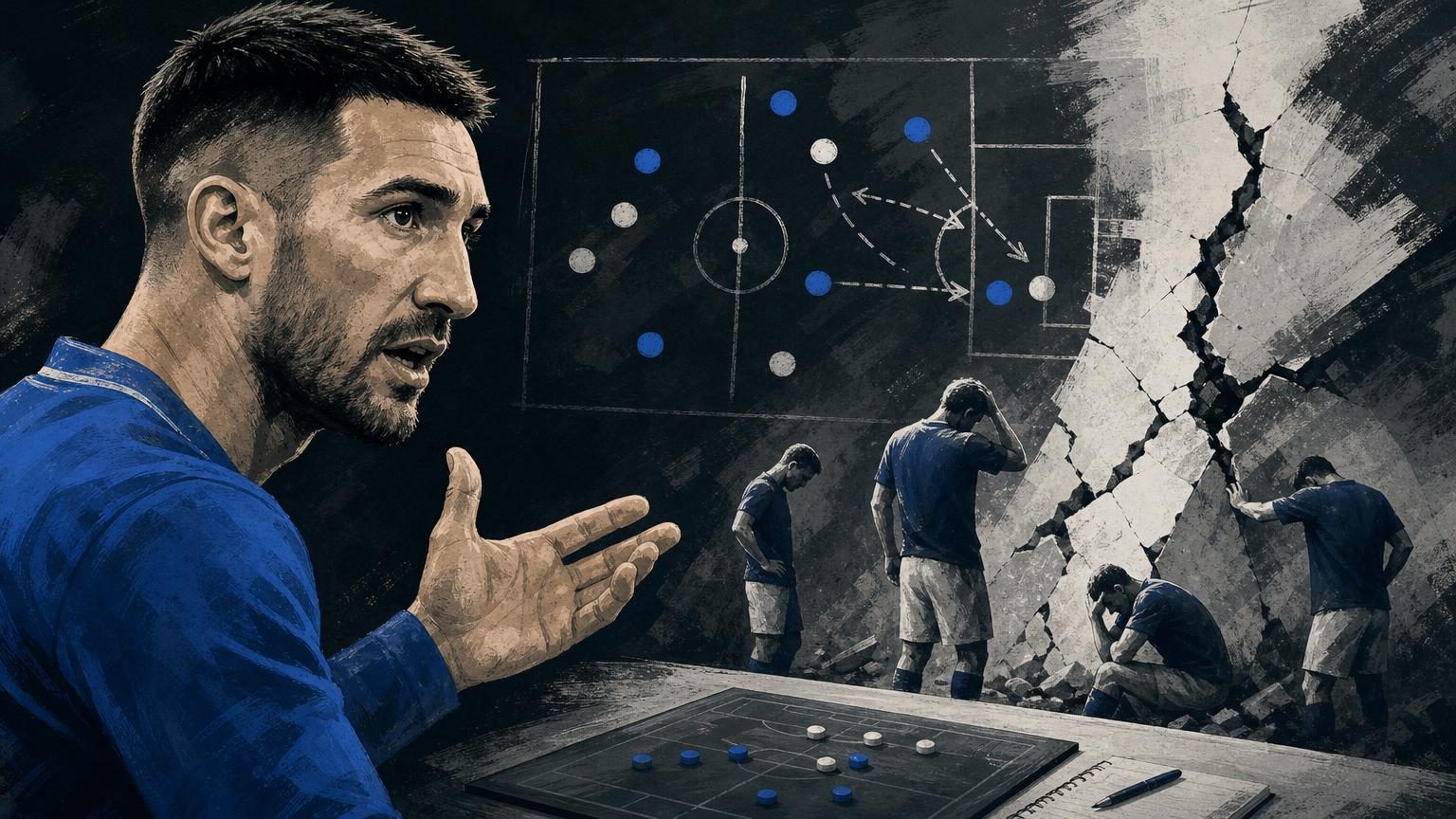
Matteo Politano did not hold back after Napoli's 4-1 defeat to Porto in the Champions League, telling reporters it was "always" the Italian contingent left to explain the team's performances in the mixed zone, according to Football Italia.
Napoli travelled to the Estadio do Dragao with ten players missing through injury or ineligibility, leaving only three senior outfield options on the bench. Given that context, the opening exchanges were encouraging: Jan Bednarek headed Porto in front from a corner, and Scott McTominay levelled for Napoli shortly after.
The collapse came in the final twenty minutes. Gabriel Veiga scored from a counter-attack, Jakub Kiwior added a second headed goal from a corner, and Rafa Marin was sent off before Samu converted a late penalty, turning a tight contest into a rout.
When Sky Sport Italia noted that it was again Politano facing the media rather than other squad members, he responded with what was described as a bitter laugh: "It would be nice if a few other teammates came here to give an explanation and not just us Italians, but never mind." He added, "I never hide my face."
Why the same twenty minutes keep undoing Napoli
Politano's account of the collapse points to something more specific than fatigue or bad luck. He said the opening period had been positive, with Napoli equalising and creating further chances, but conceded that two goals arrived from corners after Porto had already struck the crossbar twice from similar situations.
That detail matters. A team conceding repeatedly from the same type of delivery is not suffering from a single lapse but from a structural issue in how it organises against set pieces, whether in marking assignments or in reacting to second contacts. Porto's pattern of hitting the woodwork from corners before finally scoring from one suggests Napoli's defending of that specific threat was exposed more than once before it cost them.
Politano was asked directly whether the recurring late collapses, in Serie A as much as in Europe, are a physical problem. His answer resisted a simple explanation. "At times, it is not even a tactical issue, as we are all behind the ball, but we lack the determination and sharpness, we don't read situations well or sense danger," he said, adding that at this level the smallest gap in concentration is enough to be punished.
That framing is significant: a team can hold a compact low block and still get exposed, because compactness alone does not guarantee alertness in transition or sharpness in one-on-one duels at set pieces. Veiga's counter-attack goal came precisely in that kind of moment, when defensive shape existed but reaction speed did not.
The unity question Politano tried to deflect
Pressed on whether his comment about Italian players stepping up implied a lack of unity in the squad, or that Max Allegri was losing control of the dressing room, Politano pushed back on that reading. "I was not attacking anyone, we have a squad that is struggling, but we need to come together and think about this next game before the break for international duty," he said, adding that the hope was to recover injured players during the break so that "our season can really begin."
The distinction he drew, between a group that is short-handed and one that is divided, is his own interpretation rather than a settled fact. But it sits awkwardly alongside his opening remark about only Italian players facing the media, which was pointed enough that Sky Sport Italia's question about dressing-room unity followed naturally from it.
Speaking separately to Amazon Prime Video Italia, Politano stressed the scale of the collapse rather than the result alone: "losing 2-1 and losing 4-1 is a big difference. We melted at the second goal and we need to take a good look at ourselves." That phrase, melting rather than merely losing control, reinforces his earlier point that the issue is less about defensive organisation than about the moment concentration breaks down.
What it means for the run-in
The defeat leaves Napoli having lost three of their four Champions League group-phase matches, and it follows a 2-0 Serie A loss to Juventus at the weekend. Politano's comments suggest the dressing room itself is searching for answers rather than hiding from the problem, even as his remarks about shouldering responsibility alone hint at tension beneath the surface.
With the international break now arriving, Napoli's immediate task, by Politano's own description, is less tactical remodelling than recovering bodies and resetting mentally before what he called the real start of their season.