
Amorim diagnoses a competitiveness problem, not a tactical one, after Milan's Bournemouth collapse
Ruben Amorim reshuffled his Milan side for the trip to Udinese, insisting Thursday's 3-0 Europa League defeat at Bournemouth was about application rather than quality.
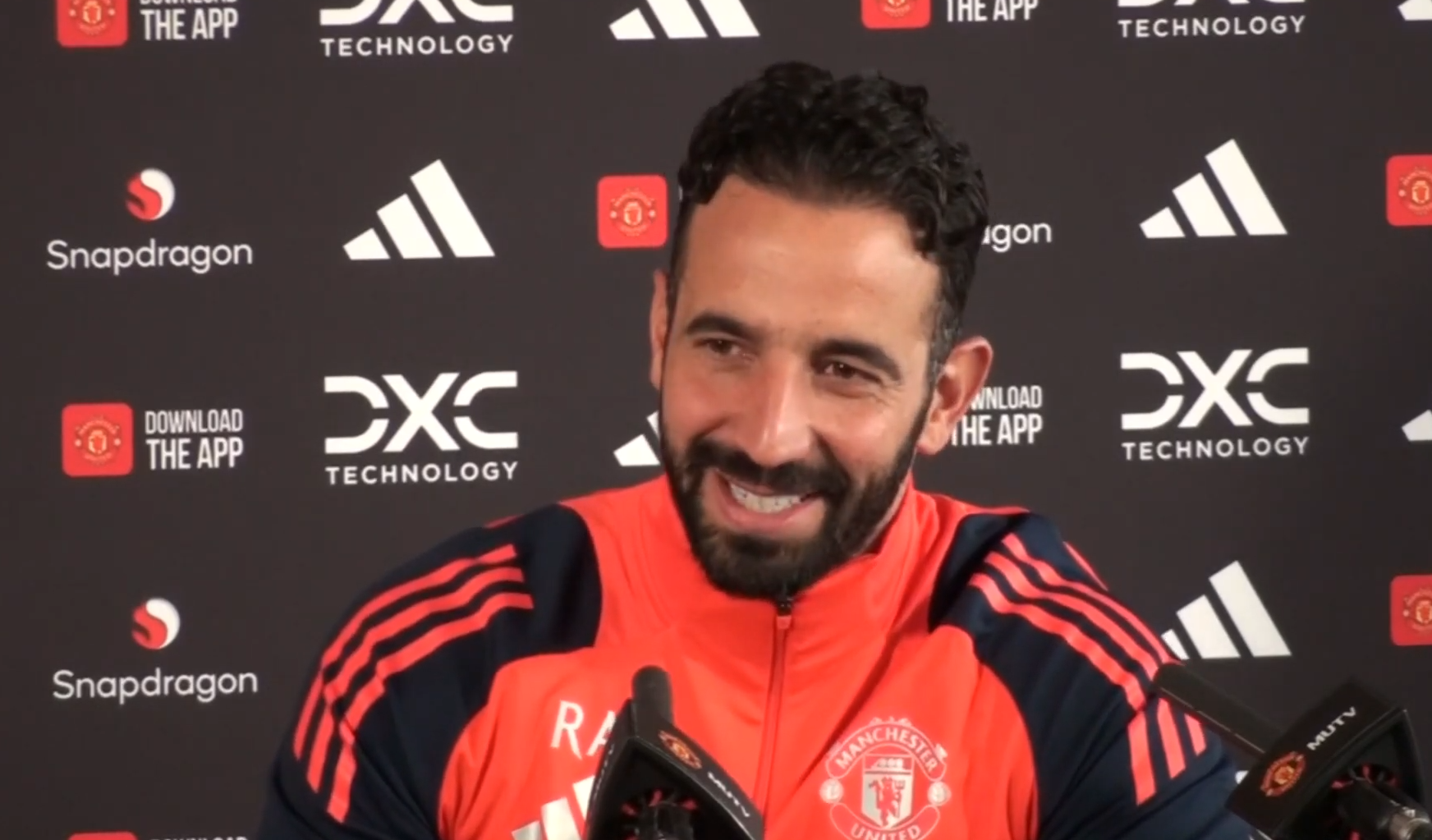
Ruben Amorim used his pre-match press duties ahead of Milan's trip to Udinese to explain both his team selection and his reading of the 3-0 Europa League defeat at Bournemouth three days earlier, telling DAZN Italia that the humbling at the Vitality Stadium was not a question of tactics or technical ability.
"I felt what happened at the beginning with Bournemouth was nothing to do with tactics or technical qualities, because they were not better than us on a technical level, they were more competitive," Amorim said, according to Football Italia.
A night that exposed more than one red card
The Guardian's Nick Ames described Milan as resembling "holograms" even before Mike Maignan's sending-off, with Bournemouth, managed by Marco Rose, never relinquishing control of the game. Justin Kluivert opened the scoring from the penalty spot, and Marcus Tavernier added a second from another spot-kick after Maignan's dismissal, before Amine Adli completed the scoring with a late free-kick.
Maignan was sent off for shoving Bournemouth's Tyler Adams as a corner was being delivered, an impulsive act that left Milan to play more than half the match a man short. The Guardian went further than framing it as one individual error, calling the whole performance an "abject" continuation of Amorim's earlier struggles in English football and suggesting Manchester United, whom Bournemouth face next, share traits with this version of Milan.
Amorim's account does not contradict the scoreline, but it reframes the explanation. Where the Guardian situated the collapse within a pattern of fragility under his management in England, Amorim located it in a lack of competitive edge that he says has also surfaced domestically.
Why Amorim links this to Milan's Serie A form
Milan remain unbeaten in Serie A this season, but Amorim's own framing undercuts the record rather than celebrates it. He pointed to draws against Juventus, Lazio and Sassuolo, and to a 3-2 win over Atalanta in which Milan nearly surrendered a three-goal lead, as evidence of the same issue: "That is something we see in the first halves in the league too, it's about how competitive we are. Sometimes we need to forget about playing really nice, we need to approach the game in a different way."
That is a notable admission from a coach whose Milan teams are generally built around possession structure and positional discipline. Diagnosing a competitiveness gap rather than a tactical one effectively asks his players to solve a mentality problem, not a shape problem, which is a harder thing to coach for in a five-day turnaround before facing Udinese.
On Maignan specifically, Amorim said he had addressed the incident directly with his goalkeeper but did not treat it as requiring special handling. "The players are not boys, they are men. Maignan understood right away he cannot do that, we cannot put ourselves in that position," he said, adding that he had spoken to the whole squad, not just the goalkeeper, about the game.
The reshuffle forced on Amorim at Udinese
Milan's injury list left Amorim with little room for continuity even had he wanted it. Adrien Rabiot, Mario Gila and Diego Moreira all picked up injuries around the Bournemouth game, joining Samuel Chukwueze, Matteo Gabbia, Alexis Saelemaekers and Pietro Terracciano on the sidelines. "They cannot play, it's just not possible. We need to manage the players, and there are players here today too where we need to manage their minutes," Amorim said, citing the congestion of the current schedule as the reason some fit players were also rested.
The consequence was a revamped back line, with Fikayo Tomori and Sankhoun Diawara handed their first Serie A starts of the season, and suggestions Milan could switch into a 4-4-2 for the visit to Udinese. Amorim tied the formation choice directly to the opposition, noting that Udinese build with a back five and that his team needed "to play in a different way" against that structure.
He was careful to present the selection as a product of circumstance rather than conviction, saying that rotation and player availability, not a tactical preference, dictated the XI he picked. "What matters is the rotation, I try to choose the players that are available physically, and then look at their characteristics," he said, adding that the starting line-up was built to begin the match rather than necessarily finish it.
Milan's challenge now is converting that stopgap defensive setup and a squad short on options into a result that arrests the pattern Amorim himself has identified: a team technically equipped enough to avoid defeat in Serie A, but not yet consistently competitive enough to dominate games from the first whistle, let alone replicate anything close to the control Bournemouth showed over them in England.