
Spalletti's three-man midfield solves one problem for Juventus and exposes another
A restructured midfield gave Juventus control for 45 minutes at Lecce, but Luciano Spalletti admits his side lost their nerve once the hosts changed shape.
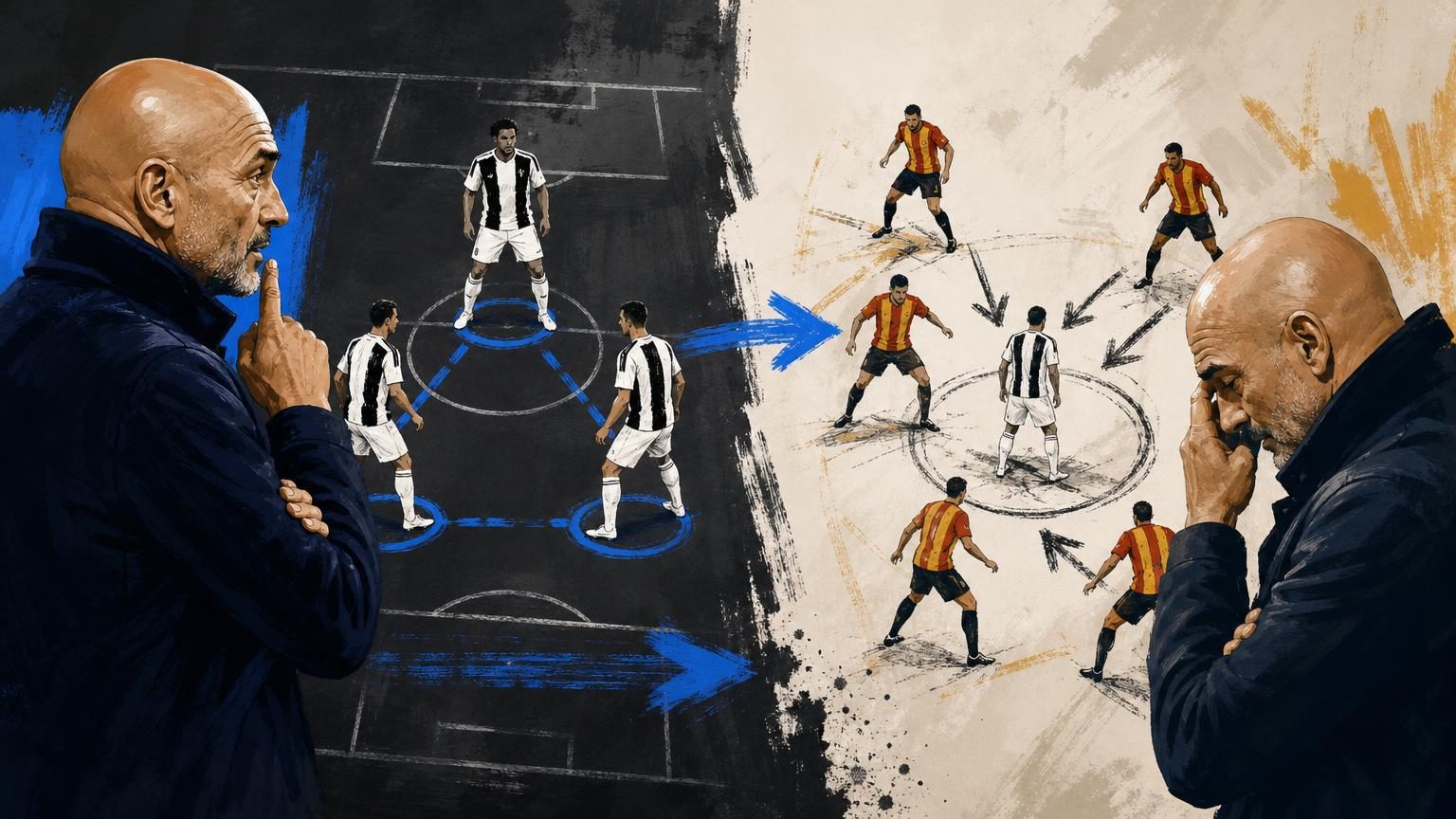
Juventus beat Lecce 2-0 at the Via del Mare on Sunday, Weston McKennie and Douglas Luiz scoring in the first half to answer last weekend's 3-0 defeat to Lazio. Afterwards Luciano Spalletti told Sky Sport Italia that his revised system has given the team more solidity, though he was unhappy with how his players managed the second half, as reported by Football Italia.
This was the second straight match in which Spalletti paired Randal Kolo Muani and Nick Woltemade up front, supported by a three-man midfield rather than the shape used before the Lazio loss. Adding a body in central midfield is a direct response to being overrun: it gives Juventus extra cover against transitions and more passing options to escape pressure through the middle.
That structural change has a cost. Fitting a third central midfielder in means dropping wide players who had previously been effective, a trade-off Spalletti acknowledged directly. "We spoke about what we needed most," he said. "We changed something on a tactical level by playing with three midfielders, because in these sorts of moments you need more solidity and clarity and we did the most logical thing."
A midfield built for control, not width
Concentrating numbers centrally sacrifices the stretch that wide forwards provide, but it buys control of the ball in congested areas. For the first 45 minutes at Lecce, that trade paid off. Spalletti described his side as playing with tempo and openness, a performance level he wanted sustained for the full 90 minutes.
"The players played a very good game in terms of pace and playing openly," Spalletti said of the first half, according to Football Italia. The problem, by his own admission, was what followed.
Why the second half unravelled
Lecce altered their own approach at the interval, moving from a 4-3-3 into a back three with man-oriented marking across the pitch. That shift changes the picture for any side building from the back: instead of facing zonal pressure, Juventus's defenders and midfielders were suddenly marked individually, which shrinks time on the ball and makes the first pass far riskier.
Spalletti explained the consequence plainly. "They came out in a 4-3-3 and in the second half they played three at the back and went man for man. We stayed put, we didn't press with any force and we no longer built from the back. The goalkeeper had a lot more passes to make in the second half," he said, as relayed by Football Italia.
Facing man-marking should, in theory, invite more rotation and quicker combinations to unbalance individual markers. Instead, Juventus retreated into caution. Spalletti's own description of his team losing courage points to a side that stopped trying to play through the press and instead let the goalkeeper take on more of the passing load, ceding territory and the chance to extend the lead.
Douglas Luiz's goal underlines a wider utility
Douglas Luiz's opener was his first competitive goal for the club, and Spalletti singled him out for his contribution beyond the finish. "He had a great game today, he fought and ran, he battled on all sides and he helped clean up certain situations when we needed him to," the coach said, per Football Italia.
That combination of defensive work and a goal threat from midfield is exactly what a three-man configuration is designed to produce: a player capable of screening the back line while still arriving late enough to score. It is one reason Spalletti views the system as workable even though the second-half execution fell short.
The result moves Juventus past the disruption of the Lazio defeat, but Spalletti's comments make clear the next task is not structural. Having found a shape that brought the control he wanted in the opening half, he now needs his players to hold that intensity and press without retreating once a game stops going entirely their way.