
Carlos Augusto's shift from back three to wing-back wins it for Inter
Inter beat Shakhtar Donetsk 1-0 despite Alessandro Bastoni's second-half red card, with Carlos Augusto switching roles to score the only goal at San Siro.
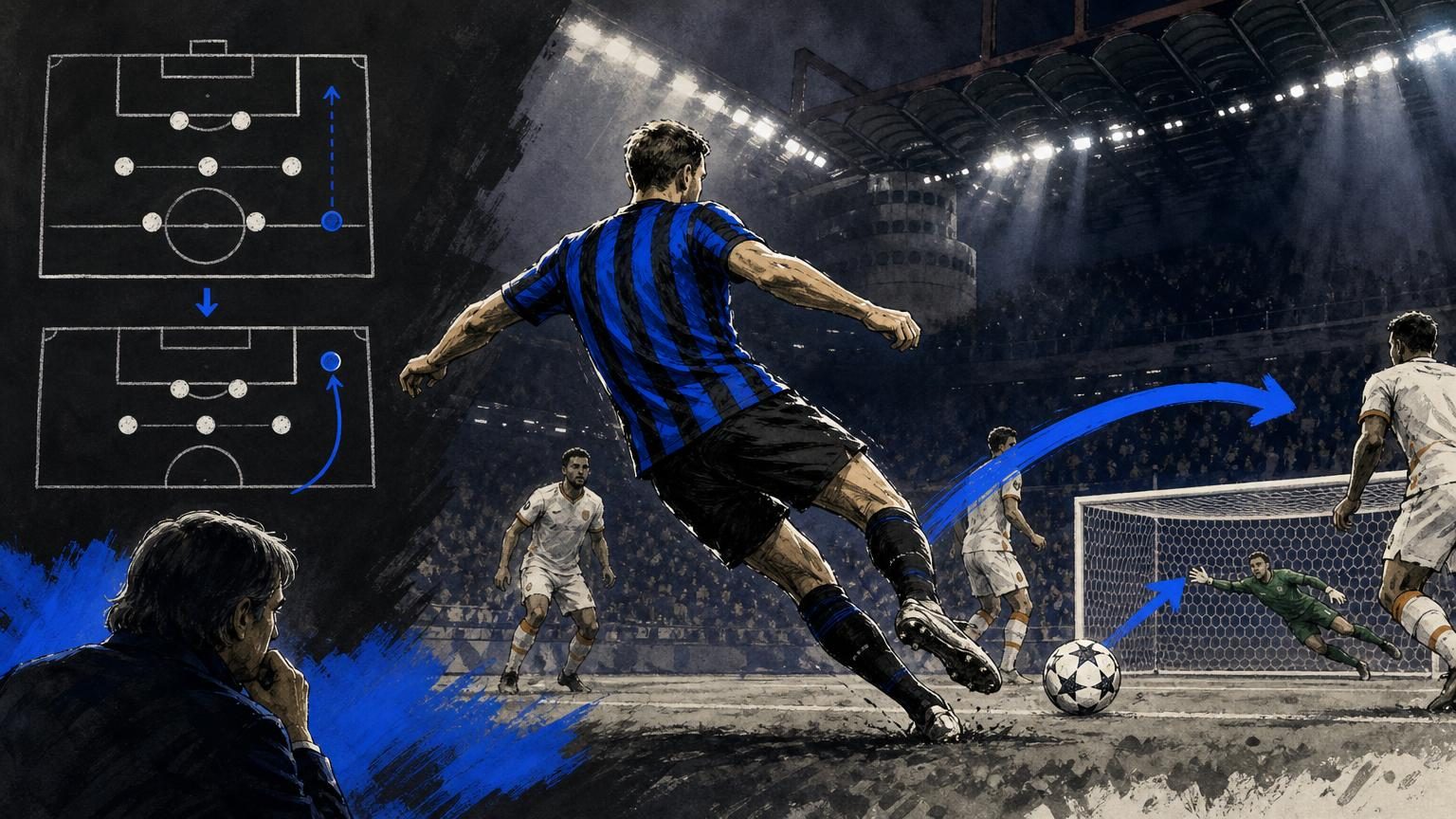
Carlos Augusto scored the winner for Inter against Shakhtar Donetsk in the Champions League on Tuesday, converting a chance after changing positions following Alessandro Bastoni's dismissal, Football Italia reported.
The Brazilian started the match on the left side of a three-man defence before moving into the left wing-back role once Federico Dimarco was substituted off. He finished the move by chesting down a pass from substitute Henrikh Mkhitaryan and lifting it past the goalkeeper.
"It was an important goal, as Shakhtar Donetsk are a really good team, they pass it around well, but I have to credit my teammates, as it was not easy to play down to 10 men and we showed how much we wanted this victory," Carlos Augusto told Amazon Prime Video Italia.
A back three forced to reshape under numbers pressure
Bastoni's two yellow cards in quick succession left Inter a man short, and that moment reshaped the structure of the entire side. A back three built around Bastoni, Yann Aurel Bisseck and Carlos Augusto depends on balance across the width of the defence; losing one of its three central pieces usually forces a team to drop into a back four or sacrifice an attacking outlet.
Inter instead kept their attacking spine by shifting Carlos Augusto out to wing-back, a role that trades defensive solidity for licence to join the build-up. It is a demanding adjustment mid-match, requiring a defender to read space in behind an opposition that, by Carlos Augusto's own account, had plenty of quality to exploit it.
That the goal came from exactly this repositioning is the detail worth isolating. Mkhitaryan's pass found Carlos Augusto running into the space a conventional back-three system would not normally vacate, and he credited Piotr Zielinski with starting the move before it reached the Argentine international for the final pass that preceded the goal.
Why the pressure before the red card mattered
Inter had lost their opening two Champions League group-phase matches this season, against Real Madrid and Club Brugge, and had lost seven of their previous eight games in the competition stretching back into last season. That run sat behind the tension Carlos Augusto described before Bastoni's dismissal.
"We weren't scared, but obviously Champions League games are difficult, you cannot control them for 90 minutes. Shakhtar Donetsk have a lot of quality, the squad is full of Brazilians, but we showed that we could suffer under pressure too," he said.
The suggestion that Inter were playing with the weight of that record rather than any specific tactical plan is significant. A side approaching matches cautiously because of recent results tends to concede territory rather than press for turnovers high up the pitch, which fits the pattern Football Italia described of Inter struggling for control before being reduced to ten men.
Paradoxically, going down to ten appears to have removed some of that caution. With a man fewer and nothing left to protect structurally, Inter committed numbers forward through the full-back areas rather than retreating into a containment shape, and that directness produced the only goal of the game.
The dedication to Bastoni and what it signals
Carlos Augusto was asked whether the two yellow cards shown to Bastoni in close succession had been harsh, with a suggestion of provocation from Shakhtar players beforehand. "It was what they were looking for. I don't know if they were yellow cards, but the important thing is that we won, so we dedicate the win to Bastoni. We've got to keep going like this," he said.
That framing matters for how Inter's dressing room is processing a difficult European campaign. Dedicating a result to a sent-off teammate, rather than treating the dismissal as a setback to be managed around, points to a squad choosing to read the ten-man spell as proof of character rather than a tactical crisis.
Whether that character translates into sustained control of matches, rather than goals scored while chasing a game shorthanded, is the question Inter's next Champions League fixtures will answer. Three points arrived at San Siro, but Football Italia's own assessment was that the overall performance remained far from impressive, even allowing for the circumstances that shaped it.