
Carrick's pressing crisis exposes Man Utd before any search for a successor begins
Bruno Fernandes blamed Michael Carrick's pressing instructions after the 4-1 Champions League defeat to Como, but his own lone pressing may have made United's problems worse.
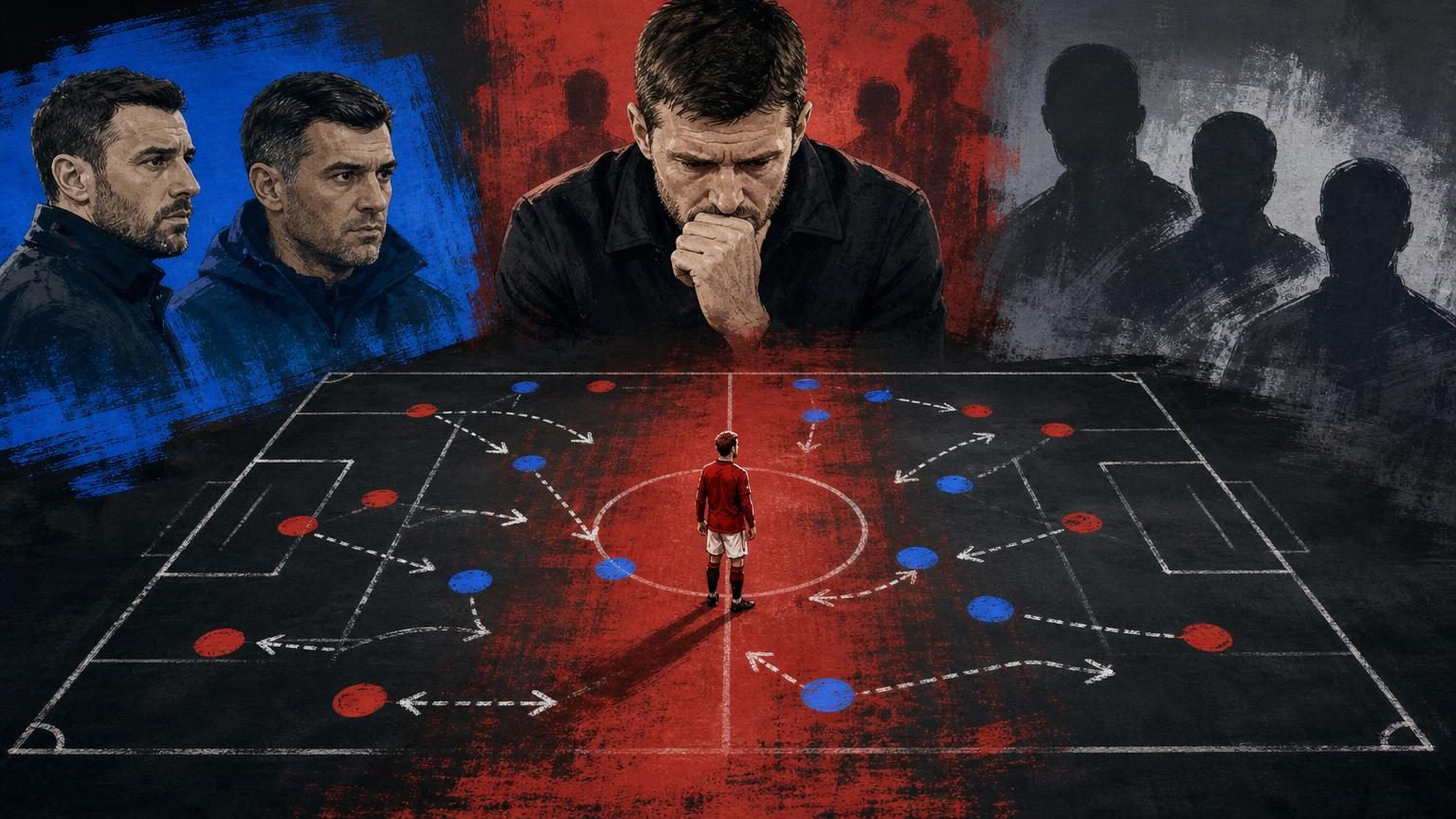
Michael Carrick's position at Manchester United has grown precarious after a 4-1 Champions League defeat to Como, a club playing only its third ever European fixture, and the fallout has been driven as much by his own captain as by the result itself.
Bruno Fernandes told TNT Sports that the collapse stemmed from a tactical choice, saying it was "a decision from the staff to not press man to man and sometimes leave space behind and try to get the ball, but sometimes when you give too much [of] the ball to these teams they get confidence," as reported by The Analyst.
Asked directly whether Carrick had got his approach wrong, Fernandes placed the responsibility elsewhere, saying "that's on the manager and staff to see it, not me. Sometimes you have to be more brave under pressure, take the risk of pressing high and making them uncomfortable," per the same outlet.
Carrick's reply was short. He noted that "we half pressed man-to-man in the second half and ended up conceding a goal from that," a detail that complicates the simple version of events Fernandes offered.
Why one man pressing high can hurt more than help
The Analyst's review of the game found Fernandes repeatedly sprinting towards Como's goalkeeper and defenders without support, then throwing his arms up or shouting at teammates when nobody joined him.
That pattern matters tactically. A high press only works as a coordinated structure: if one player steps out of the defensive shape to close down an opponent and the rest of the team holds its half-press or sits deeper, the pressing player simply opens a passing lane rather than closing one.
Como, built around the influence of Nico Paz, were able to play through the gaps Fernandes left behind him, turning his individual urgency into exactly the kind of space Carrick's setup was presumably designed to avoid.
Carrick's own account of a man-to-man half-press in the second half, which still conceded, suggests the issue was not purely about bravery versus caution, as Fernandes framed it, but about whether United's press was ever organised enough to execute either approach.
A captain's public critique adds to a week of discord
Fernandes is not usually reluctant to speak his mind, but The Analyst noted that this level of public criticism of a manager's tactics has not been seen from a United player since Lisandro Martínez's comments the previous week.
Two senior figures airing frustration with the coaching staff inside a fortnight points to a dressing room where trust in the tactical plan is thin, regardless of who is technically at fault for the Como result.
The defeat has already cranked up pressure on Carrick before Fernandes's comments, and the captain's remarks have only sharpened the scrutiny on whether the head coach's methods can hold the squad together.
The names being floated if United do move on
Planet Football has set out a list of leftfield candidates should United decide Carrick cannot continue, deliberately steering away from the obvious available options of Eddie Howe, Antonio Conte and Julian Nagelsmann.
Thiago Motta features despite a difficult spell at Juventus, where he was sacked by March of his first season after building a reputation at Bologna for the unconventional 2-7-2 shape that took them into the Champions League.
Marcelo Bielsa is another suggestion, out of work since his three-year Uruguay reign ended with their World Cup exit, with Planet Football pointing to his history of being praised by Sir Alex Ferguson during his time at Athletic Club.
Sergio Conceicao is also named, a coach who won three league titles across seven years at Porto before a brief, unsuccessful stint at AC Milan and a subsequent spell at Al-Ittihad in the Saudi Pro League, which he left at the end of last season. Planet Football describes him as a manager who favours a high-pressing approach.
None of these names carry the same market profile as the more obvious candidates, but each would bring a defined pressing or possession philosophy that United's current setup has visibly lacked.
For now, Carrick remains in charge, and the next fixture will tell United's hierarchy more about whether the problem is personnel, instructions, or the gap between the two that both their captain and their coach have just described in public.