
Carrick's Roma comeback fits a well-worn Manchester United pattern
A 3-2 win over Roma from 2-0 down may have bought Michael Carrick time, but United's history shows such reprieves rarely settle anything for long.
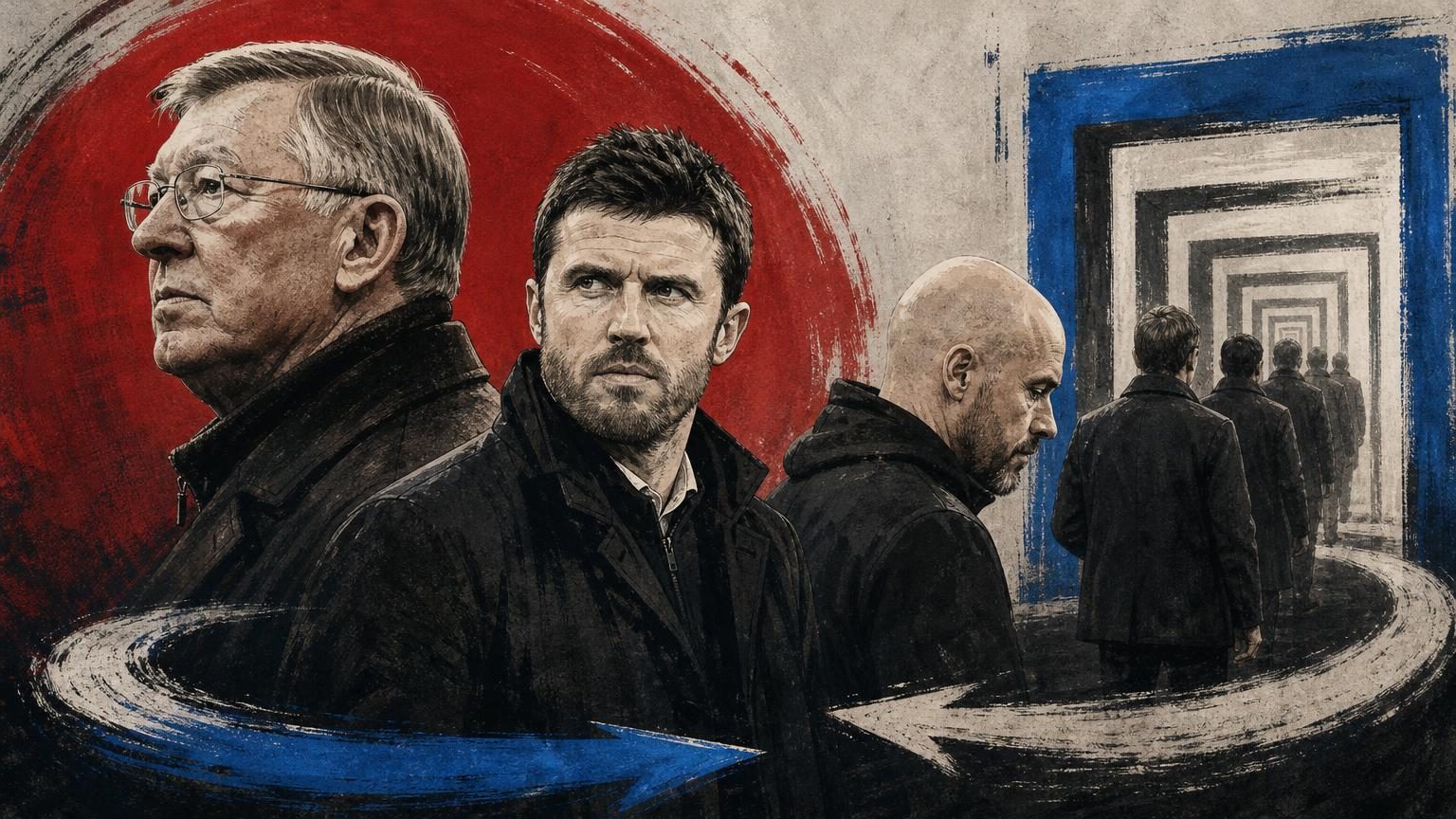
Michael Carrick's Manchester United came from two goals down to beat Roma 3-2 in the Champions League, ending a winless run stretching back to early September and, according to Planet Football, giving him a stay of execution at Old Trafford.
Three days before that match, the Guardian's Andrew Beasley had named Carrick the clear favourite to become the Premier League's first managerial casualty of the season, despite the division being unusually stable: no top-flight club had sacked its manager by November 1, a point reached without a change in only three of the previous ten campaigns.
Beasley attributed part of that stability to the fact that 11 Premier League clubs began this season with managers appointed at some point in 2026, meaning most were still inside the period a club typically allows a new appointment to take shape.
The Roma result does not erase that pressure. It simply inserts United into a pattern the club has repeated before: a single European comeback, arriving at the point of maximum scrutiny, that buys a manager a few more weeks rather than solving the underlying problem.
United have used this escape route before
Planet Football traced the lineage back to Alex Ferguson, whose position by January 1990 was close to untenable after finishes of second, 11th and a slide towards 13th, with a banner at Old Trafford reading 'Ta Ra Fergie'. An FA Cup third-round tie at Brian Clough's Nottingham Forest turned on Ferguson's decision to start 20-year-old Mark Robins, whose goal won the game and began the cup run that delivered the trophy and, eventually, the dynasty that followed.
Ole Gunnar Solskjaer had a more direct parallel to Carrick's night: trailing Atalanta 2-0 after half an hour in 2021 with his job already being written off, United fought back to win through a second-half response finished by Cristiano Ronaldo. The reprieve lasted barely a week. United lost 5-0 to Liverpool in their next game, and although Solskjaer survived into November, a 4-1 defeat at Watford ended his tenure.
Erik ten Hag's version in 2024 showed how far such moments can carry a manager, and how little they ultimately guarantee. United were reportedly close to sacking him before an FA Cup final in which his side sat off a City team chasing a fourth straight title and hit them on the counter, Alejandro Garnacho and Kobbie Mainoo scoring either side of a Jeremy Doku reply. It produced United's 13th FA Cup, but Ten Hag was gone by October, with widespread reports of his impending dismissal and costly recruitment, including the £86 million signing of Antony, having already undercut his standing.
Why the reprieve rarely resolves the underlying issue
The common thread is that each of these results was a transition-based sucker punch rather than evidence of sustained control of a match. Ferguson's cup run began with a single moment of attacking fortune under pressure; Solskjaer's and Carrick's comebacks both involved pulling level and winning from the kind of losing position that usually buries a struggling side; Ten Hag's final win was built on deliberately ceding possession to City and attacking the space in behind, a gamble that worked once against a specific opponent rather than a repeatable system.
None of that tells a club whether its structural problems — squad building, pressing organisation, control in games United are expected to dominate — have actually been fixed. Ten Hag's case is the clearest warning: the FA Cup final win did not stop his sacking, it only delayed it, and the delay cost United more by the time they eventually turned to Ruben Amorim and a different system mid-season.
What the Roma win does and does not change for Carrick
For Carrick, the scoreline matters less than what it represents: the first time since early September that United have looked capable of the second-half resilience that both Ferguson's and Solskjaer's comebacks also relied on. It is the kind of result that silences the loudest immediate criticism without addressing why United were 2-0 down to Roma in the first place.
Beasley's reporting for the Guardian placed Carrick as sack-race favourite with only one more round of Premier League fixtures to play before the international break, a window that will test whether the Roma comeback reflects genuine improvement or another short-lived reprieve. United's history suggests the next few matches, not the Roma scoreline itself, will determine which it turns out to be.