
Juventus' identity crisis goes deeper than one scoreline against Lazio
A 3-0 home defeat has left Juventus a point worse off than when Igor Tudor was sacked last season, and Fabrizio Ravanelli says the team is simply badly built.
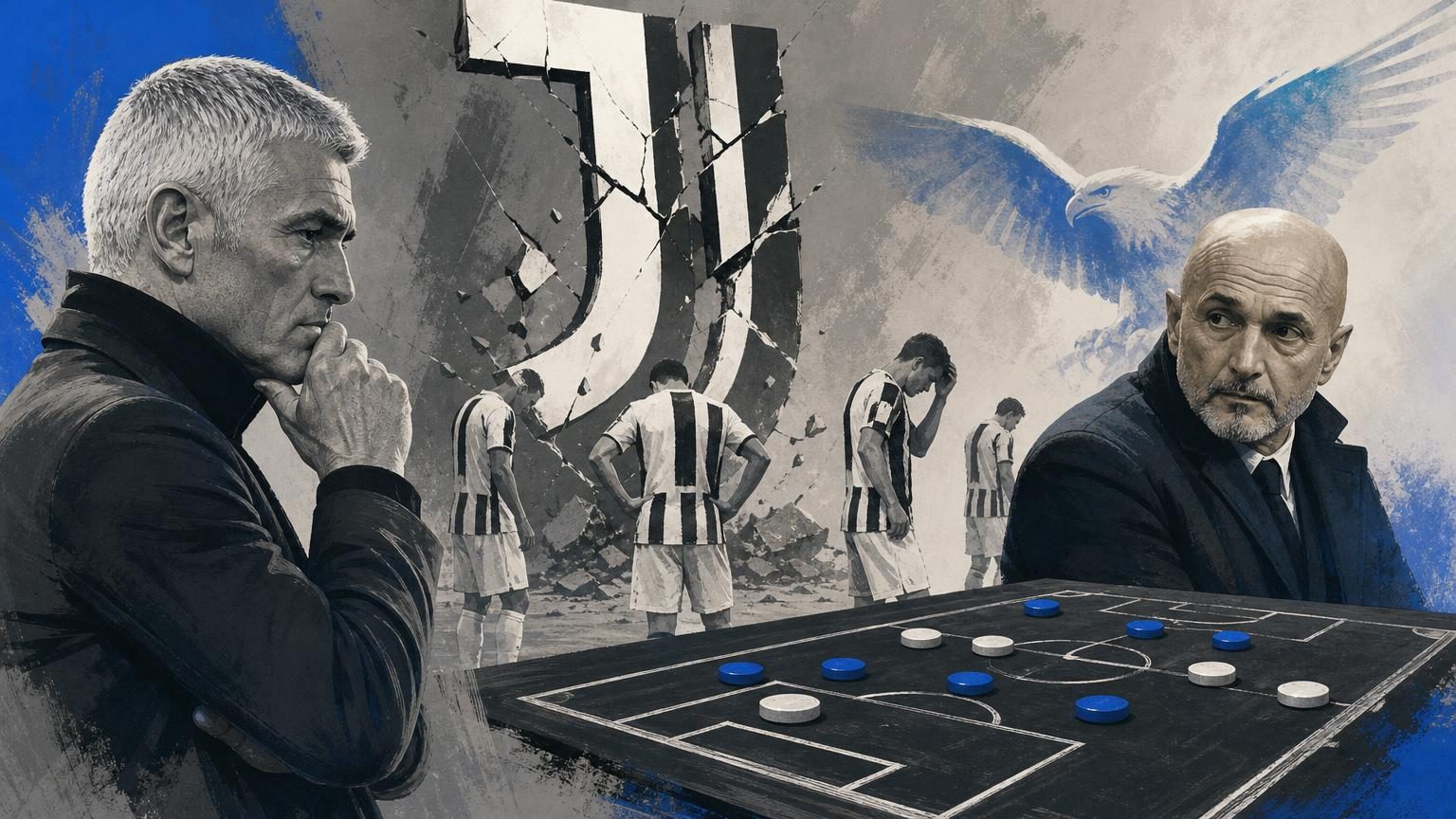
Juventus lost 3-0 to Lazio at the Allianz Stadium on Sunday, beaten by goals from Oliver Provstgaard, Gustav Isaksen and Fisayo Dele-Bashiru. It was only their second league defeat of the season, but the manner of it has done more damage than the result alone.
Juventus now sit a point worse off through seven Serie A games than they were at the same stage last season, just before Tudor was dismissed, according to Football Italia. That comparison is doing a lot of the work in the reaction that followed, with supporters calling for Luciano Spalletti to be removed and for Antonio Conte to return to the dugout.
A scoreline built from three separate goals, scored by three different players, rarely points to one isolated error. It points to a team that could not control territory, could not protect its own box in transition, and could not find a spell of the game to impose itself. That is a structural problem, not a one-off lapse.
Three different goals tell the same story
Conceding to Provstgaard, Isaksen and Dele-Bashiru in the same match suggests Lazio were able to score from more than one type of situation, whether through set-piece disorganisation, space in behind, or a breakdown in midfield coverage. A team that leaks goals through varied routes is usually a team without a settled defensive shape, rather than one undone by a single tactical mismatch.
Fabrizio Ravanelli, speaking on Radio Anch'io Sport, called it the worst Juventus performance since Spalletti took charge almost exactly a year ago. He said the players showed "not a lot of determination" and did not win their individual battles, adding that Juventus "conceded with far too much ease, especially for the second and third ones."
That detail matters more than the full-time score. A side that collapses after going behind, rather than tightening up, is signalling something about its collective resolve as much as its tactical organisation.
Personality, not just a system, is missing
Ravanelli's sharpest line was not about shape but about character. He said the team "lacks personality more than anything," and that too many players give the impression they "don't want the ball" and are "hiding" during matches, according to Football Italia.
That is a different complaint from a tactical one. A manager can adjust a formation or change personnel, but a group of players who shrink from responsibility on the ball is a dressing-room issue as much as a coaching one. Ravanelli was careful to spread the blame, saying "it's everyone's fault, you can't just point the finger at the coach, the club or the team," while still saying he expected more pride and fire from the players themselves.
He also drew a comparison to his own playing days, recalling that he, Gianluca Vialli, Alessandro Del Piero and Roberto Baggio acted as the first line of defence for Juventus, pressing and winning the ball back as a unit. The current side, by his account, is not doing that collectively, which would explain why individual goals like Lazio's can come from different areas of the pitch rather than one repeated weakness.
No focal point in attack compounds the problem
Ravanelli also identified a specific structural gap: Juventus do not currently have a striker capable of scoring 15 to 20 league goals a season. Without that reference point, a team under pressure has no reliable way to convert the chances it does create, which raises the stakes on every defensive mistake since there is less margin to recover from one.
He described the issues as spread "across all departments," from the final third backwards, and summed the squad up bluntly as "a badly built team." That framing shifts responsibility away from Spalletti alone and onto how the squad has been assembled, even as he acknowledged being unsure whether this is the moment for Spalletti to leave.
Ravanelli said he still rates Spalletti as "a very prepared person" but noted that the manager's own selection on the night "left some doubts," and that the team's body language suggested a group that had already given up before the final whistle.
On the Conte speculation now swirling around the club, Ravanelli praised the former Juventus coach as demanding and shaped by the club's traditional mentality, saying a coach like that is "capable" and someone who "can't stay away from the dugout." Whether that sentiment translates into an actual change at the top remains a question for the club's hierarchy, not something Sunday's result alone can answer.