
Unai Emery is turning Manchester United's castoffs into a defence that works
Aston Villa's back four of recycled Manchester United rejects and long-serving squad players just delivered the club's best defensive display of the season, exposing how Old Trafford has failed with similar parts.
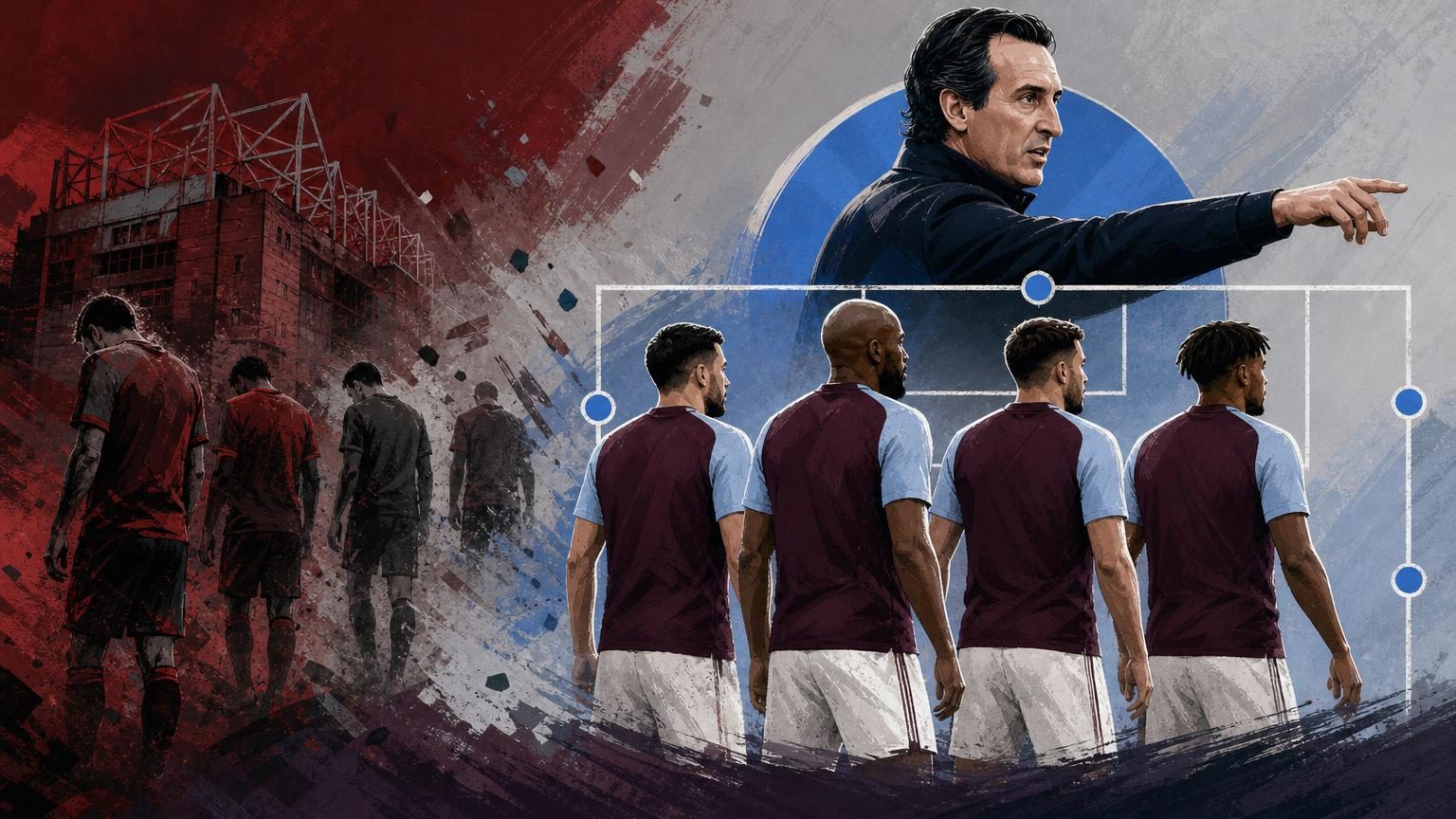
Victor Lindelof captained Aston Villa to a 1-0 win at Newcastle, the latest evidence that Unai Emery has built a functioning defensive structure from players either discarded by, or never good enough for, Manchester United's current side.
Villa's back four at St James' Park contained Matty Cash, a player signed from the Championship, Lindelof, bought by United long before his current manager even took charge there, and Aaron Wan-Bissaka, who left Old Trafford for Villa and played at left-back rather than his more familiar right-back berth.
Planet Football's Matt Stead described it as the best defensive performance of Villa's campaign, delivered by a back four assembled from a player bought out of the second tier, a near-free veteran and two players United once discarded.
Tyrone Mings called the win "a perfect Premier League away performance", according to Planet Football, a verdict that reflects how far Villa have progressed since opening the season with three goalless games and a four-match winless run in the league.
Since that sluggish start, Villa have won four of their last five league matches and drawn the other, while also maintaining a perfect record in the Champions League, a run that Stead's piece notes has arrived alongside a shift in defensive reliability rather than away from it.
Why the centre-back pairing matters more than the names
Lindelof's role as the senior centre-back is central to the turnaround. Emery praised him directly, saying he is "a fantastic guy and a fantastic professional" and framing him as the defensive example for Jaden Philogene-type newcomer Axel Disasi or, more specifically, Harwood-Bellis, who Emery said would "play in the same way" because "he has qualities like Lindelof" and must "watch him every day in training and playing matches".
That is a specific coaching claim: Emery is using an experienced centre-back not just for his individual output but as a template for how a younger defender should read games and organise alongside him. It is a developmental use of a free-agent signing that Manchester United, cycling through managers, have not replicated with their own long-serving centre-backs.
Lisandro Martinez and Harry Maguire remain part of United's regular back four under Michael Carrick, the same quartet that started as far back as Erik ten Hag's first defeat in August 2022, according to Planet Football. The personnel has barely changed, yet the defensive structure around them clearly has, given United sit among only two Premier League sides without a clean sheet this season, with Ipswich the other.
What Cash's comment reveals about Villa's shape
Matty Cash, who moved above Douglas Luiz into 15th on Villa's all-time Premier League appearance list during the Newcastle match, offered his own explanation for the clean sheet: "I wouldn't say it's just defence; it's more structure as a team."
That distinction matters tactically. A clean sheet can be a product of individual defending, but Cash is describing a collective defensive approach, where the shape ahead of the back four reduces the load on the defenders themselves. It is a claim about team organisation rather than personal quality, and it chimes with how Stead frames Emery's achievement: turning composite, previously unreliable parts into a cohesive defensive unit.
Wan-Bissaka's deployment on the left, away from his customary right-back role, is itself a small tactical adjustment that speaks to squad flexibility. A full-back asked to play on his weaker side and still contribute to a clean sheet is a test of coaching detail as much as raw ability.
The gap that numbers alone do not explain
Only a single place and point in the table currently separate Villa and Manchester United, a fact Stead highlights as deceptive. The underlying trend diverges sharply: Villa are building momentum through five matches of mostly positive results, while United's defensive approach has produced no clean sheets across the same period.
Guardian Football's Barney Ronay, writing about United's defeat at Leeds, located the club's problems above the pitch, pointing to chief executive Omar Berrada's position as the figure who appointed Carrick and previously oversaw the hiring or rehiring of two prior managers. That reporting situates United's defensive flaws within a wider pattern of recruitment and decision-making rather than treating them as an isolated coaching failure.
Taken together, the two pieces describe the same raw material, aging or previously rejected defenders, producing opposite outcomes under different management structures. Villa's next test will show whether Emery's defensive structure can hold up against stronger opposition, while United's statistic of zero clean sheets remains unresolved heading into their coming fixtures.