
Maignan's calm words can't hide Milan's transition problem
Mike Maignan urged restraint after Milan's 4-2 collapse against Bologna, but the numbers behind the defeat point to a defensive pattern, not a single bad night.
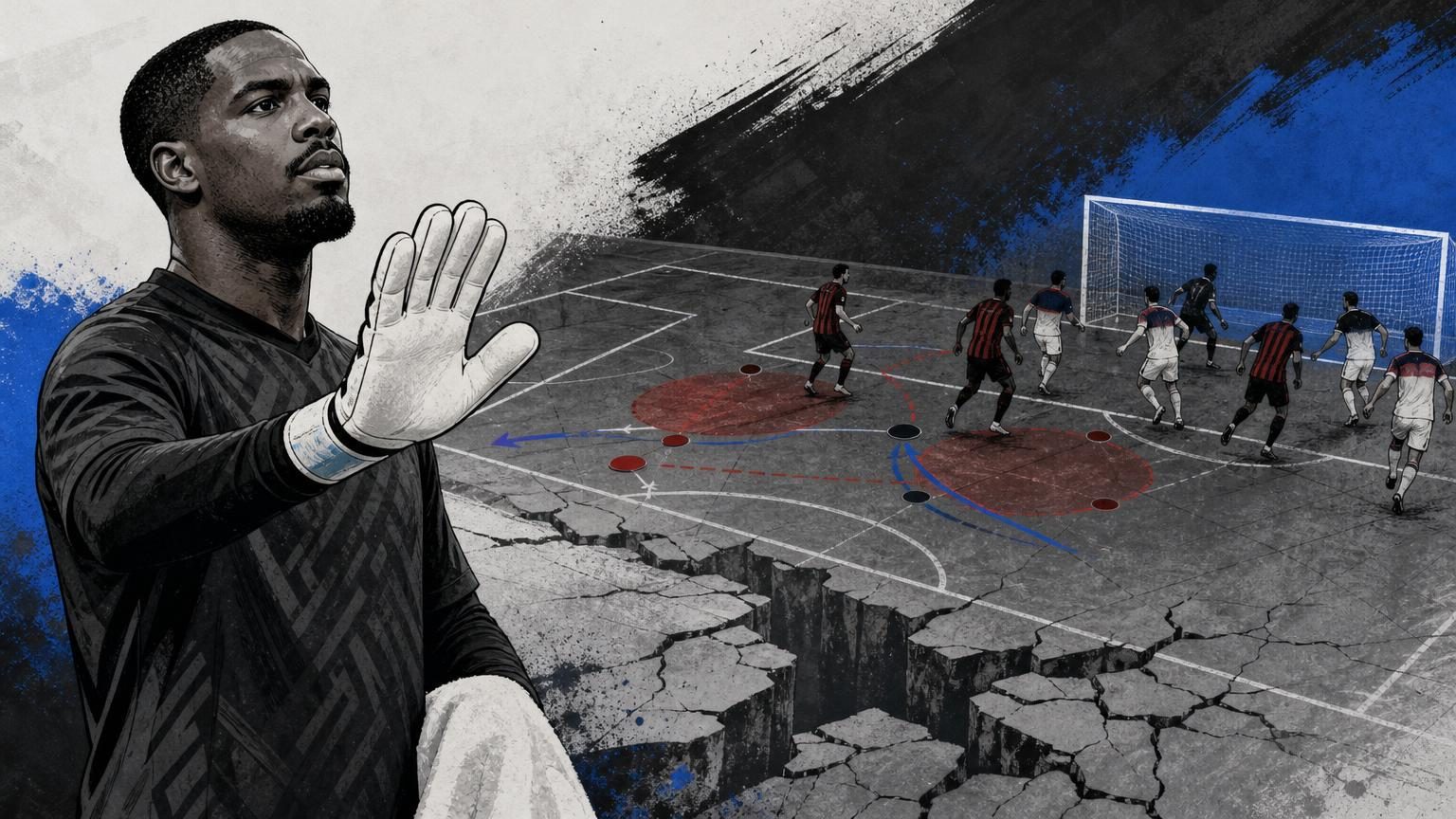
Mike Maignan told reporters Milan must avoid "throwing fuel on the fire" after a 4-2 home defeat to Bologna at San Siro left the Rossoneri seven points behind Inter and Lazio at the top of Serie A, according to Football Italia.
The goalkeeper and captain was asked why he had not addressed the media the previous week, after his red card in a Europa League defeat to Bournemouth. "I came for the team; I didn’t particularly want to speak to you today," he said, via Milannews, before explaining why he felt obliged to front up this time: "This is an important moment for the team; it’s our second defeat in three matches, and it’s only natural that I come and speak to you."
A pattern of goals conceded, not a one-off collapse
Milan have now conceded 11 goals in nine Serie A matches this season, a rate of more than one per game, with four of them coming in a single evening against Bologna. A goals-conceded tally of that size for a team with designs on the title is not explained by one off-night refereeing decision or one bad finish; it reflects a repeated structural weakness, and that is the distinction Maignan's own words draw out.
He did not dispute the diagnosis. "It’s an area where we need to improve. Right now, when we lose the ball, we know we are vulnerable because we leave space for our opponents to counterattack," he said.
Transition defending is the issue Maignan himself named
That admission matters because it locates the problem precisely in the moment of transition, the seconds immediately after possession is lost, rather than in settled defensive shape. A team that is organised in its low block but exposed on the turnover is usually one whose players are too advanced in build-up, or too slow to regroup, when the ball is won back by the opposition in central areas. Bologna were able to exploit exactly that gap at San Siro.
Maignan also pointed to a second, related failing inside the penalty area itself. "Bologna were better than us in the penalty area. It’s something we must analyse and improve," he said. Box defending is a different skill from transition recovery — it is about duels, blocking cut-backs and marking the runner at the near post — but the two compound each other: a side that is already stretched by a counterattack arrives in its own box with fewer bodies and worse angles to defend crosses and rebounds.
Taken together, the transition exposure and the penalty-area vulnerability describe a team whose aggression higher up the pitch is currently outrunning its defensive cover. Maignan framed this as correctable through work on the training ground, saying the group is "constantly working on it" and must be "more alert and aggressive" to close those gaps rather than retreat from them.
Derby with Inter arrives at the worst possible moment
The timing compounds the problem. Milan face city rivals Inter at San Siro on Saturday, a fixture that offers little margin for a defence already shipping goals at an unsustainable rate. Ruben Amorim, Milan's head coach, will need his side to defend the transition and the box in the same match in which the opposition is best equipped to punish exactly those weaknesses.
Maignan was explicit that public anxiety would not help that preparation. "We must avoid throwing fuel on the fire by saying that we’re weak or anything like that," he said, adding that the squad should stay "focused, composed, and calm while acknowledging what we’ve done well." He argued that judgements on the season should wait: "We shouldn’t draw conclusions based on one match or two months of the season. Assessments are made at the end of the season."
He also framed the moment in terms of a new project rather than a crisis, saying it is "the start of a new cycle" that requires calm from everyone "without creating unrest in the team or the dressing room," since instability would serve "the players, the fans, or the wider Milan community" badly.
The results so far sit uneasily alongside that message of patience. Milan have five wins, three draws and one loss from nine Serie A games, a record that still leaves them in touch with the top, but they have also lost two of three Europa League matches, including the one in which Maignan was sent off at Bournemouth.
Saturday's derby will be the first test of whether Amorim's side can address the specific gap Maignan identified — the space left open the instant possession is lost — against an Inter team that will look to attack exactly that moment.