
Mbangula hat-trick exposes Milan's left flank as Amorim suffers first league loss
Samuel Mbangula's treble sent Bologna to a 4-2 win at San Siro, and the pattern behind all three goals pointed to a structural problem Milan still have not solved.
Samuel Mbangula scored three times as Bologna beat Milan 4-2 at San Siro, handing Ruben Amorim his first Serie A defeat since taking charge, according to Football Italia. The result also returned Inter to the top of the table after a separate 2-0 win at Venezia, the Guardian reported, setting up a Milan derby on Saturday with the home side having just lost their unbeaten run.
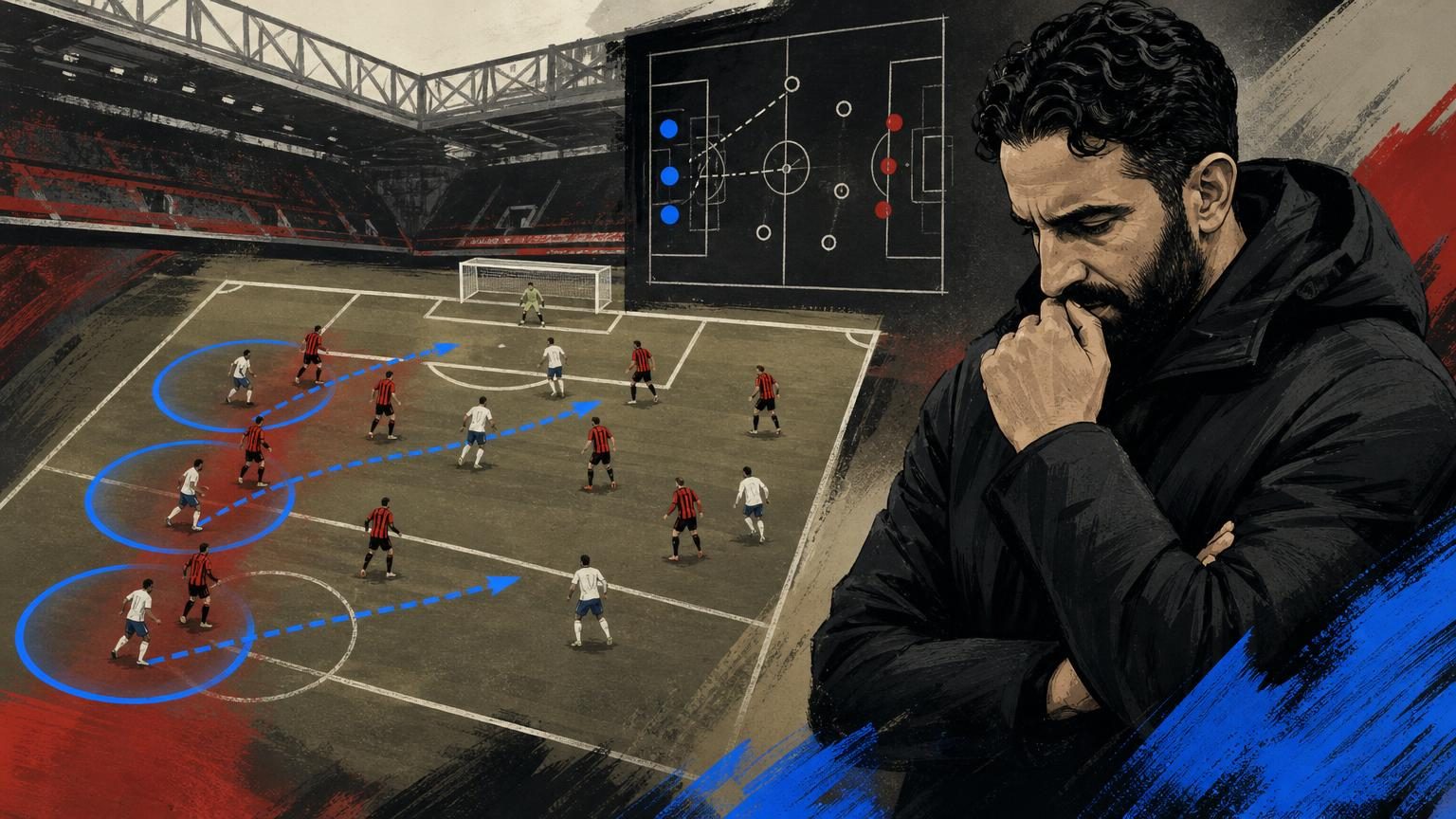
What stands out is not simply that Mbangula scored a hat-trick, but where each goal came from. All three were worked down the same side, with Nadir Zortea and Juan Miranda repeatedly finding room to pull the ball back from the by-line for runners arriving late into the box.
Why Milan kept bleeding from the same side
Football Italia's account of the match shows a clear pattern: Bologna's opener came from a Zortea cutback after Mbangula had already been denied once from the same move, and his third arrived after Miranda got down the left and squared it again. In between, Federico Bernardeschi also found space on that side to create a chance for Jens Odgaard.
That repetition is the real story of the night. A back line can survive one overload down a flank; three goals built the same way suggest the issue was never addressed at half-time, whether through a failure to double up on the wide man or through the full-back being pulled out of position in transition.
Milan's own equalising goal, by contrast, came from exactly the kind of broken-play moment that punishes sloppy build-up at the other end. Arthur Theate was caught in possession twice in the same sequence trying to play out from the back, and Alphadjo Cisse converted the loose ball. It was a reminder that transition chances cut both ways on a night when neither side defended with control.
A reshuffled back line that never settled
Fikayo Tomori's injury just before half-time forced a change that reshaped Milan's structure for the rest of the match. Luka Modric came on at the break, and Yunus Musah dropped from midfield into right-back, according to Football Italia's description of the switch.
Moving a central midfielder into a back-four role mid-match is rarely cost-free. It thins the pivot in front of the defence at the exact point an opponent is gaining confidence, and Bologna's second-half goals came after that reshuffle had been in place for some time.
The own goal that put Bologna back ahead was itself a set-piece failure rather than open-play craft: Davide Bartesaghi turned a Miranda free-kick into his own net at the back post. Set-pieces are supposed to be the moments a team controls through zonal or man-marking discipline, and conceding there compounded the damage already done out wide.
Mbangula's third goal carried its own tactical detail worth noting. Odgaard sent him down the right and he deliberately held his position behind the ball to stay onside before turning it in, a small discipline that denied Milan even the consolation of an offside flag.
What it means for the week ahead
Milan still had late chances to find a route back into the game. Niccolò Cambiaghi and Francesco Camarda both went close, and Christian Pulisic's header was turned behind by Lukasz Skorupski in stoppage time, but Bologna held on comfortably.
The timing compounds the problem for Amorim. His side go into Saturday's derby against Inter missing Ruben Loftus-Cheek alongside Adrien Rabiot, Diego Moreira, Samuel Chukwueze, Mario Gila, Matteo Gabbia, Alexis Saelemaekers and Pietro Terracciano, a list Football Italia described as a growing injury crisis.
Inter's win at Venezia, confirmed by the Guardian, puts them level with Lazio on 25 points and gives Milan an added incentive to arrest the slide quickly. A derby defence built around an unsettled back line and a makeshift right-back would invite exactly the kind of wide overloads that undid them against Bologna.