
Torino and Lecce share deflected luck in a game stats can't explain
Two sides low on confidence drew 1-1 at the Stadio Olimpico Grande Torino, with both goals coming off wicked deflections that flattered the overall run of play.
Torino and Lecce both arrested a slide in form with a 1-1 draw on Saturday, in a match that Football Italia's Susy Campanale described as chaotic from the first whistle, when kick-off was delayed by 16 minutes because the goal-line markings were found to be crooked by the stadium's own goal-line technology.
Torino arrived off the back of two straight defeats, to Como and Frosinone, after a run of three consecutive wins. Lecce were in worse shape still, having lost five of their last six, including a home defeat to relegation rival Genoa, according to Football Italia.
Both sides were patched together. Torino were missing Niccolò Fortini, Ricardo Rodriguez, Rolando Mandragora and Franco Israel through injury, though Alessio Cacciamani returned to the squad. Lecce lost Joel Monteiro to the treatment room alongside Medon Berisha, Santiago Pierotti and Ivan Ilic, though Kialonda Gaspar came back from suspension.
Two goals that flattered neither side
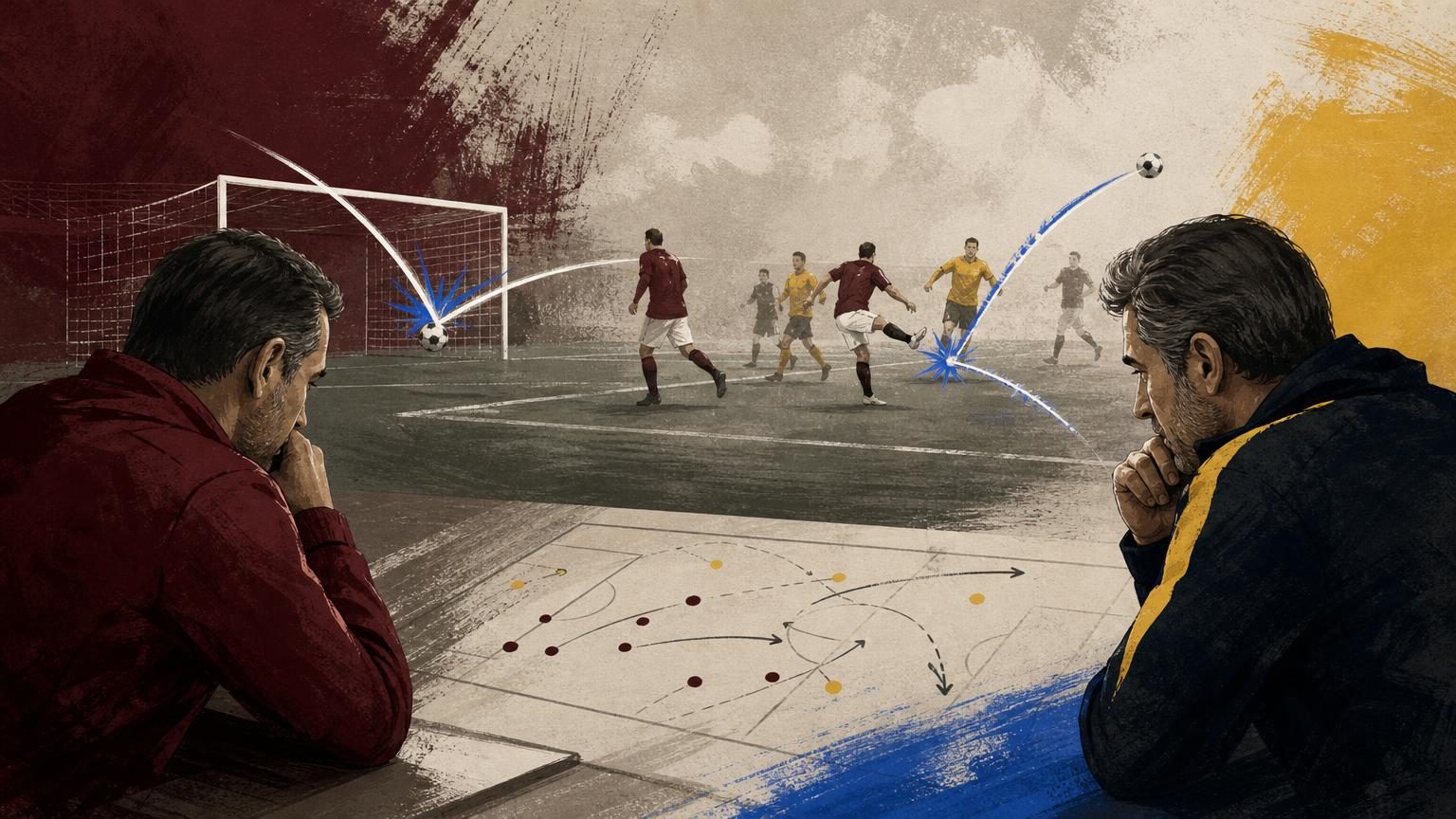
Torino led through Giovanni Simeone in the 60th minute, but the goal owed almost nothing to design. Campanale's report makes clear the striker's drive was not clearly on target before it took a heavy deflection off Gaspar and looped over Wladimiro Falcone, who had no chance of reacting.
Lecce's leveller followed an identical pattern thirteen minutes later. Konan N'Dri's effort from the edge of the box took a deflection off Daniel Bragança and dropped in over Lucas Perri. Two shots of debatable initial accuracy, both rerouted by a defender's body, decided the only goals of the match.
That matters for how the result should be read. A possession or shot count tells you who controlled territory and chance creation, but it says nothing about finishing quality, and in this case the two goals came from exactly the kind of fortunate contact that no pre-shot model would price in as likely. Judged purely on the pattern of play, this was a game that produced two goals almost despite itself.
Control without a cutting edge
Torino's dominance in possession, 64 per cent to Lecce's 36, and shot volume, ten attempts to six, point to a team that spent long periods pressing the game forward and pinning Lecce into their own half. Yet only two of those ten shots were on target, a conversion rate that reflects why the hosts needed a deflection to break the deadlock rather than a sustained spell of territorial pressure translating into clear chances.
Lecce, by contrast, played the match on the counter. Amar Fatah's failure to punish a turnover he won from Ardian Ismajli, and Sandro Kulenovic's inability to capitalise on a slip from Tiago Gabriel, both came from exactly the kind of transition moments a team defending deep and narrow looks to exploit. Neither chance was taken, but the pattern of Lecce threatening on the break while conceding the ball for long stretches was consistent throughout.
Lecce's best spell of early pressure, in fact, came from a set piece rather than open play: a corner that almost went in direct, forcing Perri to scramble it clear from under his own bar. That Lecce's two most dangerous moments of the match, the corner and the eventual equaliser, both arrived via deflection or a dead-ball situation rather than a sustained passage of build-up, underlines how little the team manufactured against the run of possession.
Late chances leave Torino with the greater regret
The closing stages belonged to Torino, even if the scoreline did not move again. Zakaria Aboukhlal, teed up by Che Adams, forced a save from Falcone's gloves with a side-footed effort. Then, in the 88th minute, Adams produced an overhead kick that struck the woodwork, and Simeone could not convert the rebound from close range after Falcone denied him.
Those two chances, arriving in the final two minutes of normal time, suggest Torino's territorial advantage eventually created the kind of clear openings their earlier pressure had not. That they came so late, and that both were saved or blocked rather than converted, is the detail that will sit with Torino more than the opening goal they did score.
For both clubs, the draw halts a losing habit without resolving the underlying issues that produced it. Torino's problem on this evidence was not creating opportunities but finishing them, while Lecce's was generating anything at all from open play beyond moments of transition and set-piece danger. Both sides will need to find a genuine goal from open structure, rather than a stroke of deflected fortune, if the recent form Campanale described as dismal for both is to turn into a sustained run of results.