
Van Dijk's praise for Ngumoha carries the weight of his own Ballon d'Or history
Virgil van Dijk, one of five Liverpool players to reach the Ballon d'Or podium, has praised Rio Ngumoha's rapid development on the right wing.
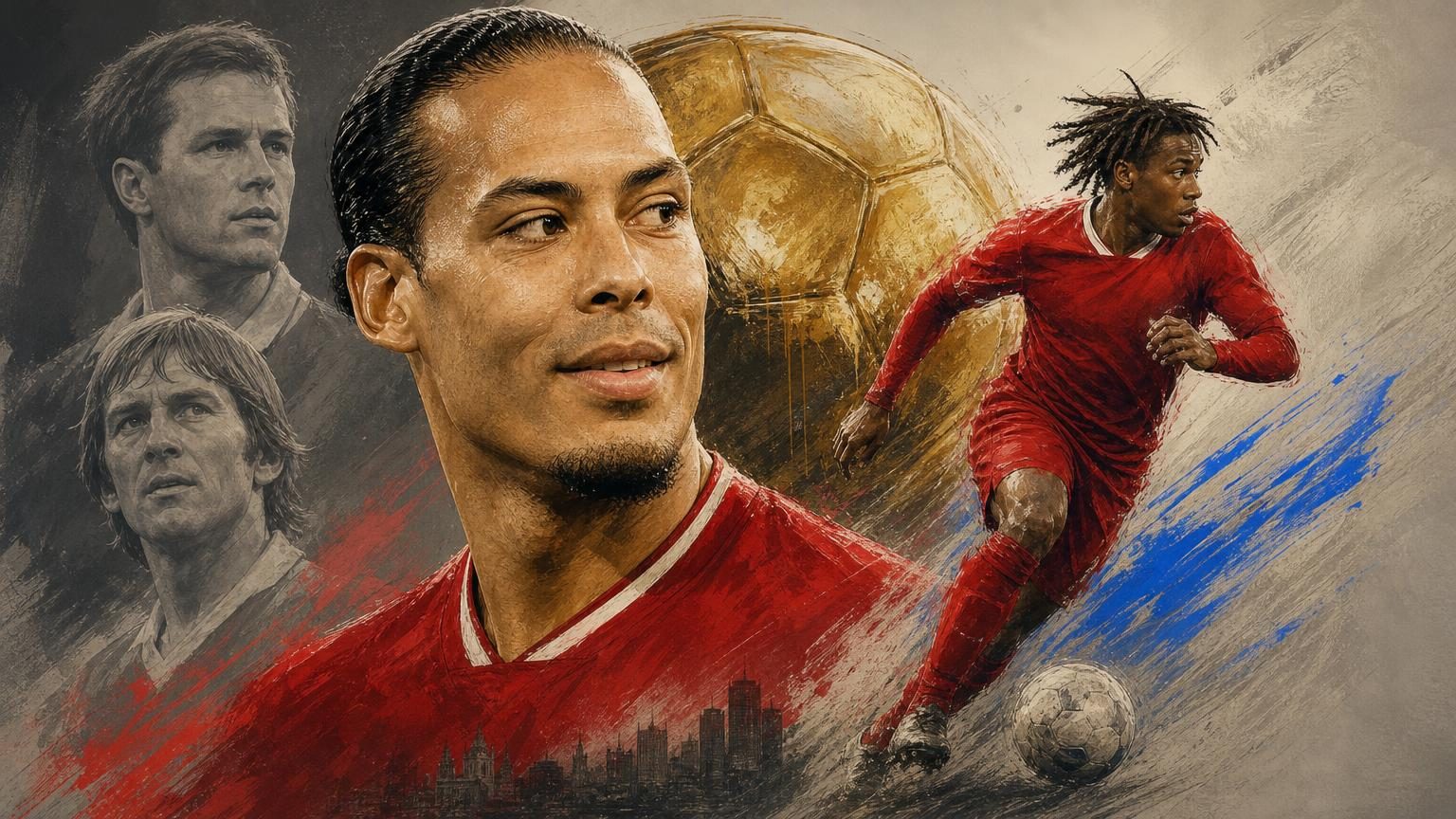
Rio Ngumoha was the standout performer as Liverpool beat Villarreal 4-3 in the Champions League on Tuesday, and it was Virgil van Dijk who offered the clearest endorsement afterwards, saying the 18-year-old had learned from watching Mohamed Salah, Andy Hunter reported for Guardian Football.
Ngumoha's night included a run that created Alexis Mac Allister's second goal and a trademark habit of cutting in from the right to shoot with his left foot, a shot that on this occasion flew wide and into the Kop. Andoni Iraola, who has asked all of his wingers for more versatility this summer, saw it as a significant step forward from a player making only his fifth start under him, according to the same report.
That request for versatility matters because Liverpool's summer signing of Bradley Barcola from Paris Saint-Germain for £123m had already raised the question of how, or whether, Ngumoha would adapt to playing on the opposite flank from his natural side. The answer against Villarreal was delivered through incisive dribbling and a willingness to shoot rather than simply cross, the inverted-winger pattern that has become standard across the position.
Why Van Dijk's endorsement carries weight
Van Dijk is not a neutral judge of elite individual quality. Planet Football's survey of Liverpool players who have finished on the Ballon d'Or podium places him second in 2019, behind only Lionel Messi, after a Champions League-winning season in which he was widely regarded as the finest centre-back in the world.
The margin was startling. Just seven points separated the two men in an award decided by a global panel of journalists who allocate points for their top five choices rather than a single winner-takes-all vote. Van Dijk actually received more first-place votes than Messi, Planet Football noted, which shows the breadth of his peak form among voters even as it could not overturn Messi's advantage once all the points were totalled. A points system like that rewards consistency of recognition across an entire panel, not just who impressed the most voters outright, and Van Dijk's case is the clearest illustration of that gap in Liverpool's history.
The Liverpool players who have reached that level before
Van Dijk sits alongside four other Reds on that podium. Michael Owen remains the club's only outright winner, taking the 2001 award after a season built on clinical finishing that delivered the FA Cup, League Cup, UEFA Cup and a hat-trick against Germany, beating Raul by 36 points in the process, Planet Football reported.
Kenny Dalglish finished second in 1983, a forward whose link play and movement underpinned three European Cups and six league titles, yet he managed only that one podium finish. Planet Football raised the possibility of a continental bias in the voting of that era, pointing out that English clubs won seven European Cups between 1977 and 1984 while their players received comparatively little individual recognition — an interpretation the outlet offers rather than a settled explanation.
Steven Gerrard's third place in 2005 came from a box-to-box display built around one transformative night: his drive from midfield helped force Liverpool's comeback from 3-0 down against Milan in Istanbul. Fernando Torres completed the group, finishing third in 2008 on the back of 33 goals in all competitions and a Euro 2008 final winner, an out-and-out striker's season of explosive running in behind defences.
What Ngumoha still has to prove
Each of those five reached the podium through a specialism refined over a full season or tournament, not a single match. Owen's finishing, Dalglish's link play, Gerrard's transition-breaking drive, Torres's movement in behind and Van Dijk's defensive distribution were all qualities built up match by match before the votes were cast.
Ngumoha's task under Iraola is different in kind: proving he can repeat his right-wing threat across a season in which he is being asked to operate away from his favoured side, with Barcola's arrival adding direct competition for the position. One performance against Villarreal does not settle that question, but it gave Van Dijk, whose own career came within seven points of the Ballon d'Or, reason enough to speak up publicly.