
Nemanja Vidic: the making of a defender teammates feared to cross
Quotes gathered by Planet Football from Vidic's teammates and opponents reveal less a single trait than a composite picture of transformation, risk-tolerance and partnership instinct.
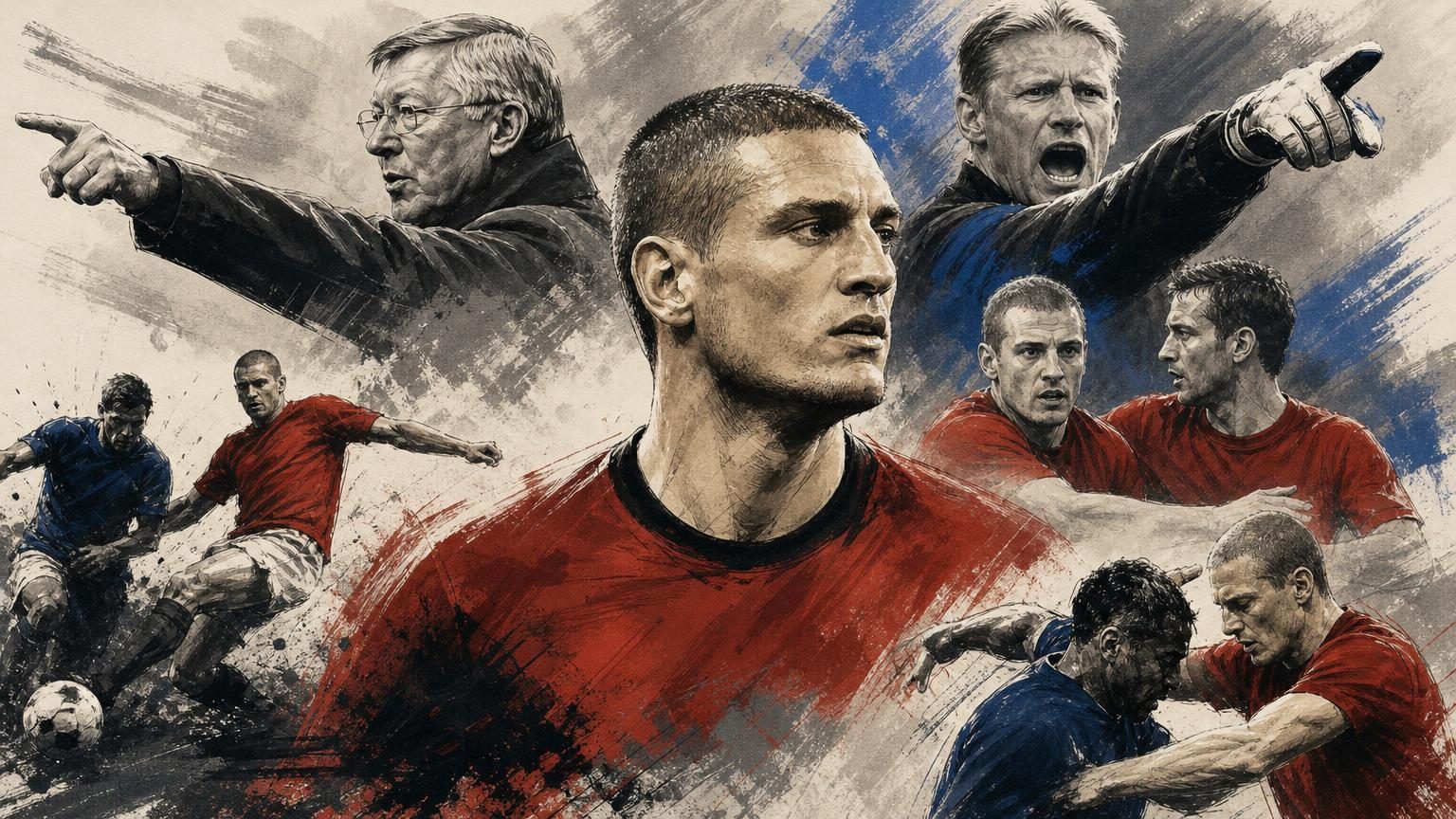
A compilation of tributes to Nemanja Vidic, published by Planet Football, does more than confirm he was admired. Read together, the testimonies from Sir Alex Ferguson, Rio Ferdinand, Paul Scholes and others sketch the mechanics of how a defender goes from vulnerable to feared, and what a centre-back partnership actually requires to function on instinct rather than instruction.
Scholes' account of Vidic's early months at Old Trafford is the clearest starting point. He described the Serbian, newly arrived from Spartak Moscow, as skinny and easily knocked off the ball, someone who took a battering in training before he had played a competitive match.
That detail matters because it undercuts the idea that Vidic was always the physical phenomenon he became. Scholes said Vidic responded by spending a year in the gym, rebuilding himself into a centre-half capable of shoving strikers aside. The aerial dominance for which he is remembered, in other words, was manufactured rather than given.
Why loving the contest changed how he defended
Ferguson's description of Vidic went further than praising his power. He said few centre-halves genuinely enjoy defending the way Vidic did, framing his relish for 50-50 duels as something that animated him rather than a duty he tolerated.
That distinction carries tactical weight. A defender who merely accepts physical confrontation reacts to it; one who seeks it out, as Ferguson suggested Vidic did, can set the terms of an aerial duel or a crunching challenge before it arrives, which is a different proposition for an opposing forward to plan against.
Robin van Persie's contribution reinforces the same point from an attacker's perspective. He said Vidic put his head where other players were scared to put their feet, and described being afraid for him while watching him dive to block crosses at corners.
That willingness to accept physical risk is not incidental to good defending; it is a currency teams trade in at set pieces, where blocking a header a fraction earlier than instinct suggests is safe often decides whether a chance is cleared or converted.
The partnership that ran on instinct
Rio Ferdinand's account of playing alongside Vidic describes a defensive partnership built without explicit coaching on positioning. Ferdinand said the pair could sense each other's movement, knowing when one would step tight to a forward and the other would drop to cover, or when one was in trouble and needed a safety net.
That kind of understanding cannot be drilled in a single session; it accumulates over matches, and it explains why Danny Higginbotham, also quoted by Planet Football, rated the Vidic-Ferdinand axis among the best central-defensive pairings English football has produced.
Ferdinand also pushed back on a narrower reading of Vidic as purely a stopper, noting that his aggression and aerial strength overshadowed an ability to play with the ball that he felt went under-appreciated.
Respect that extended beyond his own position
What stands out in the wider set of quotes is how Vidic's reputation was not confined to fellow defenders. Peter Schmeichel, speaking as a goalkeeper, valued that Vidic would put his foot or head in danger for the team, while Phil Jones credited him with shaping his own development simply through daily example in training.
Jamie Carragher, a Liverpool defender who never played with Vidic, still said he would have welcomed him as a partner, calling him his type of player and noting that Liverpool had tried to sign him before United did in 2006.
Taken together, the testimonies describe a defender whose value was legible to teammates in every position and to opponents who never shared a dressing room with him, which is a rarer form of respect than praise from fellow centre-backs alone.
Ryan Giggs, among the longest-serving teammates Vidic had at United, called him probably the best defender he ever played with, a judgement that sits consistently alongside the accounts from Ferguson, Ferdinand and Scholes of how that status was earned rather than assumed from the start.