
The Ballon d'Or podium that never had room for Suarez, Bale or Keane
Planet Football's rundown of snubbed greats shows how the Messi-Ronaldo duopoly squeezed out strikers, playmakers and captains who defined their positions.
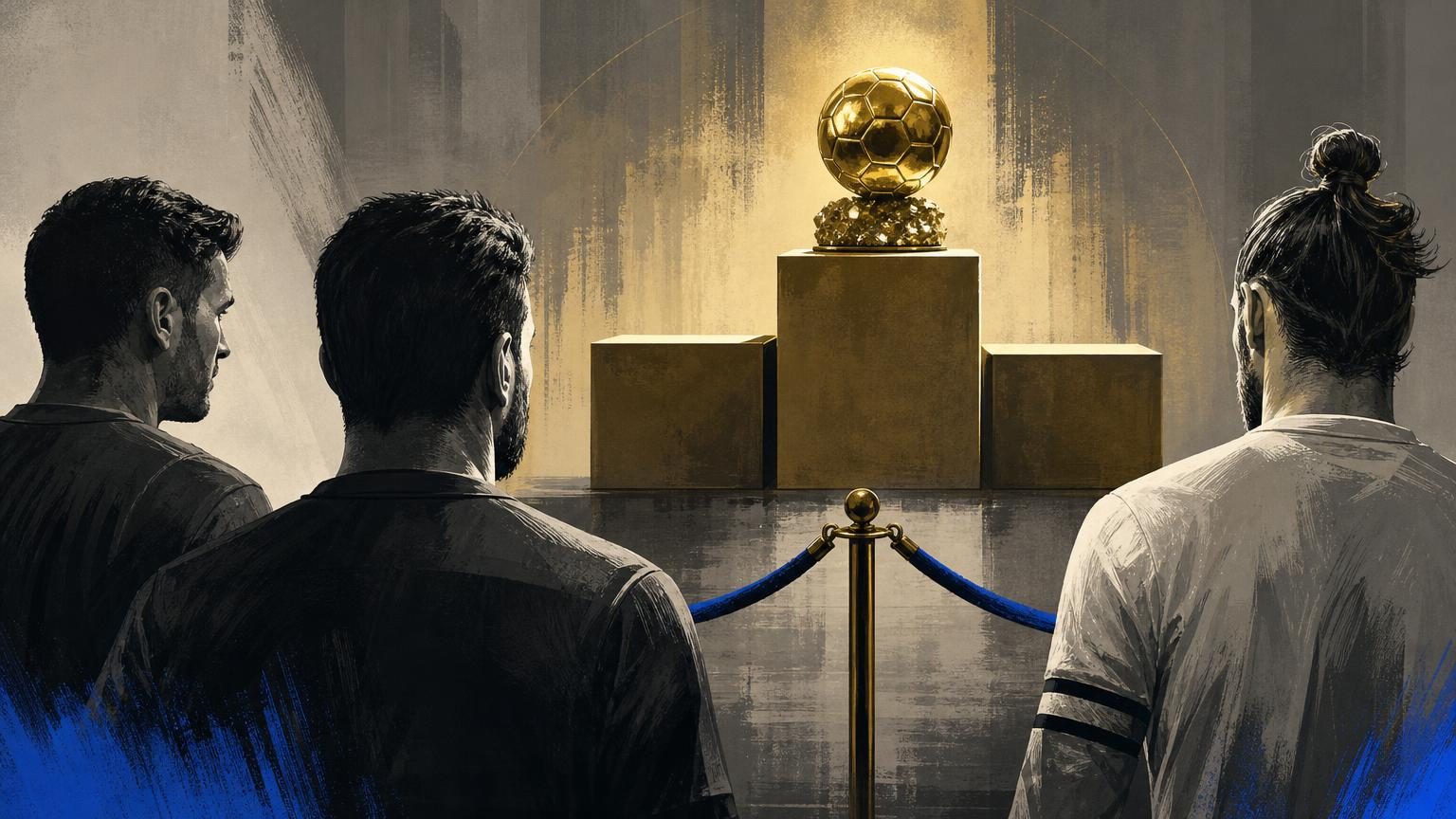
Lionel Messi and Cristiano Ronaldo's grip on the Ballon d'Or between 2008 and 2012 left little room at the top for anyone else, Planet Football notes. The podium during that stretch tended to feature one or both of them, which meant the third spot became the only realistic target for every other contender on the planet.
That scarcity produced some startling absentees. Several players who defined their roles for a decade never once finished in the award's top three, and looking at why reveals as much about tactical function as it does about voting politics.
Suarez's goal output outran his recognition
Luis Suarez never reached the podium despite leading Liverpool's 2013-14 title chase as an out-and-out centre-forward, winning the European Golden Shoe with 31 goals that season. The award measures raw goals scored across Europe's top leagues, so a 31-goal haul in the Premier League should have been impossible to overlook.
He did not even make FIFA's 23-man shortlist that year, according to Planet Football. Suarez responded by pointing to the strength of the award itself: "Everyone brings it to attention, as Gerard Pique said, and what he told me is that they voted me as the best player in the most difficult league in the world, or one of the most difficult," he said. "I was also the highest goalscorer of all of the European leagues. But I prefer to keep quiet before saying things because every time that I speak there could be a problem."
The snub followed him to Barcelona, where he operated as one third of a front three alongside Messi and Neymar. In 2014-15 that trident won the treble, yet Suarez was the one member left off the podium while Neymar and Messi both made it and Ronaldo finished runner-up. A year later he topped Barcelona's scoring charts with 59 goals in all competitions and claimed a second Golden Shoe, finishing behind Messi, Ronaldo and Griezmann regardless.
Bale's wide role never cracked the top five
Gareth Bale's case shows how a wide forward's individual output can be obscured by a front three built around someone else. His best Ballon d'Or finish came in 2016, when he was sixth, the same year he won a second Champions League with Real Madrid and drove Wales to the Euro 2016 semi-finals from a wide attacking position.
Never cracking the top five at the peak of his powers, Planet Football argues, says more about the density of elite talent in the mid-2010s than about Bale's own level.
A playmaker and a captain overlooked for their roles
Francesco Totti spent his career as Roma's deep-lying playmaker, the creative hub of a side that reached a Scudetto in 2000-01 under his direction. He finished only fifth that year, behind Michael Owen, despite steering the Giallorossi to the title from that number 10 role.
Michel Platini, a three-time Ballon d'Or winner himself, rated Totti's footballing intelligence above even Zinedine Zidane's: "Totti has a genius in him that I don't see in other players. Not even Zizou has the same kind of intuition." Planet Football points out that Roma's lack of Champions League semi-final appearances limited the platform for that creativity to be rewarded.
Roy Keane's omission is different because it concerns leadership rather than output. As Manchester United's treble-winning captain in 1998-99, marshalling the midfield through Sir Alex Ferguson's most dominant period, his highest finish was sixth. Told this on the Stick To Football podcast, his reaction captured the gap between his influence and his ranking: "Sixth!?" Keane said. He added separately: "Me coming sixth makes it a bit of a joke, doesn't it?"
Only Eric Cantona, David Beckham and Ronaldo reached the podium from that United era, which left midfield and defensive figures such as Keane, Paul Scholes and Nemanja Vidic permanently outside the conversation, Planet Football notes.
What the pattern says about the award
Mohamed Salah's case, with Virgil van Dijk runner-up after the 2019 Champions League win but Salah himself overlooked, and Didier Drogba's eighth place in 2012 after inspiring Chelsea's Champions League triumph, reinforce the same point: a front-three forward or an attacking wide player competing in the same year as Messi or Ronaldo had almost no path to the podium, regardless of trophies won or goals scored.
George Weah and Sadio Mane remain the only African footballers to have reached the Ballon d'Or podium, a detail Planet Football highlights alongside Drogba's snub. Wayne Rooney's five Premier League titles, FA Cup, three League Cups and Champions League medal similarly never translated into a top-three finish during the same stretch.