
Guti's genius was never about effort — it was about vision
Real Madrid's academy playmaker was branded lazy and unfulfilled, but his role switch and his two outrageous backheeled assists tell a different story about what actually mattered.
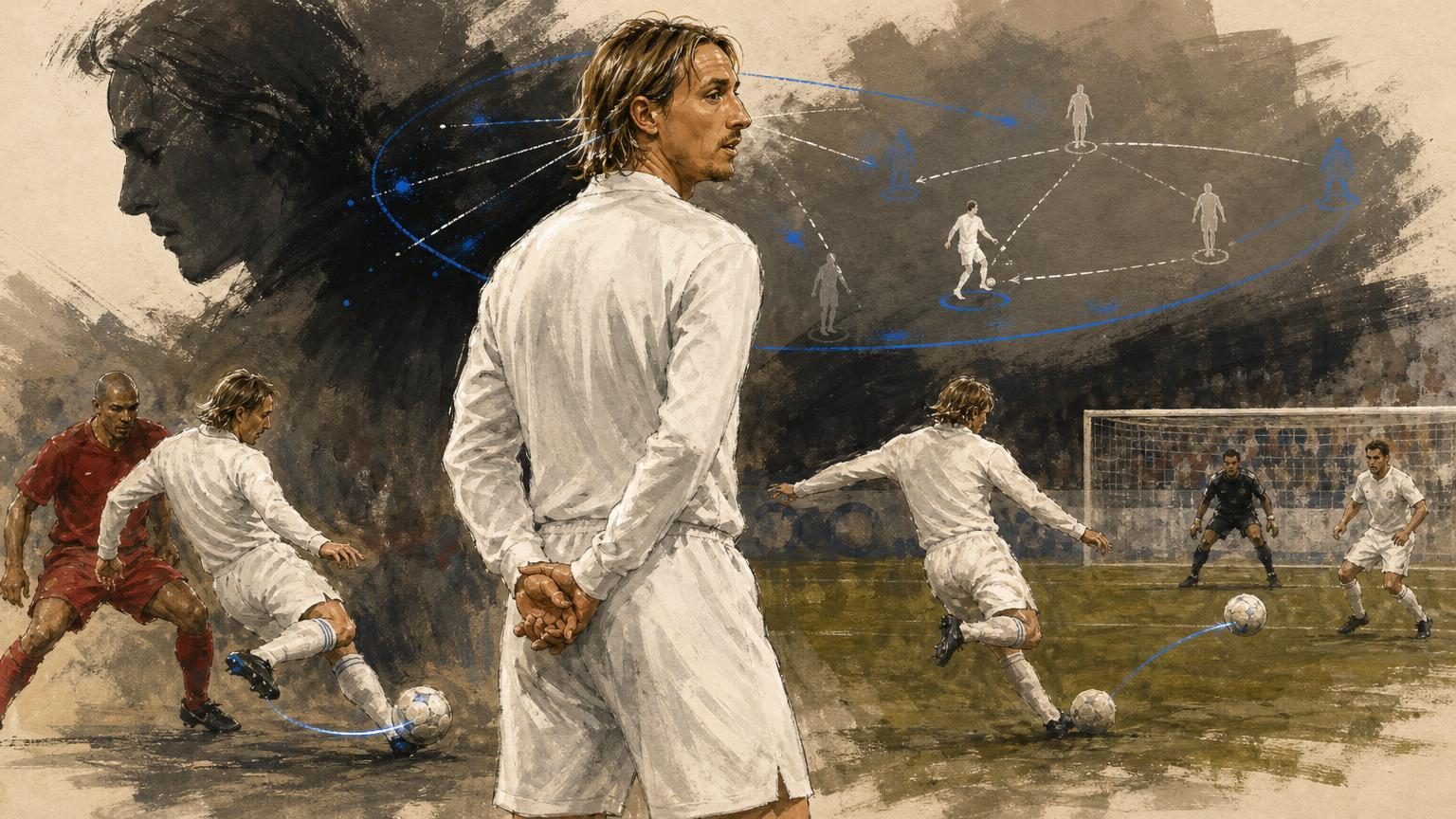
Guti spent fifteen seasons at Real Madrid and left with five La Liga titles and three Champions League trophies, according to Planet Football. That alone complicates the usual framing of him as a cautionary tale about wasted ability.
The standard account goes like this: a player with rare technical gifts, undone by vanity and a reluctance to graft, who should have won far more than 13 caps for Spain. Planet Football argues that reading is both patronising and inaccurate, and the tactical detail of Guti's career backs that up.
Why the positional switch mattered more than the caps tally
Guti came through Real Madrid's academy as a central midfielder but was redeployed as a forward, scoring 18 goals in the 2000-01 season, per Planet Football. That is a specific tactical reinvention, not a footnote: a converted attacking midfielder playing centrally in the final third, asked to finish rather than create.
He was then moved back into midfield, partly to make room for the goalscoring of Ronaldo and Raúl, the outlet reports. That reshuffle is the key to understanding his career. Rather than being miscast throughout, Guti was shifted to fit the squad's attacking hierarchy, and it was from the deeper midfield role that he produced his best football.
Judging a player only by appearances for Spain ignores how heavily his effectiveness depended on role and system. A central midfielder tasked with service for Zidane, Ronaldo and later Cristiano Ronaldo is working in different territory to a conventional number 10 or a out-and-out striker, and Guti occupied all three at different points.
What the backheels actually show about his game
Planet Football singles out two assists as evidence of Guti's quality: a backheeled through-ball from 25 yards out that set up Zinedine Zidane in a 4-2 win over Sevilla in 2006, and a backheel against Deportivo in January 2010 that, instead of a shot on an open goal, found Karim Benzema. Marca's front page reportedly called the second ball 'The backheel of God'.
Both passes rely on the same mechanism: disguise. A conventional through-ball telegraphs intent through body shape, letting defenders adjust their press or recovery run. A backheeled pass removes that cue entirely, so the defensive line reacts a half-second late, which is exactly the margin a forward like Zidane or Benzema needs to convert a chance into a goal.
That is not a party trick. It is a specific technical solution to a spatial problem — how to play a final pass when your body is facing away from the space you want to use — and Guti solved it twice in era-defining moments, not once by accident.
The moralism around effort misreads what Guti produced
Planet Football is explicit that the criticism of Guti centres on attitude rather than output: stories of him sheltering from training in the sun under Fabio Capello, declared intentions to retire to a beach in Thailand, and team-mates Steve McManaman and Michael Owen naming him the vainest player they played with, with Owen recalling a mirror kept beside his space in the dressing room.
None of that changes what he did on the pitch. The piece draws a direct parallel with Jesse Lingard, noting that players who are seen enjoying themselves away from the game are often cast as selfish while those who stay late at the training ground are treated as exemplary, regardless of what either group actually produces in matches.
Applied to Guti, that framework inverts his record. A midfielder who delivered two of the most inventive assists in Real Madrid's recent history, while playing across three positions for a squad stacked with Galácticos, was judged by column inches about his hair rather than by his passing.
Guti's trophy haul and his positional versatility suggest the 'unfulfilled potential' tag tells us more about football's expectations of visible effort than about his actual contribution. A player repositioned twice to accommodate superior finishers, who still produced the Sevilla and Deportivo assists from deep midfield, was not squandering talent so much as applying it precisely where the team needed it.