
Roma lean on makeshift options as Sassuolo switch shape at the Olimpico
A weakened Roma, still reeling from their Champions League collapse at Old Trafford, field third-choice goalkeeper Devis Vasquez and a reshaped midfield against an injury-hit Sassuolo side trying a new back-three system.
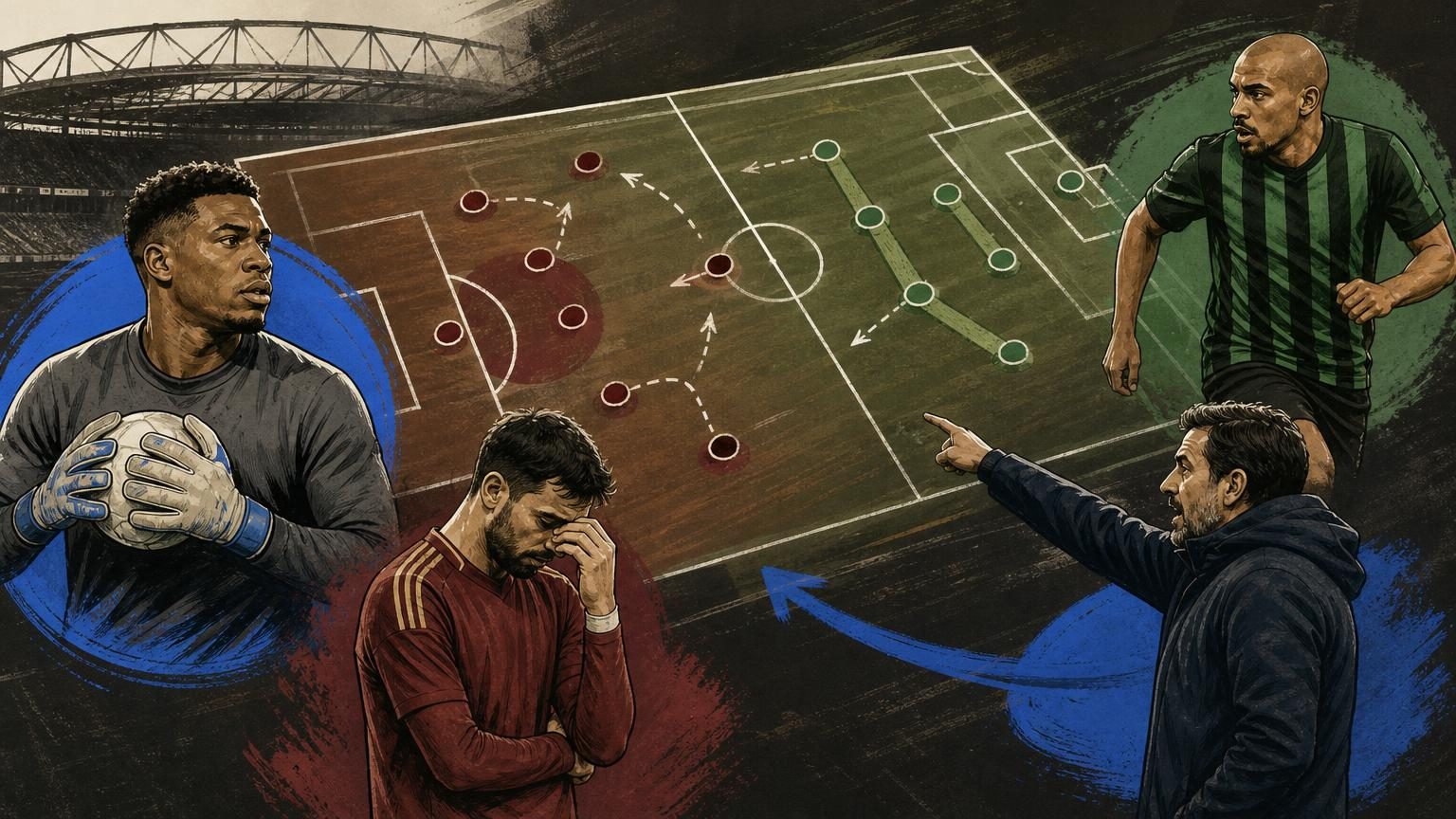
Roma go into Matchday 11 against Sassuolo with a squad thinned out by injury and a goalkeeping situation now three names deep, Football Italia reports.
Devis Vasquez starts in place of Mile Svilar, who has been out for over a month, and Pierluigi Gollini, who has not recovered from a back problem that kept him out of the 3-2 defeat at Manchester United. It is Vasquez's first Serie A start of the campaign, though he also played in the Champions League loss at Old Trafford, where he saved a penalty from Bruno Fernandes before Roma still contrived to throw away a two-goal lead.
That collapse in Manchester cost Roma more than the result. Gianluca Mancini and Devyne Rensch both picked up injuries in the match and are unavailable here, adding to a treatment table that already includes Paulo Dybala and Lorenzo Pellegrini.
Koné's return reshapes the midfield balance
The one piece of good fortune is the return of Manu Koné, who comes straight back into the starting eleven for the first time since a thigh strain forced him off against Real Madrid on October 14. He lines up alongside Bryan Cristante in the middle of a three-man midfield block that also includes Wesley, with Molina on the opposite flank.
Roma's selection points to a 3-4-2-1 shape, with Balerdi, N'Dicka and Hermoso forming the back three in front of Vasquez, Molina and Wesley pushing on as wing-backs, and Soulé and Rodrigo Mora operating just behind Donyell Malen. That structure asks the double pivot of Cristante and Koné to cover enormous ground, both shielding the back three and supplying the two attacking midfielders ahead of them.
Against a side that has conceded heavily in recent weeks, the priority will be controlling transitions rather than simply dominating the ball, given how often Roma have been exposed defensively when turnovers come at speed, as they were repeatedly in the final stages at Old Trafford.
Sassuolo's shift to three at the back
Alberto Aquilani, back at the stadium where he began his career as a player and later started out as a coach in Roma's youth academy, has changed his team's structure. Sassuolo line up in a 3-5-2 built around Walukiewicz, Idzes and Caleta Car at the back, with Cinquegrano, Sulemana, Thorstvedt, Nemanja Matic and Doig across midfield, and Armand Laurienté partnering Sebastiano Esposito up front.
The move to a back three is also a response to necessity as much as tactics. Aquilani is missing Domenico Berardi, Cristian Volpato, Daniel Boloca, Ismael Koné and Fedde Leysen through injury, though Kristian Thorstvedt returns to the squad and Arijanet Muric is back in goal.
Matic, once of Roma himself, anchors the midfield five and will be central to whether Sassuolo can keep any defensive shape at all against Roma's wing-backs, since a back three asks the wide central defenders to stretch into areas a flat four would not cover, and any lapse in that coordination is exactly what wing-back systems are designed to exploit.
A form slump that explains the caution
Sassuolo's problems go well beyond personnel. After beating Juventus 3-2 earlier in the season, they have collected just one point from their last six league matches and have conceded ten goals across their two most recent defeats, to Lazio and Fiorentina. That run of games has pushed them down the table and left Aquilani searching for a system that can stem the bleeding rather than one built around control of possession.
For Roma, the contrast is stark: results have generally held up domestically even as the European campaign has unravelled through late collapses. The challenge here is less about generating chances against a struggling defence and more about not repeating the pattern that cost them in Manchester, where a two-goal cushion was not enough to see out the match.
Against a Sassuolo side low on confidence and short of options, Roma's double pivot and back three give them the structure to dictate the game, but the recent evidence suggests the issue has been sustaining control in the closing stages rather than establishing it early on.
Both sides arrive at the Olimpico shaped as much by absence as by design, with Roma's makeshift goalkeeping arrangement and Sassuolo's reworked back three both products of situations neither club would have chosen.