
When superstar signings made the team worse, not better
Planet Football's look back at marquee transfers that backfired shows individual brilliance from Ronaldo, Ibrahimovic and others did not always translate into collective improvement.
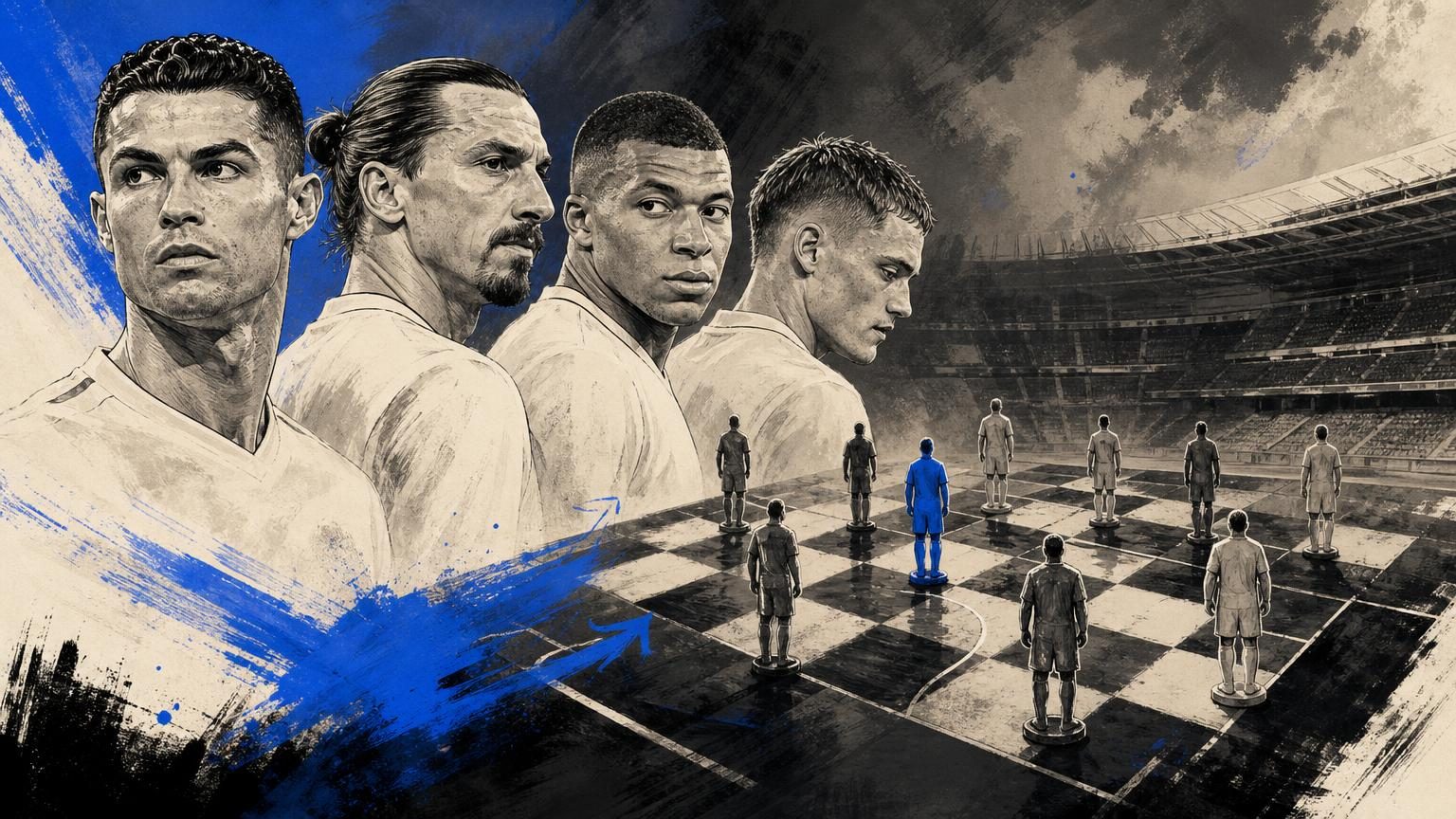
Big transfers are judged on goals, trophies and highlight reels. Planet Football's recent survey of marquee signings takes a different angle: cases where a genuinely elite player arrived and the team got worse, not better. The list runs from Ruud van Nistelrooy at Manchester United to Lionel Messi at Paris Saint-Germain, and the pattern it exposes is less about individual quality than about fit, system and timing.
Van Nistelrooy's goals couldn't offset United's slide
Sir Alex Ferguson pursued Van Nistelrooy for more than a year, waiting out a serious knee injury before signing him in 2001, according to Planet Football. United arrived as three-time defending champions. Over his five seasons the Dutchman scored 150 goals in 219 appearances and won the Golden Boot in 2002-03, numbers that stand among the best sustained scoring records in Premier League history.
The team around him did not keep pace. Planet Football notes United won just one league title, an FA Cup and a League Cup across those five years, against four titles, an FA Cup and a Champions League in the five seasons before his arrival, and four more titles, two League Cups and another Champions League in the five after he left.
Other factors were in play, including recruitment problems and a squad in transition, as the outlet acknowledges. But the comparison illustrates a recurring trap: a world-class penalty-box finisher can flatter a team's attack while doing nothing to fix its structural problems, and building the whole approach around him can even entrench them.
Ibrahimovic's personality unsettled a carefully built collective
Barcelona's 2009 swap of Samuel Eto'o, a key figure in Pep Guardiola's treble-winning side, for Zlatan Ibrahimovic still puzzles observers, Planet Football argues. Ibrahimovic was a proven serial winner and prolific scorer, but his outsized personality sat awkwardly inside a dressing room shaped around positional discipline and collective movement.
Ibrahimovic himself later described the cultural gap, telling his autobiography: "Lionel Messi is amazing. He's totally amazing. He joined Barca when he was 13." He added: "He was brought up in that culture and doesn't have a problem with that school crap."
Barcelona retained the league title that season, but Ibrahimovic was sold within a year, while Eto'o won a second consecutive treble with Inter and helped eliminate his old club from the Champions League, per Planet Football. Guardiola's fix was instructive: David Villa, a forward built to serve the system rather than bend it, replaced Ibrahimovic and Barcelona won another Champions League.
Ronaldo's returns exposed the same flaw twice
Cristiano Ronaldo's move to Juventus in 2018 produced 101 goals in 134 appearances, but the team's European results went backwards, Planet Football notes. Juventus had reached two of the previous four Champions League finals before losing in the knockout rounds to Ajax, Lyon and Porto during his spell, having previously lost finals to Barcelona, Bayern Munich and Real Madrid at a later stage of the competition. They won two more Scudetti, extending a run that had already reached seven straight, and by his final season had slipped to fourth, the start of a title drought Planet Football says continues today.
The same shape reappeared at Manchester United. Ronaldo scored 24 goals in all competitions in 2021-22, but United fell from a second-place, unbeaten-away campaign the previous season to sixth and their lowest-ever Premier League points total, according to Planet Football. Ole Gunnar Solskjaer's side struggled to accommodate a forward unable or unwilling to press, undermining the collective defensive work a modern system needs from every outfield player, strikers included.
Both cases share a structural problem rather than a form slump: a team built its attacking approach around one aging superstar's individual output while the rest of its game, particularly out of possession, degraded around him.
Messi's PSG spell changed less than expected
Lionel Messi's two seasons at PSG sit apart from the rest of the list, Planet Football suggests. Domestically it was business as usual for the club's project: back-to-back league titles alongside the European disappointment that had already defined the Qatari-owned era before his arrival.
That continuity is itself the point. Messi did not wreck a functioning system the way Ibrahimovic unsettled Barcelona, nor did his arrival coincide with a collapse like United's after Ronaldo's second debut. PSG's ceiling and floor in Europe stayed roughly where they already were, which is its own kind of answer to whether one superstar signing, however gifted, can reshape a team's fortunes on its own.