
Granit Xhaka's numbers explain a career built on contradiction
From Basel to the Emirates to Leverkusen, the data on Xhaka's build-up play tells a different story to the one his reputation suggests, according to Breaking the Lines.
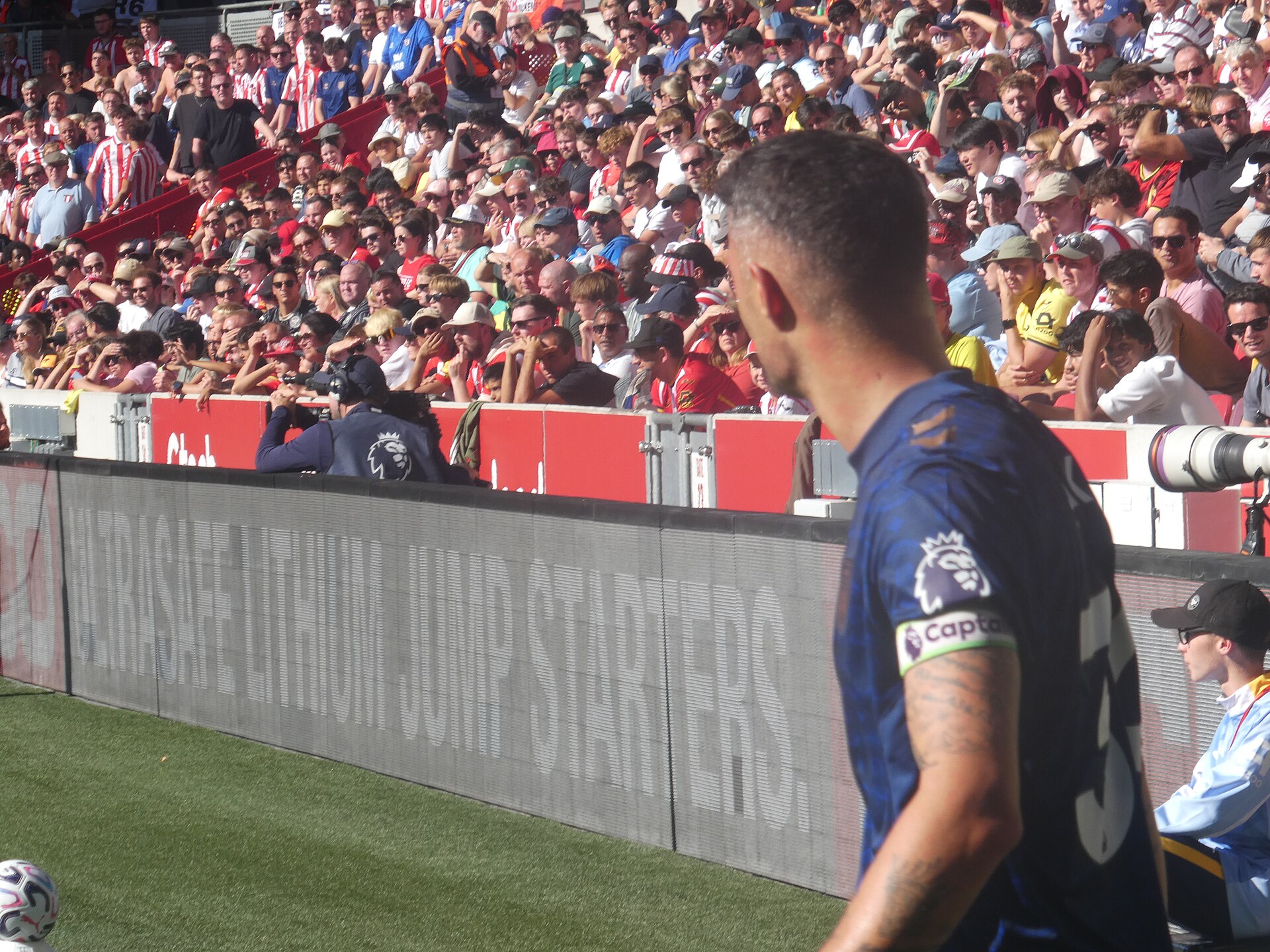
Granit Xhaka's career is remembered in flashes: a stolen microphone gesture, a mimicked crowd, red cards, penalties conceded, a stripped captaincy, a near-exit that never quite happened. According to Breaking the Lines, the Swiss-born Albanian's playing history is easier to recall through incidents than through what he actually did with the ball.
That gap between reputation and function is worth examining, because the underlying data described by Breaking the Lines suggests Xhaka was, for long spells, one of the most important build-up players in whichever team he played for — even in years when he was mainly known for the wrong reasons.
A role nobody quite agreed on
Xhaka arrived in England with an ambiguous job description. Breaking the Lines reports that many expected him to slot in as a deep-lying playmaker, a natural successor to the defensive midfielders Arsenal had fielded before him. Arsène Wenger, who signed him, saw something different: a box-to-box midfielder rather than a controlling number six.
That mismatch between external expectation and managerial intent is a useful lens for the first half-decade of Xhaka's Arsenal career. He was handed leadership status early, given what Breaking the Lines describes as the keys to the house, and responded with an abrasive streak — mimicking critics after scoring against Hull, then drifting into the pattern of cards, penalties and a stripped armband that defined the period.
The turnaround, according to the same account, arrived with a managerial change rather than a tactical epiphany. Mikel Arteta, the very defensive midfielder Xhaka had once been tipped to replace, took over at Arsenal and built an immediate rapport with him. Mistakes did not disappear entirely — Breaking the Lines cites an away trip to Burnley in 2020/21 as one such lapse — but the trajectory from there pointed upward.
The season the numbers stopped matching the role
Xhaka's peak, by this reading, arrived in 2022/23, the campaign in which Arsenal took 50 points from their opening 19 league games. Breaking the Lines credits Xhaka's positioning and off-the-ball movement as a significant part of that surge, describing a pattern where he would break from deep into the left half-space and into the penalty area, largely unmarked because opponents were preoccupied with Arsenal's more heralded attackers.
The output backs up the claim: seven goals and seven assists in 37 appearances that season, compared with a combined 15 goals and assists across the four seasons before it. That is a sharp spike in end product for a player whose reputation had never rested on goal threat.
What makes the season statistically unusual is not the output itself but what it represents in terms of involvement. Breaking the Lines uses xGBuildup — a measure of expected goals generated through a player's touches in a move, stripped of any shot or assist he registers himself — to track Xhaka's centrality to Arsenal's play across six seasons under Wenger, Emery and Arteta. In four of those seasons he ranked first outright among all Arsenal players regardless of minutes played; in a fifth he was second; in the sixth, among players with substantial minutes, he was third. By that measure, Arsenal's attacking play for years ran disproportionately through him.
In 2022/23, the season of his best individual output, he ranked only fifth in xGBuildup per 90 among Arsenal's regular starting XI. Breaking the Lines frames this as a paradox worth sitting with: Xhaka became less central to Arsenal's overall build-up in the very season he became statistically more productive himself. Being one voice among several, rather than the dominant conduit, appears to have suited him better than the years in which the team leaned on him almost exclusively.
Leaving before the trophy, arriving to be the centrepiece
Arsenal did not win the league in 2022/23, but Breaking the Lines identifies that campaign as the structural foundation for a title Arsenal would eventually win three years later — a trophy Xhaka did not share in, having already left the club by then.
His next move took him to Bayer Leverkusen, again under a Basque coach with his own playing history in the position: Xabi Alonso. The dynamic Breaking the Lines describes there is close to an inversion of his late Arsenal role. Where he had been, in the report's words, an undercover figure in Arsenal's best season, at Leverkusen he became an explicit centrepiece, operating alongside Exequiel Palacios as what Breaking the Lines calls the metronome of a side built to move at a consistent rhythm.
The through-line across Basel, Borussia Monchengladbach, Arsenal and Leverkusen, as Breaking the Lines lays it out, is a player whose functional importance has rarely matched his public image in a given moment. Whether cast as background support or acknowledged centrepiece, the underlying build-up numbers point to a midfielder who has, more often than not, been doing the quiet work the highlight reels never show.