
Johan Cruyff's Barcelona: Laying the Foundations of an Identity
As Barcelona coach from 1988, Johan Cruyff gave the club a playing model, its first European Cup and a way of thinking that shaped the next generation.
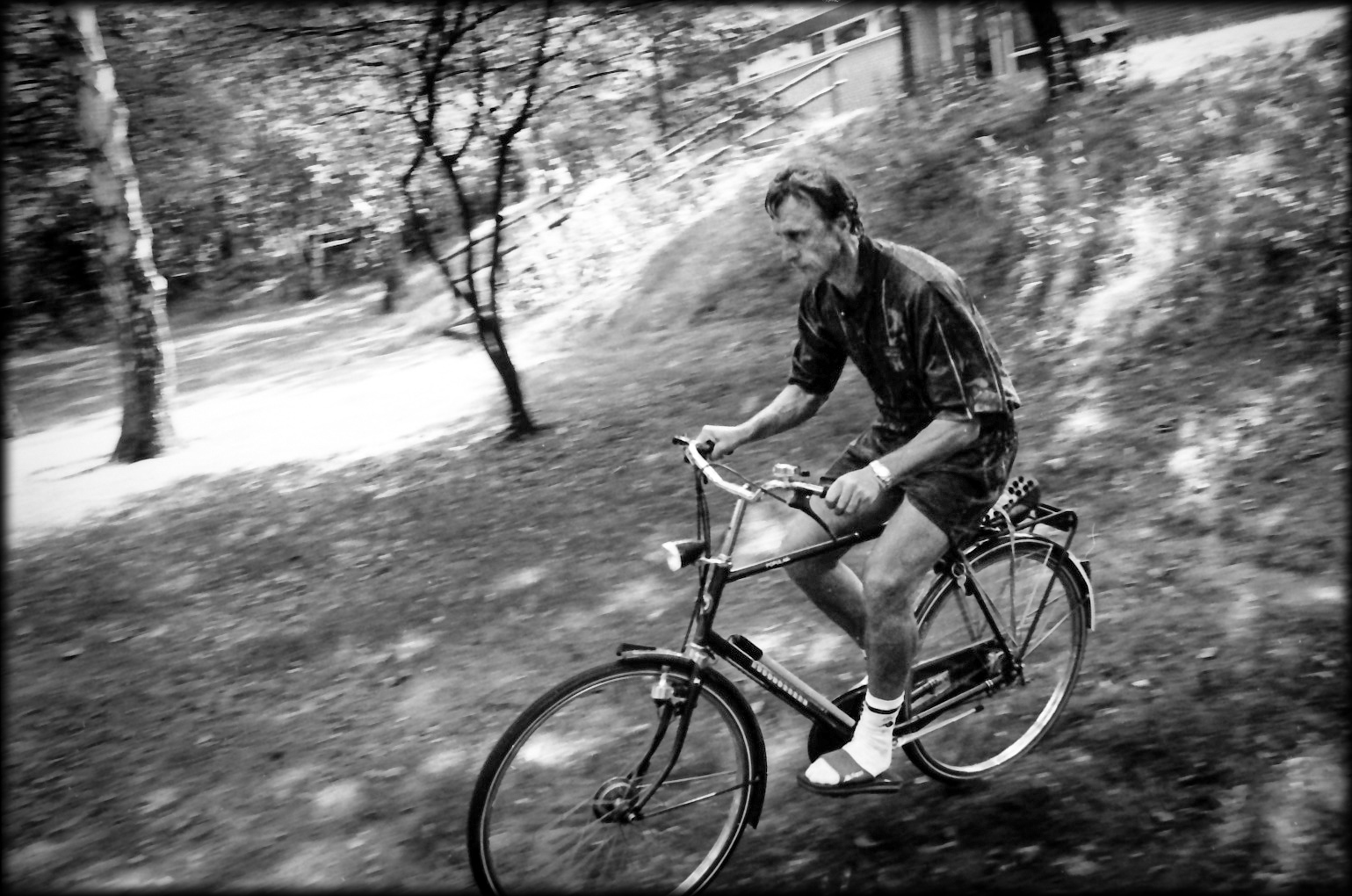
Johan Cruyff's influence on Barcelona is sometimes discussed as though it were inevitable, the natural extension of his playing career and his association with Total Football. It was not. When he returned to the club as coach in 1988, Barcelona were a large, wealthy institution without a settled footballing identity and with only intermittent success in the league. Over the following eight years Cruyff gave them a playing model that outlived his tenure by decades.
His Barcelona won four consecutive league titles between 1991 and 1994 and the club's first European Cup in 1992. More importantly, it fixed a set of principles that the club would return to again and again.
A structure built for the ball
Cruyff's teams were built to have the ball and to use it. He favoured a shape often described as a 3-4-3 with a midfield diamond, although the numbers mattered less than the relationships they created. Players were spread across the pitch so that the man in possession always had several passing options, and width came from wingers who stayed high and close to the touchline.
- A single holding midfielder at the base of the diamond organised possession.
- Wingers stretched the pitch, opening space in the centre.
- Defenders were expected to be comfortable on the ball and to start attacks.
The holding role, frequently filled by a young Pep Guardiola, was the heart of it. The position demanded a player who could receive under pressure, see the whole pitch and move the ball quickly. Physical dominance was secondary. That priority, valuing positioning and passing over power, anticipated the later careers of midfielders such as Xavi and Sergio Busquets.
Risk, width and superiority
Cruyff accepted defensive risk in exchange for control. Playing with three at the back and pushing players high left space behind, but the underlying reasoning was that a team in possession is not being attacked, and that pressing quickly after losing the ball would limit the counter-attacks that remained. The emphasis on creating numerical superiority around the ball, and on positioning players so that it could always move forward to a free man, would later be formalised under the heading of positional play.
Cruyff's Barcelona gave the club more than a trophy. It gave it a set of priorities: the ball, the space, the free man and the courage to accept risk.
The Dream Team and Wembley 1992
The side that became known as the Dream Team combined homegrown players with international signings including Ronald Koeman, Michael Laudrup, Hristo Stoichkov and, later, Romário. Koeman, a centre-back with an exceptional range of passing, embodied Cruyff's belief that defenders should also be playmakers.
In 1992 Barcelona reached the European Cup final at Wembley against Sampdoria. The match went to extra time and was settled by a Koeman free-kick, giving the club its first European Cup. The victory confirmed that Cruyff's approach could deliver at the very highest level.
It also had limits. In the 1994 final Barcelona were beaten 4-0 by Fabio Capello's Milan, a result often used to illustrate the vulnerability of Cruyff's attacking structure against a disciplined, well-drilled opponent. Any philosophy that embraces risk will occasionally be punished for it.
An academy with a shared language
Perhaps Cruyff's most enduring contribution lay beyond the first team. He pushed for coherence between the senior side and the youth ranks, so that young players learned the same principles and the same positional logic as they progressed. Rondos, possession exercises in which a group keeps the ball away from players in the middle, became a familiar part of the club's training identity.
This mattered because a playing model depends on players who understand it instinctively. A coach can explain a system to experienced signings, but players who have grown up inside it read its cues without thinking. The Barcelona teams of the late 2000s, filled with academy graduates, were in part the harvest of this approach.
The thread running from Rinus Michels through Cruyff to Guardiola is explored in From Michels to Guardiola. What stands out in that story is how much of the later success rested on decisions Cruyff made about the club as a whole, not only about his own team.
Cruyff left the club in 1996. By then, Barcelona knew what it wanted to be.