
From Michels to Guardiola: The Lineage of Positional Play
A thread of ideas runs from Ajax in the 1960s through Cruyff's Barcelona to Guardiola's teams. Tracing it shows how football philosophies are passed on and changed.
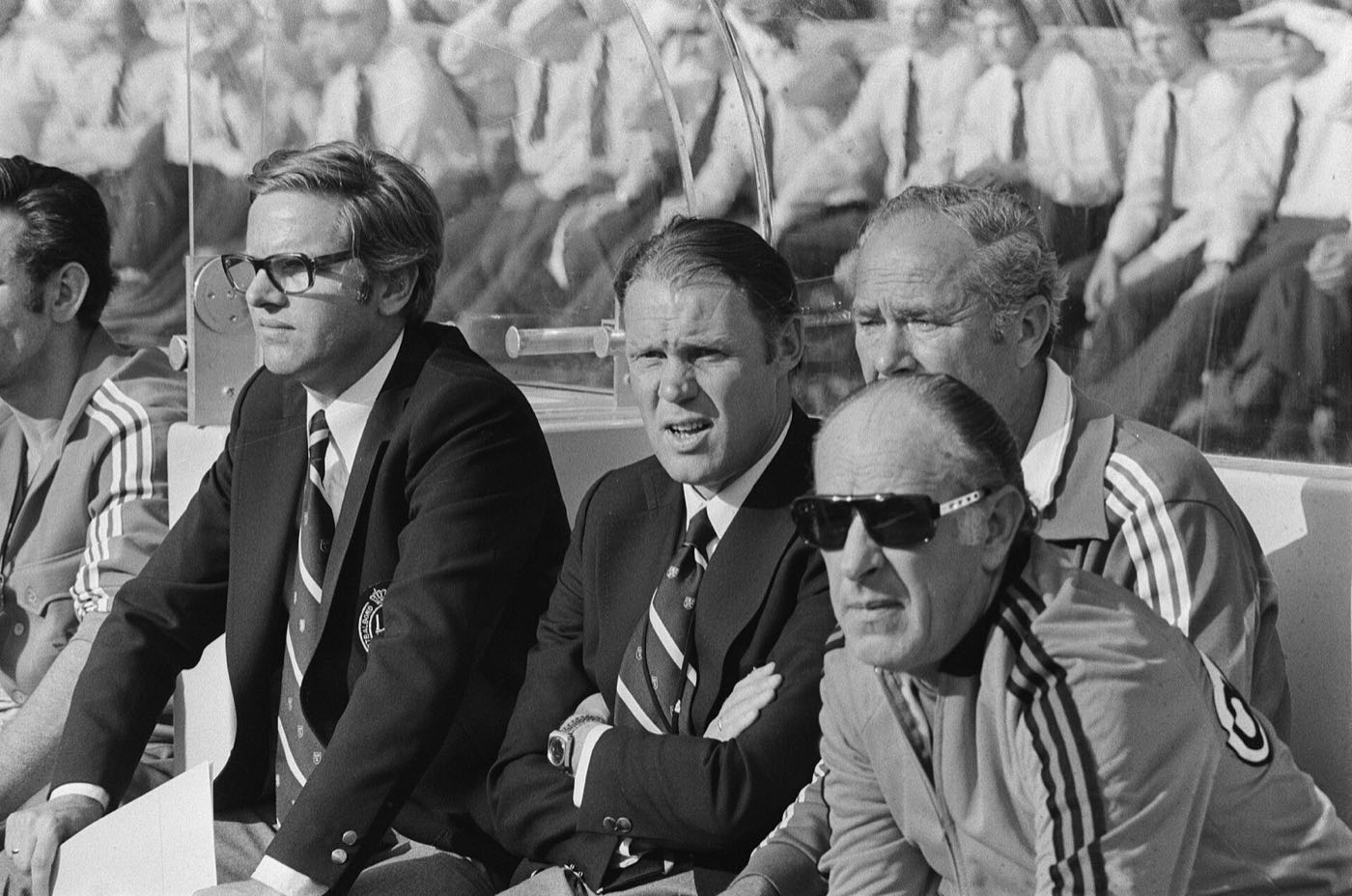
Football ideas rarely arrive fully formed. They are passed from coach to player and from player to coach, adapted to new circumstances and reshaped by each generation. One of the clearest examples is the lineage connecting Rinus Michels, Johan Cruyff and Pep Guardiola, a thread that runs from Amsterdam in the 1960s to Barcelona and beyond.
Michels: the foundations
Rinus Michels' Ajax established several principles that would echo through the decades: players able to interchange positions, a team that compressed space when defending and expanded it when attacking, and a commitment to pressing high up the pitch.
Cruyff was the central figure in that team, and the relationship between coach and player was formative. Michels later moved to Barcelona, and Cruyff joined him there as a player in 1973, planting an early Dutch influence at the club that would matter far more than anyone could have known at the time.
Cruyff: the model and the institution
When Cruyff returned to Barcelona as coach in 1988, he brought the Dutch ideas with him but reshaped them. As described in Johan Cruyff's Barcelona, his teams placed particular emphasis on:
- Possession as a means of control.
- Width, with wingers holding high and wide positions.
- A single pivot at the base of midfield who organised the play.
- Coherence between the first team and the academy.
The last point was crucial. By encouraging a shared footballing language across age groups, Cruyff helped create a pipeline of players who understood his principles instinctively.
Guardiola, a product of the academy, became Cruyff's pivot. In that role he learned the positional logic of the system from the inside, as the player responsible for circulating the ball and organising the team around him.
The lineage from Michels to Guardiola is not a straight copy. Each coach inherited principles and translated them for a different era.
Guardiola: systematisation
When Guardiola became Barcelona coach in 2008, after a season in charge of the club's reserve side, he inherited Cruyff's principles and a generation of academy players shaped by them. His contribution was to systematise positional play further.
His Barcelona, built around Xavi, Busquets and Iniesta, combined:
- A carefully organised positional structure, with players occupying specific zones to create passing options.
- Immediate pressing after losing the ball.
- Flexible use of the front line, including Lionel Messi dropping from a central position.
At Bayern Munich, Guardiola continued to develop these ideas, including the use of inverted full-backs to strengthen the centre. His work there showed that positional play was not tied to a particular club or a particular set of players, but could be adapted to different squads and leagues.
What changed along the way
Although the principles are connected, each stage differed in emphasis:
- Michels stressed collective pressing, interchange and physical conditioning.
- Cruyff placed possession and technical quality at the centre, and built an institutional identity around them.
- Guardiola formalised positional structure and tied pressing and possession together more tightly.
It would be too neat to present this as a single, closed line of descent. The Dutch tradition had other branches, and ideas from outside it, including the zonal pressing that transformed Italian football in the late 1980s, fed into the thinking of the coaches who followed. Lineages are useful for understanding, but football has always borrowed freely.
Why lineages matter
Tracing these connections is more than a historical curiosity. It shows how football ideas survive: not as fixed formations, but as principles transmitted through people. Coaches learn from those who coached them, players become coaches, and institutions preserve or lose philosophies depending on whether they maintain continuity.
The lineage also shows that lasting success depends on adaptation. Total Football could not simply be replayed in the 1990s, and Cruyff's Barcelona could not be copied unchanged in the 2000s. Each generation kept what remained useful and adjusted the rest.
Seen this way, modern football is the latest stage in a long conversation about space, possession and collective play, one that began on the training pitches of Amsterdam and has not yet finished.