
Why Woltemade fell behind Newcastle's pressing hierarchy
Matthias Jaissle's explanation of Nick Woltemade's loan to Juventus reveals how Newcastle's high-press identity, not a lack of talent, decided the striker's standing.
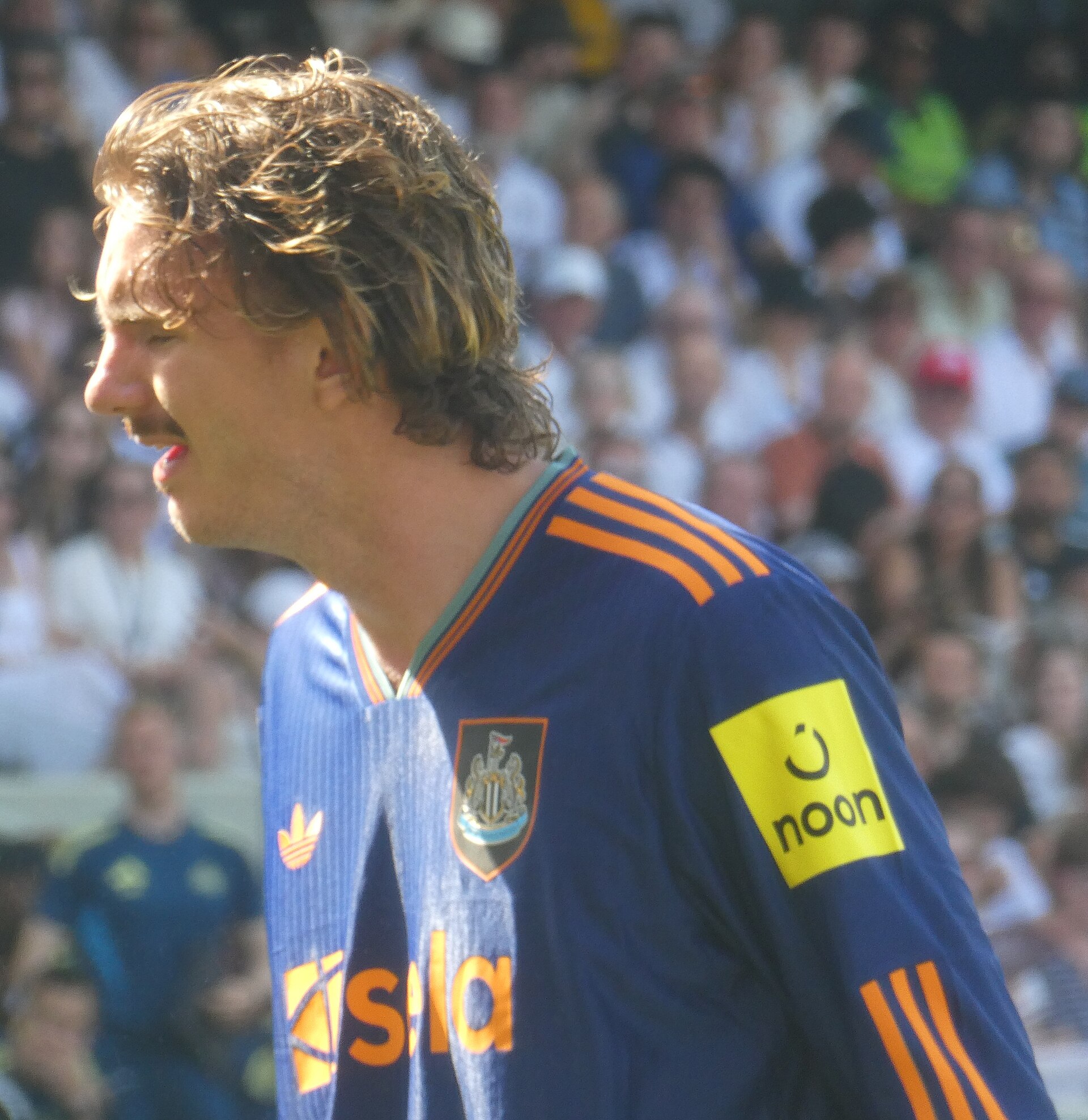
Nick Woltemade left Newcastle United for Juventus on a season-long loan on transfer deadline day, a deal with no option to buy attached, despite the German forward costing Newcastle roughly €75m including add-ons when he arrived from VfB Stuttgart only a year earlier.
Newcastle head coach Matthias Jaissle has now explained the reasoning behind that decision in an interview with German outlet Kicker, reported by Football Italia. Jaissle said the club had been explicit with Woltemade about where he stood: "We explained his position in the team to him, which was linked to our style of high pressing, and in that moment, there were one or two players in front of him."
That single sentence does more to explain the move than any fee or loan clause. It frames Woltemade's demotion not as a judgement on his quality but as a consequence of fit within a specific defensive structure.
A pressing system that asks more than finishing
High pressing schemes live or die on the willingness and physical capacity of the front players to initiate pressure in precise sequences, cutting passing lanes and forcing turnovers in advanced areas. A manager who builds his attack around that principle is not simply picking his best finisher; he is picking the players who can execute the pressing triggers at the right moments and sustain that work rate across ninety minutes.
Jaissle's comment that "one or two players" stood ahead of Woltemade suggests the issue was less about technical ability in possession and more about suitability to that specific pressing role. A target forward built to hold the ball up and occupy central defenders does not automatically translate into a first line of pressing that disrupts opposition build-up. Newcastle apparently judged that other attacking options executed that function more effectively.
This is a useful corrective to the instinct to read every loan departure as a verdict on a player's level. Squad hierarchies built around tactical function can leave an expensive, talented forward on the bench not because he underperforms in isolation, but because his profile does not match what the system in possession, and more pointedly out of possession, demands in that moment.
Spalletti's different puzzle in Turin
The loan has not resolved the question so much as transplanted it into a different context. Woltemade has made four Serie A appearances for Juventus, all as a substitute, with Football Italia noting that head coach Luciano Spalletti wanted a more conventional out-and-out centre-forward. His performances and his preferred position have already split opinion in Italy.
That detail matters alongside Jaissle's explanation. It suggests Woltemade's positional profile, whatever exactly it is that made him secondary at Newcastle's high press, has also not slotted neatly into Spalletti's forward line. Two different coaches, in two different systems, have so far found reasons to use him sparingly or adapt around him rather than build through him.
Why Newcastle structured the exit as they did
The terms of the loan are themselves informative. Newcastle sanctioned the move for an initial fee of just €2.8m, a fraction of what they paid to sign him, and included no option to buy. Jaissle was direct about what that means for Woltemade's long-term status at the club: "I have a very high opinion of him and he remains one of our players because he is only on loan."
Structuring a loan without a buy clause, on a player who still has several years left on his Newcastle contract, is a deliberate hedge. It allows Newcastle to send Woltemade for regular football and game time he was not getting in the pecking order, while retaining full control over his next move rather than ceding it to Juventus at a fixed or negotiable price.
Read together, Jaissle's comments describe a decision shaped by tactical necessity rather than a loss of faith. Newcastle's pressing structure left no space for Woltemade in the short term, but the contract terms were drawn up to keep the door open. Whether that reopens depends on what Woltemade does with limited minutes in Turin, and on whether his profile eventually proves adaptable to Newcastle's high-press demands once he returns.