
Andrea Pirlo and the Modern Regista
Pirlo turned the space in front of the defence into a creative hub. His career shows how a playmaker can shape a game from deep rather than between the lines.
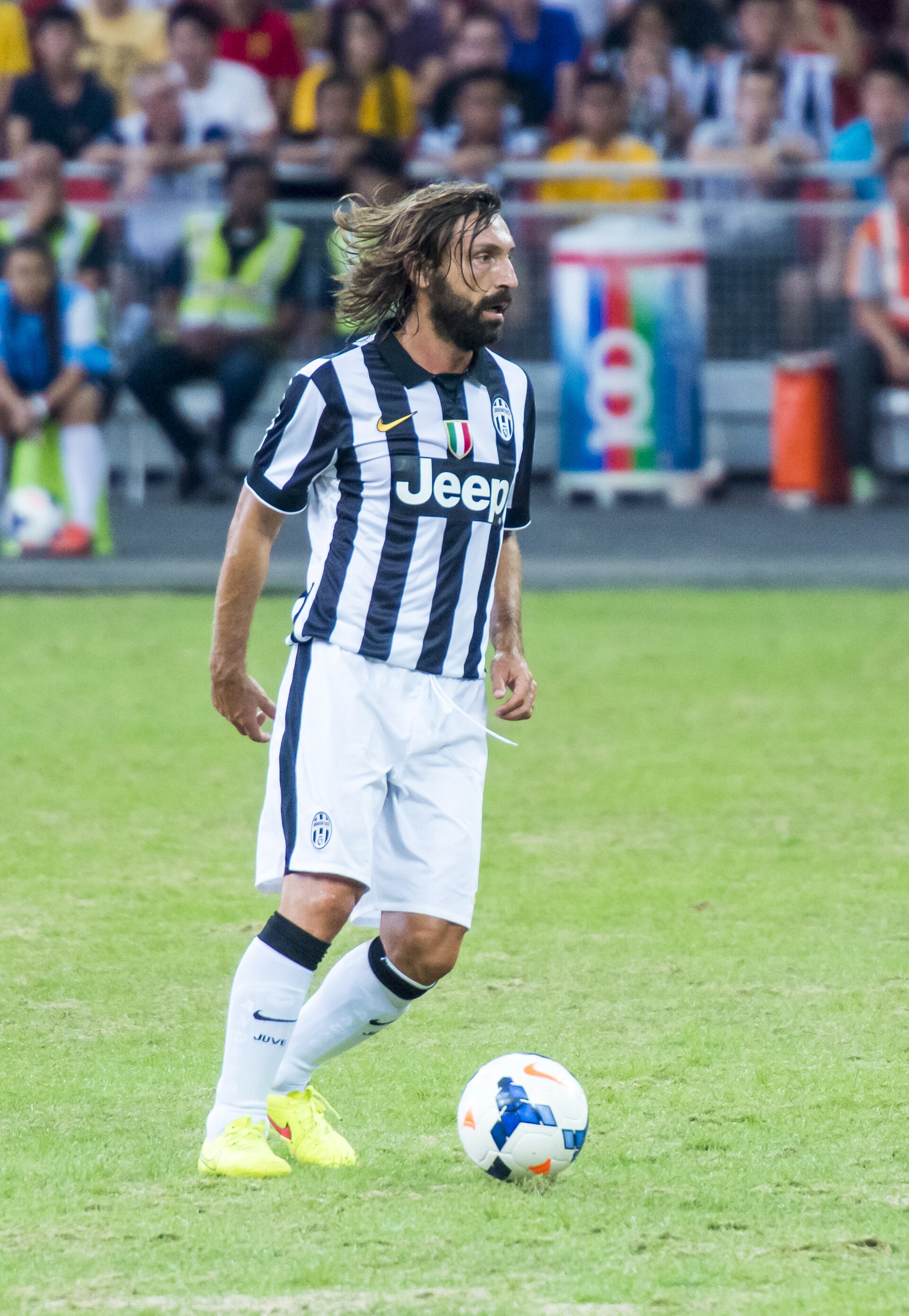
The Italian word regista means director, and in football it describes a playmaker who operates from deep, setting the rhythm and direction of a team's attacks. The role has a long history in Italian football, but no player of the modern era is more closely associated with it than Andrea Pirlo.
What made Pirlo notable was not simply his range of passing. It was the fact that he exercised such control from a position that, in many teams, would have been occupied by a defensive midfielder whose main task was to win the ball back.
From trequartista to regista
Pirlo began his career as an attacking midfielder, playing behind the forwards. At Brescia he was moved into a deeper position, a change often credited to the coach Carlo Mazzone. It was at AC Milan under Carlo Ancelotti that the role became fully established, with Pirlo stationed in front of the defence in a midfield built to protect him and to exploit his vision.
The shift made sense. Between the lines, a creative player is closely marked and has little time. In front of the defence, a playmaker often has more space, sees the whole pitch ahead of him and can pick passes before the opponent's shape has settled.
What the regista does
Pirlo's game can be broken down into several functions:
- Receiving from the defence: he was the first point of contact in build-up, collecting the ball from the centre-backs.
- Setting tempo: he decided when to circulate patiently and when to accelerate.
- Switching play: long diagonal passes moved the ball away from pressure and into space on the far side.
- Breaking lines: forward passes into the feet of attackers, or over the top for runners, turned possession into chances.
Crucially, Pirlo was not a traditional ball-winner. His defensive value lay mostly in positioning and anticipation, so his teams had to build structures around him to cover the physical work he was less suited to.
The regista's power comes from time. Pirlo turned the space in front of his own defence into the place where attacks were designed.
Protection and balance
At Milan, Pirlo played alongside hard-working midfielders such as Gennaro Gattuso, whose energy and tackling complemented his passing. The midfield diamond Ancelotti often used placed Pirlo at its base, with Gattuso and Clarence Seedorf either side and Kaká ahead. That arrangement is analysed in the tactical story of the 2005 final.
Milan won the Champions League in 2003 and 2007 with Pirlo in this role, and he was part of the Italy side that won the 2006 World Cup.
Later, at Juventus, he played in a system with three central defenders behind him and two energetic midfielders alongside. The Juventus of that period won several consecutive Serie A titles, and Pirlo gave them a calm passing hub at the base of midfield. The arrangement echoed the Milan model: a playmaker protected by runners, with the defensive burden shared out around him.
Pressing the regista
The obvious response to a deep playmaker is to press him or to assign a forward to screen him. Opponents often tried both. The regista's counter was to reposition, to drop between the centre-backs, or to move the ball before the press arrived. Teams built around a regista also relied on others, including defenders, sharing the build-up duties when the playmaker was marked out of the game.
The modern game has made this harder. With pressing more widespread and better coordinated, a single deep playmaker can be targeted more easily, and many teams now prefer two players sharing the base of midfield. The mobile, positionally disciplined profile of Sergio Busquets represents one evolution; the defensive screen popularised as the Makélélé role represents another, very different answer to the same area of the pitch.
The regista's legacy
Pirlo's career reminded coaches that creativity does not have to be located near the opponent's goal. A player who reads the game and moves the ball precisely can shape a match from the deepest midfield position.
The role continues to evolve, and the pure regista, largely excused from pressing, is harder to accommodate than it once was. But the idea he represented, that the first pass of an attack can be its most important, remains central to how teams think about building play.